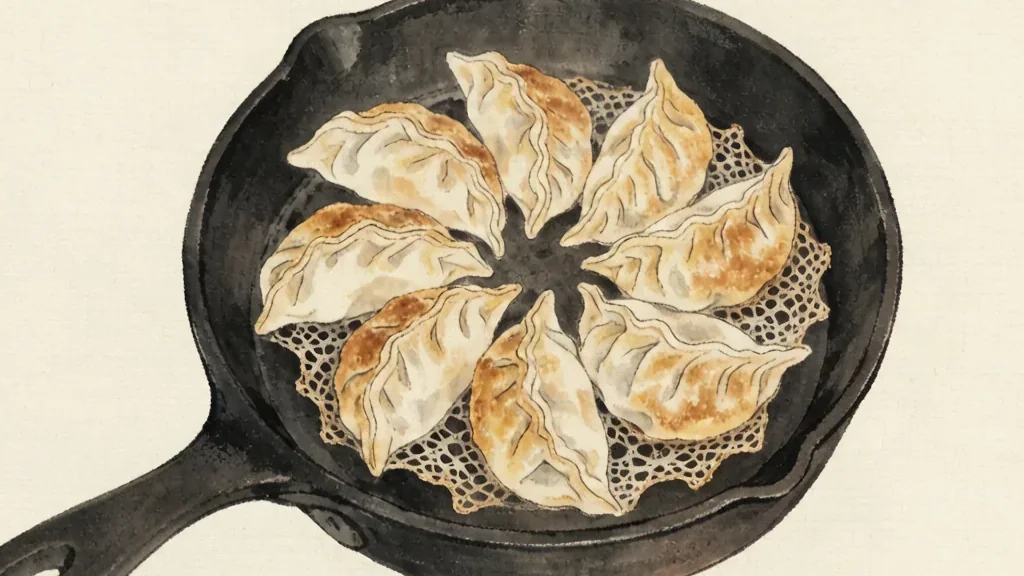
There is a sound that signals comfort in millions of Chinese kitchens: the sizzle of dumplings hitting a hot pan, followed by the patient wait for a golden, lace-like crust to form. That dish is guō tiē (锅贴), the "potsticker," a Northern Chinese dumpling that is fried on one side and steamed on the other, giving it a texture no boiled dumpling can match. More than a snack, guotie embodies the Chinese genius for transforming a single parcel of dough and filling into something with three distinct textures — crisp, tender, and juicy all at once. Understanding guotie is a gateway to understanding how Chinese cooks think about contrast, heat, and the humble dumpling that anchors family tables from Beijing to Shanghai.
What Exactly Is a Guotie?
A guotie is a crescent-shaped dumpling made from a simple wheat-flour dough wrapped around a moist filling, most traditionally a mixture of ground pork, Chinese chives (jiǔcài), and sometimes shrimp or cabbage. Unlike the boiled jiǎozi (饺子), guotie are never dropped into water. Instead, they are placed seam-up in a lightly oiled pan, seared until the bottoms begin to color, and then a small amount of water or starch slurry is added and the pan is covered. The steam cooks the top and the filling through, while the bottom continues to fry into a brittle, amber crust.
The final flourish is optional but beloved: a thin batter of flour and water painted beneath the dumplings before steaming. When the pan is inverted onto a plate, the dumplings emerge wearing a delicate, web-like "lace" of crisped starch — a feature that turns a home-cooked staple into a restaurant showpiece. The result is a dumpling that is simultaneously crunchy, chewy, and bursting with hot broth, a trio of sensations that explains why guotie have outlasted countless culinary fashions.
Guotie Versus Jiaozi: A Family of Dumplings
Confusion between guotie and jiaozi is common, and the distinction matters. Jiaozi are typically boiled and served in soup or drained plain; guotie are a specific cooking method applied to a similar parcel. In practice, many families make a large batch of jiaozi and choose to pan-fry a portion of them — those fried ones become guotie. The shape also differs slightly: guotie are often longer and more slender, with a flat bottom and a pleated, upright top, designed to stand in the pan rather than float in a pot.
This flexibility is part of the dumpling's cultural power. A single recipe for dough and filling can yield boiled, steamed, or pan-fried dumplings, letting a household adapt to season, fuel, and occasion. Guotie occupy the celebratory end of that spectrum — they require more attention and fat, which is precisely why they feel like a treat. During Chinese New Year, families across the north gather to fold dozens at a time, and a plate of guotie often anchors the table alongside their boiled cousins.
The Technique Behind the Crisp
The defining feature of a great guotie is its base, and achieving it is a matter of heat control. The cook begins with medium-high heat and a film of oil. Once the dumplings are arranged, they fry undisturbed for a minute or two until the undersides set. Water is then poured in — just enough to come a third of the way up the dumplings — and the lid goes on. The water flashes to steam, which cooks the upper dough and the filling without drying them.
When the water has evaporated, the heat is raised for a final thirty seconds to drive off moisture and deepen the color. The dumpling must then be loosened with a spatula and slid out in one piece. Skilled cooks judge doneness by ear as much as by eye: the frantic bubbling of water gives way to the quiet, nutty whisper of frying that means the crust is ready. A dip of black vinegar (zhēnjiāng xiāngcù) with a sliver of fresh ginger is the classic accompaniment, cutting the richness of the pork.
Regional Styles and Fillings
While pork and chive is the canonical filling, regional kitchens improvise freely. In Shanghai, guotie may be smaller and leaner, sometimes with a touch of sesame oil and napa cabbage. In the northeast, richer fillings with more fat content keep the interior succulent through the harsh winters. Vegetarian versions use smashed tofu, mushrooms, and glass noodles, while coastal cities add shrimp or crabmeat for a sweeter note.
The wrapper itself varies too. Some shops use a thicker, more elastic dough that crisps dramatically; others prefer a thinner skin that shatters. What unites them is the contrast principle: every regional guotie balances a brittle bottom against a soft, faintly chewy top and a juicy center. This textural dialogue is the dish's signature, and regional pride often rests on which local variant achieves it most satisfyingly.
How to Eat Guotie Like a Local
Guotie are eaten hot, ideally within minutes of leaving the pan, because the crust loses its crunch as it cools and the filling tightens. Pick one up by the top, dip the crispy base into vinegar, and bite from the fried edge so the broth does not spill. In casual eateries, guotie are ordered by the liǎng — a unit of weight equal to fifty grams — typically ten to fifteen pieces per person as a meal, or a few shared among friends as a side.
They pair naturally with a bowl of plain congee or a light noodle soup, and with beer or soy-milk in the morning at the many breakfast stalls that specialize in them. Because they are portable and quick, guotie have become a staple of Chinese fast food, sold from street carts, frozen-food aisles, and dedicated dumpling houses alike. Yet the homemade version remains the gold standard, tied as it is to family and festival.
A Note on Festival and Family
Dumplings in general are inseparable from Chinese New Year, when the folded shape is said to resemble ancient gold ingots (yuánbǎo) and thus symbolize wealth. Guotie, with their golden crust, lean even harder into that symbolism of prosperity. Folding them is a communal activity, often spanning generations, and hiding a coin or a sweet in one dumpling is a playful way to wish luck to the finder.
Beyond the holiday, guotie mark ordinary moments of care: a grandmother's weekend batch, a late-night supper after travel, a welcome-home meal. The dish's endurance across centuries of urbanization shows how a simple technique — fry, steam, crisp — can carry memory as reliably as flavor. To eat guotie is to take part, however briefly, in that continuity.
Guotie in Everyday Life
Beyond festivals, guotie are a workhorse of Chinese fast food. They are sold from street carts at dawn, kept in frozen-food aisles for busy weeknights, and made in large batches at home to be pan-fried on demand. Because they combine three textures, crisp bottom, tender top, and juicy center, in a single parcel, they satisfy as a snack or a light meal. Office workers grab a few with congee or noodle soup, and late travelers treat them as a welcome-home supper. The dish's practical appeal is exactly its flexibility: one dough and filling can be boiled, steamed, or fried, so a household adapts to the moment. That everyday usefulness, more than ceremony, is why guotie have outlasted countless food fashions and remain on tables from Beijing breakfast stalls to Shanghai late-night counters.
The Crisp Crust as a Symbol
The golden base of a guotie does more than taste good; it carries meaning. Chinese dumplings in general echo the shape of old gold ingots and stand for wealth at the New Year, and the potsticker pushes that idea further with its fried, money-colored crust. Families gather to fold them during the holiday, and the act of pan-frying a portion of a big jiaozi batch turns ordinary dumplings into a celebratory treat. Some cooks hide a coin or sweet inside one dumpling, turning the plate into a small game of luck. Seen this way, the crisp crust is a edible wish: a promise that the year will be as rich as the fried edge looks. The symbolism is gentle but real, which is part of why guotie feel special even on an ordinary morning.
❓ Frequently Asked Questions
📝 Chinese Vocabulary
锅贴 — : potsticker / pan-fried dumpling.
饺子 — : boiled dumpling.
韭菜 — : Chinese chives.
醋 — : vinegar, especially black vinegar for dipping.
两 — : a traditional unit of weight (50g) used to order dumplings.
馅 — : filling, the meat or vegetable mixture inside the dumpling
生煎 — : Shanghai-style pan-fried bun, a close cousin of the potsticker
香油 — : sesame oil, used to scent fillings and dipping sauces
🎉 Fun Facts
- The name guō tiē literally means "stuck to the wok," a nod to the dumplings bonding to the pan as they crisp.
- Legend says potstickers were invented by accident when a cook forgot about boiling dumplings and the water boiled away, leaving them fried to the pot.
- The crispy lace underside, called "ice flower" in some shops, is considered the mark of a skilled dumpling chef.
- Guotie are so associated with breakfast in parts of China that dedicated stalls open before dawn and sell out by mid-morning.
- Guotie freeze well, and many home cooks shape a large batch, freeze them flat, then cook straight from frozen for a quick meal.
- The dish leans into the New Year symbolism of wealth because its golden, ingot-like crust resembles the old Chinese gold used as currency.