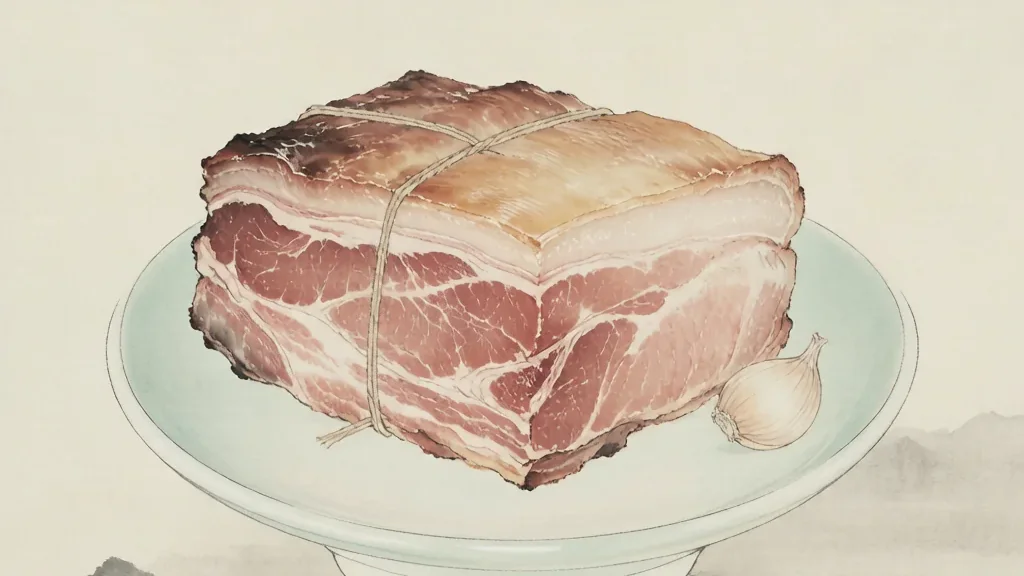
Jiezi rou (芥菜肉), "pork with mustard greens," is a homely braised dish of the north and central China in which pork belly or shoulder is cooked down with jie cai—pungent leaf mustard—until the meat is tender and the greens have absorbed its richness. Less famous abroad than meicai kourou, it belongs to the same broad family of preserved-vegetable-and-pork braises that once solved the practical problem of keeping greens edible through winter. The dish is savory, slightly bitter-edged, and deeply comforting, and it remains a fixture of holiday tables in provinces such as Henan and Hebei, where mustard greens are a local staple.
The Mustard Green at the Center
Jie cai (芥菜) is leaf mustard, a hardy brassica with a sharp, peppery bite when raw. In northern China it is grown as a cold-season vegetable and preserved by salting and drying, much as leaf mustards are treated across Asia. The cured green mellows into a complex, savory preserve.
The character of the mustard determines the dish's profile. Fresh jie cai brings brightness and a little heat; preserved jie cai brings depth and salt. Cooks choose according to what they have and how robust they want the finished braise.
Northern Roots
The dish is associated with the wheat-eating north, where pork and preserved vegetables were natural partners through long winters. Henan in particular claims a tradition of jiezi rou served at Spring Festival, alongside steamed breads rather than rice.
In these regions, mustard greens were among the few greens that could be put by, and braising them with pork turned a preservation strategy into a celebratory dish. The result spoke to both thrift and festivity, a common theme in northern home cooking.
Choosing the Pork
Like its southern cousin, the dish favors a cut with fat, usually pork belly or a fatty shoulder, because the rendered fat tames the mustard's edge and keeps the meat succulent through long cooking. The skin is sometimes kept on for body.
The pork is typically blanched, then cut into chunks and either briefly fried or directly braised with the greens and aromatics. The goal is collagen breakdown and a sauce that clings, rather than a lean, quick stir-fry.
The Braise
Cooking is slow and low. Pork and mustard greens go into a pot with ginger, perhaps a little soy and rice wine, and enough liquid to braise. Over time the greens soften and darken, the pork becomes fork-tender, and the two exchange flavors.
Unlike a clear soup, this is a clinging, brown braise meant to spoon over steamed bread or congee. The mustard's bitterness balances the pork's richness, so neither dominates—a balance northern cooks aim for instinctively.
Fresh vs. Preserved Mustard
A cook can make jiezi rou with fresh jie cai for a greener, brighter dish, or with salted-dried mustard for a darker, more concentrated one. Some households blend the two, using preserved greens for depth and a handful of fresh for color.
This flexibility is part of the dish's folk character: there is no single correct version, only the version a given family learned. Recipes pass down by hand and eye rather than by measurement, which is why the same name covers a range of tastes.
Place on the Holiday Table
At Lunar New Year in the north, jiezi rou joins other make-ahead braises that can be reheated as guests arrive. Its ability to sit and improve makes it ideal for a multi-day feast, and its hearty nature suits cold weather.
Served with mantou or other steamed breads, it anchors a meal built on shared dishes and staples. The mustard's sharpness also cuts through the richness of neighboring holiday foods, keeping the table balanced.
Comparison with Meicai Kourou
Jiezi rou and meicai kourou are cousins. Both pair pork with a salted leaf mustard and both steam or braise slowly. The differences are regional: meicai is a Hakka/Cantonese preserve steamed in an inverted bowl, while jie cai is a northern mustard often braised in a pot.
Recognizing the family helps a diner appreciate a wider Chinese logic—preserve the greens, render the pork, and let the two rescue each other. The same insight explains many regional braises across the country.
Everyday and Modern Life
Though tied to festivals, jiezi rou is also everyday food wherever mustard greens are cheap and pork is affordable. In cities, prepared preserved mustard is sold vacuum-packed, so the dish is quick to assemble even for weeknight cooking.
Health-conscious cooks may use leaner pork and rinse the preserved greens to lower salt, but the soul of the dish—the marriage of sharp green and soft pork—survives any trimming. It remains comfort food first and tradition second.
Preservation as a Way of Life
The deeper story of jiezi rou is the northern climate. Before refrigeration, winters in Henan and Hebei were long and cold, and fresh greens vanished for months. Salting and drying leaf mustard was a way to keep a vegetable on the table, and braising it with pork turned necessity into something worth anticipating.
This logic produced a whole family of "winter vegetables" across China—pickled cabbages in the northeast, preserved mustards in the south, salted greens in the center—each region solving the same problem with local crops. Jiezi rou is one expression of a nationwide ingenuity in putting food by.
Understanding this reframes the dish as more than a recipe. It is a memory of scarcity transformed into comfort, and of a time when the smell of pork and mustard braising meant the hard season was being met with generosity. Modern freezers have made the technique optional, but the taste still carries that history.
❓ Frequently Asked Questions
What is jiezi rou?
It is a northern Chinese braise of pork with jie cai (leaf mustard), slow-cooked until tender, savory, and lightly bitter-edged.
Where is it from?
It is associated with northern and central China, especially Henan, where mustard greens and pork braises are holiday staples.
How does it differ from meicai kourou?
Both pair pork with salted leaf mustard, but jiezi rou uses a northern mustard and is usually pot-braised, while meicai kourou is steamed Hakka style in an inverted bowl.
Can I use fresh mustard greens?
Yes; fresh jie cai gives a brighter, greener dish, while preserved mustard gives a darker, more concentrated braise. Some cooks blend both.
What do you eat it with?
Traditionally with steamed breads such as mantou or with congee, spooning the braise over the staple.
Is it very salty?
If made with preserved mustard it can be salty, but rinsing the greens and balancing with pork and aromatics keeps the finished dish savory rather than sharp.