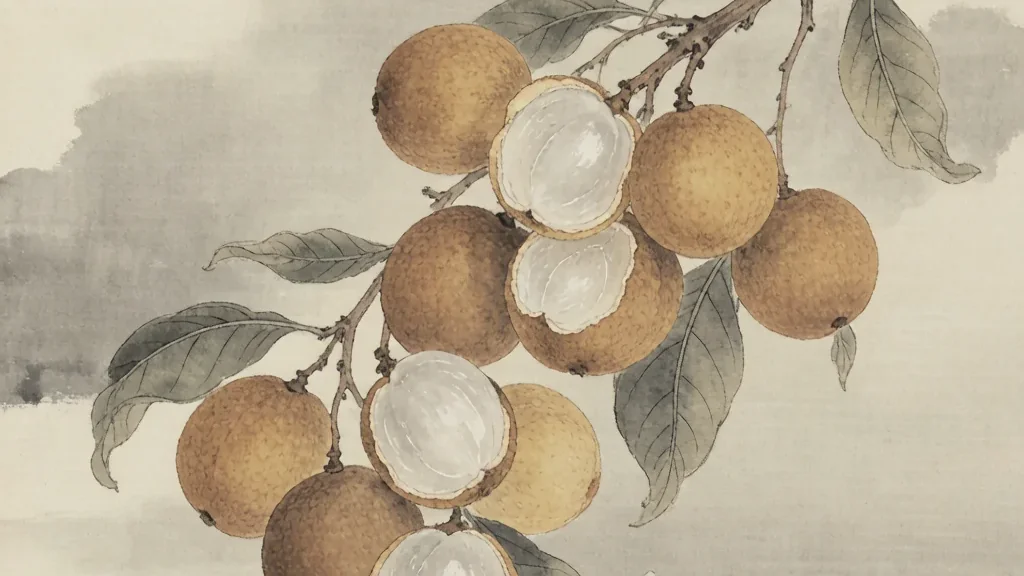
Longan (龙眼, lóng yǎn), literally "dragon eye," is a small round fruit prized across southern China for its sweet, musky flesh and its glossy seed that, with the translucent aril removed, resembles an eyeball. Botanically Dimocarpus longan, it is a close relative of lychee and rambutan, native to the tropical and subtropical south. Eaten fresh in summer or dried into a wrinkled brown "longan meat" (桂圆, guìyuán) used in teas, soups, and tonic desserts, the fruit carries a long cultural charge: its name links it to dragons, and its dried form is a staple of restorative cooking for women, the elderly, and the convalescent.
Botany and Appearance
The longan tree is an evergreen that bears clusters of tan, thin-shelled fruits about the size of a large grape. Under the brittle skin sits a translucent, juicy aril—the edible part—wrapping a single dark, round seed. The seed's black shine through the pale flesh is what earned the "dragon eye" name.
Compared with lychee, longan flesh is firmer, less perfumed, and more subtly sweet, with a slightly tart finish. The two fruits are often mentioned together, but connoisseurs treat longan as the gentler, more "warming" of the pair in traditional food classification.
Growing Regions
Longan thrives in the warm, humid south: Guangdong, Guangxi, Fujian, and Taiwan are major growing areas, with a long season through late summer. The fruit does not travel perfectly when fresh, so much of the crop is dried, candied, or canned.
Some regions are especially famous for particular cultivars, and local economies have grown around both fresh markets and the dried-longan trade. The drying process concentrates sweetness and creates the guiyuan of commerce and kitchens.
Fresh Eating and Markets
In season, longan is sold by the heap at southern markets and eaten out of hand, peeled and popped whole. Its refreshing sweetness makes it a favorite summer snack, and it appears in fruit platters alongside lychee and mango.
Because the fresh fruit is delicate, it is often enjoyed close to where it grows or rushed to city markets on the same day. The brief window of peak freshness is part of its appeal, marking the height of summer in the south.
Dried Longan (Guiyuan)
Drying transforms longan into guiyuan (桂圆), a brown, leathery fruit with concentrated sweetness and a deeper, almost caramel aroma. Dried longan keeps for a long time and becomes a pantry staple for sweet soups and tonics.
In traditional Chinese food therapy, guiyuan is considered warming and nourishing, used in dishes meant to replenish blood and calm the spirit. It is a common ingredient in postpartum and recuperative meals, though such uses reflect tradition rather than clinical claims.
In Soups and Desserts
Dried longan appears in savory-sweet soups and desserts across the south: simmered with red dates, lotus seeds, and rock sugar into a soothing tong sui, or added to bird's-nest and snow-fungus soups for texture and fragrance.
It also flavors savory broths and teas, where its sweetness balances herbs. The fruit's versatility—equally at home in a dessert bowl or a restorative soup—explains its permanent place in the southern larder.
Cultural and Symbolic Weight
The dragon connection gives longan a festive, lucky aura; dragons are benevolent powers of rain and fortune. Serving longan at gatherings is thus mildly auspicious, and the fruit's roundness suggests reunion and completeness.
In folk belief, guiyuan is also linked to sleep and calm, and it features in "cooling" or "warming" food logic depending on preparation. These associations are cultural rather than medical, but they shape how the fruit is used in family cooking.
Longan vs. Lychee
Though related, the two are distinct. Lychee is brighter, more floral, and more perishable; longan is subtler, firmer, and better suited to drying. Cooks choose between them based on the desired aroma and on what the dish needs after cooking.
Both belong to the same family of southern "eye" fruits, and both carry dragon or royal symbolism in their names. Knowing the difference helps a cook pick the right sweetness and texture for a given soup or snack.
Modern Uses and Products
Today longan is found beyond fresh markets: in bottled teas, canned fruit, herbal drinks, and exported dried form. Modern branding often emphasizes its traditional "tonic" image while reaching younger consumers with chilled beverages.
Agricultural research has also improved cultivars and storage, extending the fresh season. Yet the essential experience remains peeling a fresh fruit on a hot day, or stirring dried guiyuan into a warm sweet soup at night.
Longan in Folk Food Therapy
In traditional Chinese food therapy, foods are classified as warming or cooling, and dried longan is firmly in the warming camp. It is routinely added to restorative soups and teas given to new mothers, the elderly, and anyone recovering from illness, on the belief that it nourishes blood and steadies the spirit. Such uses are cultural tradition rather than clinical medicine.
The fruit also appears in the logic of "tonic" cooking (补, bǔ), where ingredients are chosen to rebuild strength after exertion or sickness. A late-night bowl of guiyuan with red dates and rock sugar is as much comfort ritual as dessert, associated with calm sleep and quiet evenings.
This therapeutic reputation explains why dried longan sits in nearly every southern pantry alongside ginger and goji. Even people who rarely think about "food as medicine" reach for it instinctively when someone in the family feels run down, a habit passed down without needing explanation.
Choosing and Storing
When buying fresh longan, look for firm fruit with intact, tan shells and avoid any with mold or shriveled skin, since the fresh fruit spoils quickly once the shell is broken. Eat it within a day or two, or refrigerate briefly to slow softening.
Dried guiyuan keeps far longer in an airtight jar away from moisture, and its quality shows in a plump, dark, slightly oily appearance rather than a brittle, pale one. Stored well, it remains ready for soups and teas through the year.
❓ Frequently Asked Questions
What is longan?
It is a small southern Chinese fruit with translucent sweet flesh and a dark seed, named "dragon eye" for how the seed looks through the aril.
How is it different from lychee?
Longan is firmer, less floral, and better for drying; lychee is brighter, more perfumed, and more perishable. They are close relatives.
What is guiyuan?
Guiyuan is dried longan, with concentrated sweetness and a deeper aroma, used in teas, soups, and tonic desserts.
How is longan used in cooking?
Fresh fruit is eaten out of hand; dried longan is simmered in sweet soups with red dates and lotus seeds or added to savory broths.
Why is it considered auspicious?
Its dragon name and round shape link it to fortune and reunion, making it a mildly lucky festive fruit in southern culture.
Where does longan grow?
It grows in the warm, humid south of China—Guangdong, Guangxi, Fujian, and Taiwan—and across similar tropical Asia.