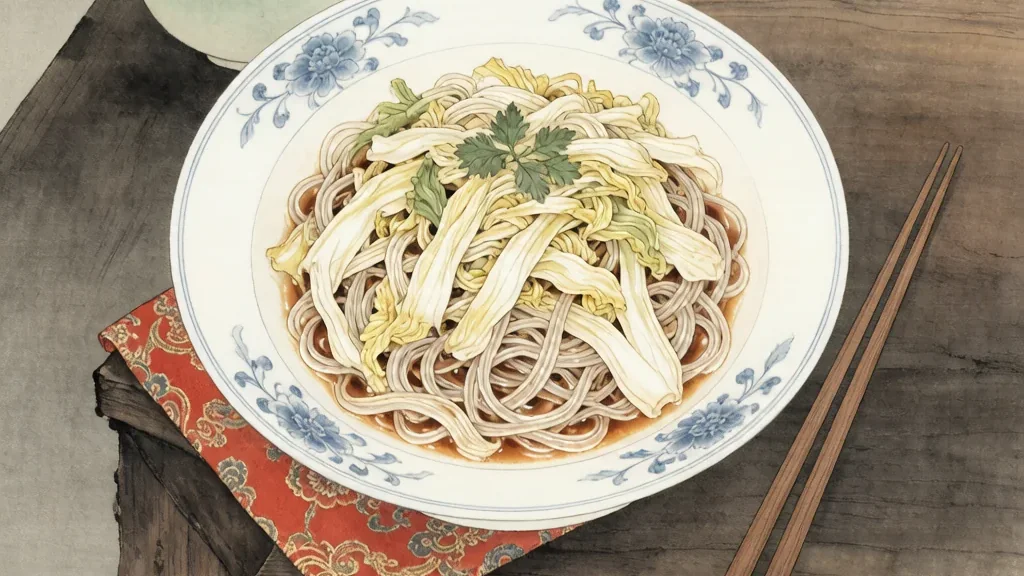
Sour cabbage — suān cài (酸菜) in Mandarin — is one of the defining tastes of northern China, a preparation in which whole heads of napa cabbage are salted and left to ferment in brine until they turn tangy, crisp, and faintly effervescent. Long before refrigeration, families across the cold North relied on this method to keep vegetables edible through winters when frost locked the ground for months. The result is a clean, sour, refreshing flavor that cuts through rich meats and heavy stews. Though every region of China has its own fermented vegetables, suan cai is especially bound up with the identity of the Northeast (Dongbei), where making it each autumn is less a recipe than a seasonal ritual passed from one generation to the next.
A Northeast Tradition
Suan cai is most strongly associated with Dongbei, the Northeast China region of Heilongjiang, Jilin, and Liaoning, where continental winters are long, dry, and brutally cold. Before modern transport and greenhouse farming, fresh vegetables simply could not be grown or stored through the frozen months. Fermentation offered the only practical way to keep cabbage — the region's staple vegetable — nutritious and edible from late autumn until spring.
For much of the twentieth century, nearly every northern household kept a large ceramic vat, or gāng (缸), in a cool corner where the cabbage could ferment slowly. The sour, funky aroma of fermenting cabbage became the background scent of northern winters, and the annual cycle of making and eating suan cai shaped how families ate for half the year. The practice is so central to regional life that it has been recognized as intangible cultural heritage in several northeastern provinces.
Why the North, Why Sour
The northern preference for sour, fermented cabbage is rooted in climate and agriculture. Cabbage is easy to grow in the short northern summer and stores reasonably well, but it cannot survive the winter fresh. Salting and lactic-acid fermentation both preserves it and transforms it into something more interesting than a stored vegetable — a bright, acidic condiment that wakes up the heavy, meat-and-starch diet of the cold months.
The sourness also happens to be practical. A few spoonfuls of suan cai can balance a fatty pork stew or a rich hotpot, sharpening flavors that would otherwise feel flat in winter's monotonous cooking. In this sense suan cai is not just preservation but seasoning — a homemade acid that northern cooks reach for the way a southern cook might reach for vinegar or pickles.
The Autumn Harvest Ritual
In the Northeast, suan cai-making is tied to the autumn cabbage harvest, traditionally around October, before the first hard freeze. In cities and villages alike, the season turns into a communal event: families buy napa cabbage by the hundreds of kilograms, stacking the pale green heads along balconies, courtyards, and street edges to air-dry for a few days.
Older residents still speak of the smell of those October days with nostalgia — the crisp cabbage, the salt, and the first faint sourness rising from the vats. A traditional Dongbei household might ferment anywhere from one hundred to three hundred kilograms of cabbage in a single autumn, enough to carry a family through the winter. For many, the labor of stacking, salting, and weighting the cabbage is inseparable from a sense of home.
How Suan Cai Is Made
The process begins with napa cabbage, often halved or left whole, which is briefly blanched or simply cleaned and dried. The cabbages are then packed tightly into a ceramic or glass vat, layered with coarse salt, and pressed down under a heavy stone weight. Boiled, cooled water is poured in until the cabbage is fully submerged, and the vessel is covered and left in a cool place, ideally around 5 to 10°C.
Over the next three to six weeks, naturally present lactic-acid bacteria quietly transform the cabbage. The salt draws out water and suppresses spoilage microbes, while the beneficial lactobacilli multiply and convert the cabbage's sugars into lactic acid. The result is a soured, semi-translucent vegetable that stays crunchy. Good suan cai is pale, clean-smelling, and bracingly sour rather than rotten or slimy.
The Science of Lactic Acid Fermentation
Suan cai is a classic example of lacto-fermentation, the same family of process behind sauerkraut, kimchi, and traditional pickles. Salt creates an environment where harmful bacteria cannot thrive but salt-tolerant Lactobacillus species can. These bacteria consume the cabbage's natural sugars and release lactic acid as a by-product.
The falling pH — typically settling around 3.5 to 4.0 — both preserves the cabbage and gives it its characteristic sour tang. Fermentation also begins to break down compounds that can interfere with mineral absorption, and it generates the live cultures that make fermented foods valued for digestion. Importantly, home fermenters are advised to wait at least twenty days before eating, because naturally occurring nitrite levels rise early and then fall as fermentation proceeds.
Suan Cai Yu — the Famous Fish Stew
Suan cai's most famous modern dish is suān cài yú (酸菜鱼), a Sichuan-style fish stew in which tender fillets of fish simmer in a broth built on sour cabbage, pickled chilies, and Sichuan peppercorn. The sourness of the cabbage cuts straight through the richness of the fish and oil, producing a bright, mouth-watering bowl that has become one of the most ordered dishes in Chinese restaurants worldwide.
The genius of the pairing is balance: where plain fish broth can feel heavy, the cabbage supplies acidity and a refreshing crunch that keeps each spoonful lively. Though suan cai yu is associated with Sichuan rather than the Northeast, it shows how a northern preservation staple was adopted and reimagined by another regional cuisine into a national favorite.
Northeast Home Cooking
In its native Northeast, suan cai stars in suān cài dùn bái ròu (酸菜炖白肉), pork belly slowly braised with sour cabbage until the meat turns silky and the cabbage soaks up the rendered fat. Served in a heavy pot, often with a little potato or vermicelli, it is the quintessential northern winter comfort dish.
Suan cai also enriches dumpling fillings, where its sourness lifts the richness of pork; appears stir-fried with glass noodles; and is dropped into hotpot broths to add acidity. In all these roles it functions as both vegetable and seasoning, a pantry staple that northern cooks use to bring brightness and depth to otherwise hearty, wintry food.
Suan cai also carries social meaning in the Northeast. Offering a guest a bowl of suan cai dun bai rou is a gesture of hospitality, and the dish appears on holiday tables during the Lunar New Year, when families gather for elaborate meals after weeks of plainer winter food. In this way the humble fermented cabbage bridges everyday survival and celebration.
Nutrition and Health
As a fermented vegetable, suan cai offers some genuine nutritional upsides. It is low in calories and provides dietary fiber, vitamin C, and vitamin K, along with the live lactic-acid cultures associated with digestive health. Fermentation makes some minerals easier for the body to absorb and lends the cabbage a tangy flavor without added fat or sugar.
The main caveat is sodium: traditionally made suan cai can be two to four percent salt by weight, so people watching their blood pressure should enjoy it in moderation. The other caution is timing for home makers — waiting the full twenty-plus days before eating lets nitrite levels drop to safe ranges. Eaten sensibly, suan cai is a flavorful, probiotic-rich complement to a northern diet. Because a single serving adds only a few calories but a meaningful amount of sodium, nutritionists suggest treating it as a condiment — a spoonful alongside a meal — rather than a large side dish.
From Home Vat to Global Shelf
While homemade suan cai remains a point of pride in many northern households, most people today buy commercially produced versions: vacuum-sealed bags of pre-fermented cabbage with standardized salt and consistent sourness, available in supermarkets across China and in Chinese grocery stores abroad. Industrial fermentation has made the flavor reliable and convenient.
The international rise of suan cai yu has carried suan cai to new audiences far beyond the Northeast, and the broader boom in fermented foods has earned it a place alongside kimchi and sauerkraut as a world-class fermented vegetable. What began as a northern family's winter survival strategy is now a pantry ingredient with a genuinely global reach.
❓ Frequently Asked Questions
📝 Chinese Vocabulary
酸菜 — : sour vegetable; fermented cabbage.
酸菜鱼 — : sour cabbage fish; popular Sichuan stew.
东北 — : Northeast China; cultural home of suan cai.
大白菜 — : napa cabbage; main ingredient.
乳酸发酵 — : lactic acid fermentation.
缸 — : ceramic vat used for fermenting.
腌 — : to salt-cure or pickle.
酸菜炖白肉 — : sour cabbage braised with pork belly.
乳酸菌 — : lactobacillus; the fermenting bacteria.
泡菜 — : pickled vegetables (broader category).
🎉 Fun Facts
- The annual suan cai-making season is recognized as intangible cultural heritage in several northeastern provinces.
- A traditional Dongbei household may ferment 100–300 kg of cabbage each autumn.
- Suan cai is a form of lacto-fermentation, related to sauerkraut and kimchi.
- Home fermenters are advised to wait at least 20 days before eating, as nitrite levels peak early then fall.
- Suan cai yu became a national restaurant phenomenon, spreading the ingredient far beyond the Northeast.
- In the Northeast, suan cai is a key ingredient in dumplings, hotpot, and braised pork.
- The fermentation target pH is around 3.5–4.0, which preserves the cabbage safely.