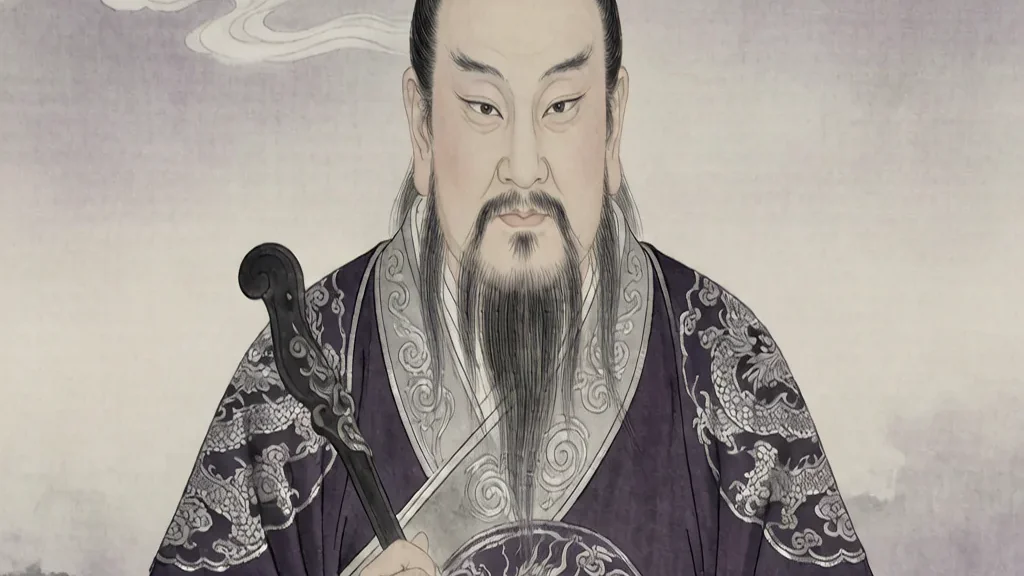
Tai Sui (太岁), often translated as the "Grand Duke Jupiter" or the "Yearly God," is one of the most widely respected yet feared deities in Chinese popular religion. Each year is governed by a specific Tai Sui spirit, and traditional belief holds that offending the reigning Tai Sui brings misfortune, while honoring him invites protection and smooth fortune. Far from being a single fixed figure, Tai Sui is better understood as a rotating office filled by a different celestial commissioner every year, woven into the Chinese calendar, astrology, and the everyday etiquette of avoiding inauspicious directions.
Origins in Astronomy and the Jupiter Cycle
The roots of Tai Sui lie in early Chinese astronomy. Ancient sky-watchers noticed that Jupiter, called Suìxīng (岁星), completes its circuit through the heavens in roughly twelve years. Because twelve is a convenient number, they divided the ecliptic into twelve stations and used Jupiter's position as a cosmic clock for counting years. This gave rise to the twelve-year cycle still familiar today in the zodiac.
However, Jupiter moves eastward, while the popular Count-of-Years (岁阴) convention ran westward. To reconcile the two, astronomers imagined a shadow counterpart moving in the opposite direction. This invisible partner was named Tai Sui — the "Grand Year" — and it became the true ruler of the year in folk imagination, even though it was originally a bookkeeping device.
The Twelve and Sixty Tai Sui Generals
In the popular layering of the belief, Tai Sui is not one god but a hierarchy. There is a supreme Tai Sui, and beneath him stand the sixty Tai Sui generals (太岁将军), each presiding over one year in the sixty-year sexagenary cycle formed by combining ten heavenly stems and twelve earthly branches. Every person is thought to be born under a particular general, who becomes their personal patron for life.
Each general has a name drawn from historical or legendary figures — scholars, officials, and martial heroes remembered for virtue or bravery. Devotees often learn which general rules their birth year and which rules the current year, since the relationship between the two determines whether one is said to be "offending Tai Sui" (犯太岁).
Fan Tai Sui: Offending the Year God
The central practical concern of Tai Sui worship is avoidance. A person "offends Tai Sui" in several recognized ways, most commonly by sharing the earthly branch of the year (the animal sign of the year), by being its direct opposite (the clash), or by standing in certain related positions. In such years, tradition advises caution: avoid major life changes like moving house, starting large ventures, or undertaking risky travel.
Offending Tai Sui is not necessarily a curse. It is understood more as a period of heightened instability that calls for respect and care. Many believers counter it through ritual: praying at a Tai Sui hall, wearing a red string or protective talisman, and making offerings early in the lunar year to ask for safe passage.
Temples and the Tai Sui Hall
Most larger Chinese temples contain a side hall devoted to the sixty Tai Sui generals, usually arranged in a grid with the reigning year's general highlighted. Worshippers locate their own general by birth year and the current one by the calendar year, then bow, present incense, and sometimes pay a small fee to have their name written on a placard.
Famous centers of Tai Sui devotion include temples in Hong Kong, Taiwan, Southeast Asia, and southern China, where the lunar new year sees long lines of people seeking to "pacify Tai Sui" (安太岁). The practice is especially popular in urban areas, where anxiety about career and health makes the promise of annual protection appealing.
Rituals of Pacification and Thanksgiving
The standard rite begins around the first days of the lunar year. A devotee states name, birth date, and address, then offers incense, fruit, and a "peace lamp" (太岁灯) kept burning for the year. At year's end, a "thank-you rite" (谢太岁) returns the favor, dismantling the placard and expressing gratitude for safe keeping.
These rites are notably transactional yet gentle. They ask not for wealth but for stability — for the ordinary luck of not falling ill, not crashing a business, not burying a relative. In this sense Tai Sui devotion reflects a very practical, risk-averse strand of Chinese religiosity.
Tai Sui in Daily Superstition
Beyond formal worship, Tai Sui shapes everyday caution. Building manuals and almanacs (通书 / 黄历) mark the year's "Tai Sui direction," and many avoid digging, renovating, or placing the main door on that side of a property. Moving against the Tai Sui direction is said to "stir up" the god.
This spatial taboo blends with Feng Shui. A house whose orientation clashes with the year's Tai Sui may be considered temporarily inauspicious, prompting owners to delay construction or hang protective charms. The logic is preventive rather than punitive: the aim is harmony with the year's ruling force.
Connection to the Almanac and Destiny
The Chinese almanac, consulted for everything from weddings to haircuts, is built on the same stem-branch system that defines Tai Sui. Days, months, and years each carry a branch, and the interplay produces labels like "clash day" or "fair day." Tai Sui is the year-level expression of this web of relations.
In destiny calculation (八字 / Four Pillars), the year pillar carries the Tai Sui branch, and fortunetellers weigh how the flowing year interacts with a client's birth chart. A clashing year is read as turbulent; a harmonious one as supportive. Tai Sui thus links folk worship to the technical language of astrology.
Regional Variations and Folk Names
Although the core idea is shared, local names and customs vary. In some regions Tai Sui is called "Sui Jun" (岁君, the Year Lord); in others the sixty generals are honored with elaborate processions. Hokkien and Cantonese communities each maintain their own temple calendars and favored generals.
Interestingly, "Tai Sui" also became a colloquial term for something powerful and not to be provoked — to "touch Tai Sui's head" (太岁头上动土) means to court disaster by offending someone dangerous. The phrase survives in modern Mandarin as a warning against reckless provocation.
Modern Revival and Popular Culture
In recent decades Tai Sui worship has surged again among younger, urban Chinese who may not attend temple regularly but still pay respects at New Year. Mobile apps now list the reigning general and sell digital pacification rites, blending ancient belief with smartphone convenience.
The imagery also appears in films, novels, and games, where Tai Sui generals are recast as warriors or guardians. While commercialized, this keeps the concept alive for a generation more comfortable with screens than incense, ensuring the "Year God" remains a living part of cultural vocabulary.
❓ Frequently Asked Questions
What exactly is Tai Sui?
Tai Sui is the celestial "Year God" believed to rule over each year. It originated from the observation of Jupiter's twelve-year cycle and later became a rotating office filled by different generals in the sixty-year calendar.
Why are people afraid of offending Tai Sui?
Tradition holds that clashing with the year's ruling force brings instability and misfortune. The concern is preventive: devotees take care and perform rites to ensure a safe, smooth year rather than to escape a fixed curse.
How do you know if you offend Tai Sui?
You offend Tai Sui mainly if your zodiac animal matches the year's animal, its opposite, or certain related branches. Almanacs and temples list who is affected each lunar year.
What is the pacification rite?
The pacification rite (an tai sui) involves stating your name and birth data, offering incense and a peace lamp, and sometimes having a plaque hung in the temple for the year, followed by a thanksgiving rite at year's end.
Are there really sixty Tai Sui generals?
Yes. The sixty generals correspond to the sixty combinations of ten heavenly stems and twelve earthly branches, each presiding over one year of the full sexagenary cycle.
Is Tai Sui worship still practiced today?
Very much so. Temples across China, Taiwan, Hong Kong, and Southeast Asia hold New Year pacification rites, and the belief has spread to apps and popular media, keeping it relevant for new generations.