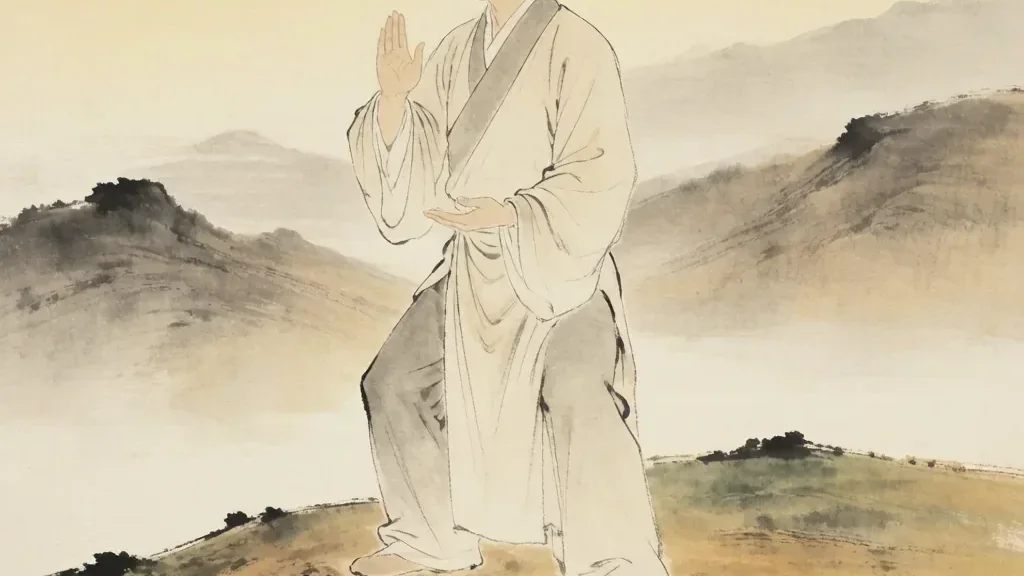
Jinshizhao, literally "Golden Shield Claw" or often rendered as "Golden Bell Iron Claw," is a specialized Chinese martial method centered on developing an extraordinarily strong, hardened claw hand capable of gripping, tearing, and striking with the fingertips. Associated with the eagle-claw and northern "iron" conditioning traditions, it combines tendon-strengthening exercises, grip training, and the "iron shirt" idea of toughening the body. Though sometimes treated as a subset of eagle-claw boxing, Jinshizhao is distinctive for its near-obsessive focus on the claw as both weapon and tool of control.
Name and Meaning
The name joins "jin shi" (golden shield/iron) and "zhao" (claw). "Jin" and "tie" imagery in Chinese martial arts denotes methods that harden the body like metal, while "zhao" is the grasping claw used by predatory birds.
"Zhao" specifically means a beast's or bird's claw, here adapted to the human hand trained to mimic a raptor's grip. The "golden shield" part hints at defensive toughening, the ability to receive blows as well as give them.
Thus the name promises a two-sided art: an offensive claw of crushing grip and a defensive body hardened through conditioning—a compact summary of the method's goals.
Lineage and Eagle-Claw Connection
Jinshizhao is closely related to Ying Zhao Pai (Eagle-Claw Style), the northern art attributed to the Song-dynasty general Yue Fei in legend. Both emphasize the hooked, gripping hand and tendon power over muscular bulk.
In many schools the claw- conditioning of Jinshizhao is taught as a specialization within or alongside eagle-claw boxing, refining the grip to a weapon-grade level. The distinction is one of emphasis rather than separate lineage.
Some traditions also link it to "iron shirt" (ti bu shan) practice, the internal-external conditioning that protects the torso, suggesting Jinshizhao sat at the intersection of gripping skill and body hardening.
The Claw Hand Shape
The hand forms a tight hook: fingers curled, the fingertips pressing toward the palm, and the thumb locked to reinforce the grip. Unlike the relaxed dragon claw, this is a fully engaged, vice-like shape.
The striking surface is the fingertips and the underside of the curled fingers, used to jab pressure points, claw the throat or face, and seize tendons and joints. Precision matters because the contact area is small.
Training holds the claw shape under load—squeezing balls, gripping posts—until the hand can maintain it without fatigue, so that in combat the grip is automatic and devastating.
Grip and Seizing Training
The heart of Jinshizhao is "na" (seizing): capturing an opponent's wrist, finger, or limb and controlling it through grip strength. A superior claw can immobilize a larger person by attacking small joints.
Drills include gripping a partner's forearm and applying rotational pressure to the tendons, and "finger push-ups" or squeezing implements to build the crushing force. Consistency over years produces the attribute.
Because the claw targets joints and soft tissue, it is effective regardless of the opponent's size, embodying the principle that a small, precise tool can dominate a large structure.
Striking with the Claw
Beyond grappling, the claw strikes like a multi-point spear: the fingertips jab eyes, throat, and nerve clusters. The "eagle pecks" motion is a fast, repeated clawing attack meant to overwhelm the opponent's guard.
Some versions train "iron finger" thrusts into sand or bean bags to harden the tips, so the strikes both penetrate and resist injury. This hardening parallels the knuckle conditioning of other external styles.
The combination of seizing and striking makes the claw a complete close-range tool: grab to control, then claw to damage, often in a single fluid motion that leaves little room for the opponent to respond.
Body Conditioning (Iron Shield)
The "golden shield" side uses percussion and breath training to toughen the torso and limbs, akin to iron-shirt methods. The stylist learns to tighten the body and direct breath to absorb impacts.
Conditioning is gradual: partners lightly strike the forearms and torso, building tolerance and the habit of "closing" the body on contact. Over time the tissue and mindset adapt to receiving force.
This defensive hardening complements the offensive claw, giving a rounded method: hard to hurt, dangerous to be grabbed by. The name's promise of shield and claw is thus fulfilled in training.
Forms and Practice
Jinshizhao forms are concise, emphasizing repetitive claw extensions, seizing movements, and low stances that support grip application. The aesthetic is less flowing than, say, dragon style, and more about functional repetition.
Two-person "na" drills are central: one partner offers a limb, the other applies the claw and a controlling twist, then they swap. These build the timing and sensitivity needed to seize a moving target.
As a specialization, the forms are often shorter than full animal styles, reflecting the art's focus on a single, perfected tool rather than a broad technical vocabulary.
Legacy and Modern Relevance
Today Jinshizhao survives within eagle-claw schools and among enthusiasts of traditional grip and conditioning methods. Its demanding, repetitive nature limits its popularity but ensures depth for those who commit.
The claw method also informs modern grab-and-control self-defense thinking, where seizing a wrist or finger to redirect an attacker remains sound regardless of era. Its principles are timeless even if the trappings are old.
For practitioners, Jinshizhao offers a lesson in specialization: rather than knowing everything superficially, master one tool—the claw—so completely that it becomes decisive. In a world of generalists, the perfected claw still bites.
Training Progression for Students
A typical Jinshizhao path begins with basic grip conditioning—squeezing soft balls, then progressively harder objects—before any application, because the claw must be reliable under fatigue before it can be trusted in drills.
Only after the hand can hold the hooked shape comfortably does the student learn "na" seizing on a stationary partner, then on a moving one, and finally combine seizing with the beak strike. Each stage is mastered before the next, reflecting the art's specialization philosophy.
Body hardening is introduced gradually and never forced; teachers watch for signs of strain and adjust, since damaged tissue would undermine the very tool being built. The slow, staged progression is why few reach high levels, but those who do possess a genuinely formidable skill.
❓ Frequently Asked Questions
What is Jinshizhao?
It is a specialized Chinese method centered on a hardened, gripping claw hand for seizing and striking, combined with iron-shirt-style body conditioning for defense.
How is it related to Eagle-Claw?
It is closely tied to Ying Zhao Pai eagle-claw boxing, often taught as a claw-specialization within or alongside that northern bird-style art.
What does the claw do?
It seizes wrists and joints to control, and strikes pressure points with the fingertips, functioning as both a grab and a multi-point weapon at close range.
Is the body conditioning real?
The "golden shield" side uses gradual percussion and breath training similar to iron-shirt methods to toughen the torso and build impact tolerance.
Why focus so much on one tool?
The art's philosophy is specialization: mastering the claw completely makes it decisive, letting a smaller person dominate a larger structure through precise grip.
Is it still practiced?
Yes, within eagle-claw schools and among traditional conditioning enthusiasts, though its repetitive demands keep it a niche rather than mainstream art.