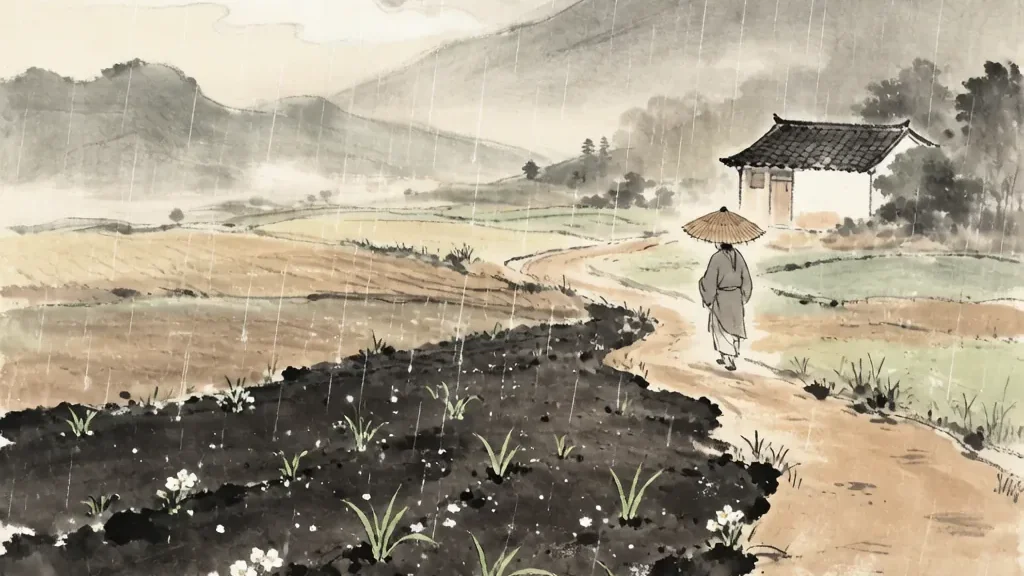
Yushui, or "Rain Water" (雨水), is the second solar term in the traditional Chinese calendar, usually arriving around February 18 or 19. The name means exactly what it says: after the freeze of early spring, precipitation begins to fall more as rain than snow as temperatures rise. When the sun reaches the ecliptic longitude of 330 degrees, the thaw deepens, ice breaks up, and moisture returns to the soil—vital for the crops soon to be sown. Yushui follows Lichun, the formal beginning of spring, and confirms that the season is truly turning from winter's dormancy toward growth. For farmers it was a signal to prepare seedbeds and nurse the waking earth, while in custom it was a time to honor parents and wish for gentle, timely rains that would bless the year's harvest. It is the quiet assurance that winter's hold is breaking at last.
Name and Calendar Position
Yushui is the second term, following Lichun (Beginning of Spring) and preceding Jingzhe (Awakening of Insects). It typically falls around February 18 or 19, at 330° of ecliptic longitude.
The name marks a clear meteorological shift: as average temperatures climb above freezing, precipitation that fell as snow in deep winter now increasingly falls as rain. It is the calendar's acknowledgment that water has changed form.
Thaw and Rising Moisture
At Yushui the frozen ground begins to soften, rivers swell with meltwater, and the air feels damper. Though cold snaps could still return, the overall trend was toward warmth and wetness.
This moisture was precious. After months of dry, frozen soil, the returning water revived microbes and seeds and prepared the land for planting. The term thus carried a quiet promise of fertility.
Farming Preparations
With the thaw, farmers started mending tools, selecting seed, and preparing beds. In the south, early vegetables and the greening wheat needed attention, while orchards were pruned before full sap flow.
Proverbs tied the term's rain to the year's fortune: timely Yushui rains were welcomed as a good omen for germination. The term was less about active sowing than about readying the earth and self for the work ahead.
The Custom of "Returning to the Mother's Home"
A distinctive Yushui custom involved married daughters visiting their parents, sometimes bringing gifts like canned meat or a walking stick for the father-in-law, expressing filial care at the year's turn.
This practice highlighted the term's gentle, relational side. Amid the agricultural rhythm, it carved space for family bonds, reminding communities that the seasonal cycle was also a social one.
Weather Lore and "Spring Drought"
Because Yushui could still be dry in some years, folk sayings warned of "spring drought" and the need for rain. "If Yushui is dry, the fields will cry" captured the anxiety of insufficient moisture.
Conversely, steady light rains were celebrated. Observers watched the term's weather as a clue to the spring ahead, blending hope and caution in their reading of the sky. A dry term was mourned and a wet one celebrated, for both seemed to speak to the year's coming fortune.
Nature's Signs
The classical three pentads of Yushui describe that jackrabbits (or in some versions, otters) appear, the wild geese fly north, and grass and trees begin to bud—early signs of life returning to a waking landscape.
These markers—migrating birds, swelling buds, softened earth—made the term's meaning visible. They told farmers and households that winter's grip had loosened and growth was imminent.
Health and Seasonal Care
Traditional health advice for Yushui noted the lingering chill and rising damp, recommending warmth and the "cover in spring" (春捂) principle of not shedding winter clothes too quickly.
Diets favored mild, nourishing foods to support the spleen as moisture increased. The term's regimen balanced the urge to greet spring with the need to protect against relapse cold.
Literary and Cultural Echoes
Poets wrote of Yushui as a time of soft rains and renewed hope, the "rain that knows the season" imagery later famous in Du Fu's lines about spring precipitation. The term evoked gentle awakening.
In painting, misty rains over budding willows became a classic Yushui scene, capturing the tender, dripping freshness of early spring. The term inspired some of the most serene images in Chinese seasonal art.
Yushui in Modern Life
Today Yushui appears in almanacs and weather apps as a marker of the season's turn from snow to rain. Seasonal articles often quote its moisture theme alongside spring-health tips.
For city dwellers, noticing Yushui is a way to welcome the year's first soft rains and to remember the agricultural logic once woven into daily life. It remains a quiet, hopeful hinge between winter and the work of spring.
Yushui in Poetry and Proverb
Yushui's soft rains made it a favorite subject of poets, who praised precipitation that "knows the season" and falls quietly at night to nourish the waking world. Such lines fixed the term in the literary imagination as a symbol of gentle, timely grace.
Proverbs likewise treasured the term's rain, linking it to the year's abundance and warning against its absence. The contrast between a nourishing drizzle and a feared spring drought gave the term an emotional charge beyond mere weather.
Together, poem and saying show how Yushui spoke to both beauty and survival. The same rain that inspired verse also decided whether fields would thrive, uniting aesthetic feeling and practical need in a single, hopeful moment of the turning year.
The term's lesson, then, is gratitude for the ordinary. Rain that might seem a mere inconvenience is, at Yushui, a gift—the first soft water that wakes the soil and promises the harvest to come. Noticing it reconnects modern life, however briefly, to the dependence on weather that once shaped every meal and every season.
❓ Frequently Asked Questions
When does Yushui occur?
Yushui typically falls around February 18 or 19, when the sun reaches 330° of ecliptic longitude.
What does Yushui mean?
It means "Rain Water," marking the shift from snow to rain as early spring temperatures rise above freezing.
What farming happens at Yushui?
Farmers prepare seedbeds, select seed, and tend waking crops, readying the earth for the planting season.
What customs are linked to Yushui?
A notable one is married daughters visiting their parents to show filial care at the year's turn.
Why is the term important for crops?
Its returning moisture revives the soil after winter, a vital precondition for successful germination.
What comes before and after Yushui?
It follows Lichun (Beginning of Spring) and precedes Jingzhe (Awakening of Insects).