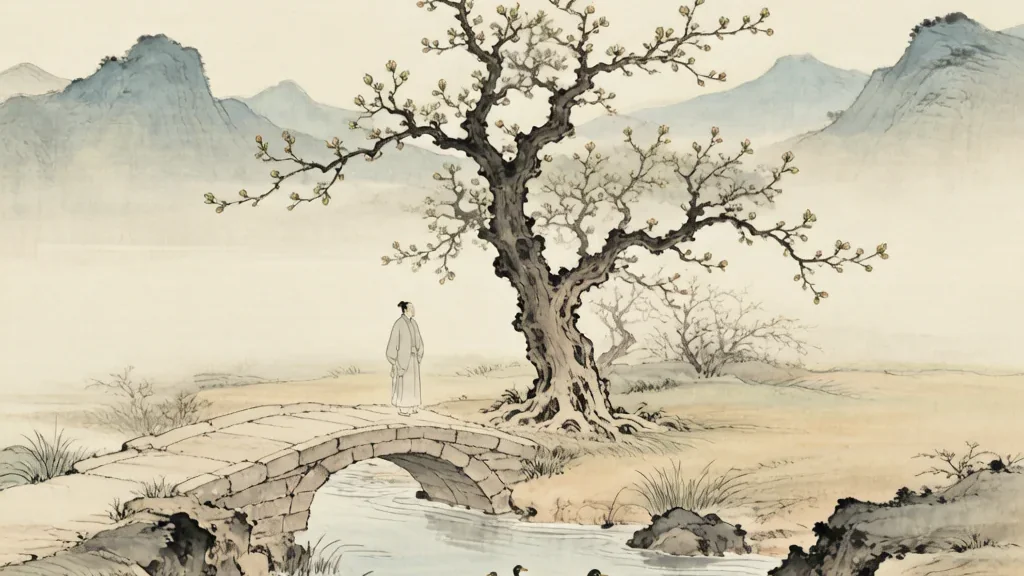
Lìchūn (立春), literally "the beginning of spring," is the first of the twenty-four solar terms that structure the traditional Chinese agricultural calendar. Falling each year around February 4, it marks the moment the sun reaches the celestial longitude of 315° and announces the gradual retreat of winter. More than a meteorological marker, Lìchūn has for over two millennia been a cultural hinge between the cold dormant season and the renewal of growth, shaping imperial rituals, farming schedules, dietary customs, and popular beliefs about luck and health throughout China.
Position in the Twenty-Four Solar Terms
The twenty-four solar terms divide the solar year into segments of roughly fifteen days, each named for a recognizable shift in weather, phenology, or farm work. Lìchūn opens the cycle, sitting before Yǔshuǐ (rain water), Jīngzhé (awakening of insects), and Chūnfēn (spring equinox). Because it begins the year's agricultural rhythm, it was historically treated as a "mini New Year" in many rural communities.
Chinese astronomers fixed the terms by observing the sun's position along the ecliptic. Lìchūn is defined as the point when the sun's apparent longitude reaches 315 degrees. This precision allowed the calendar to stay aligned with the seasons even though the lunar months drift relative to the solar year.
Although the Gregorian date hovers near February 4, the exact instant varies by a day or two year to year. Farmers and almanac-makers relied on the official announcement rather than the calendar page to know when spring had "officially" begun.
Historical Origins and Early Records
References to the solar terms appear in texts from the Warring States and Han periods. The "Monthly Ordinances" (Yuè Lìng) chapters preserved in the Rites of Zhou and the Lüshi Chunqiu already describe seasonal observances that correspond closely to what later became Lìchūn.
By the Han dynasty, the system of twenty-four terms was standardized and incorporated into state astronomy. The term "Lìchūn" itself is attested in these early compilations, where it is tied to the element of wood, the direction east, and the color green or blue-green associated with youthful growth.
Over the centuries the imperial court elaborated Lìchūn into a formal state ceremony. Local magistrates, too, were expected to model proper comportment at the turning of the season, reinforcing the link between cosmic order and good government.
The Eastern Suburb Sacrifice and the Emperor's Role
In imperial China, Lìchūn was one of the great seasonal rites. The emperor, as the ritual intermediary between heaven and earth, would lead a procession to the eastern suburb of the capital to welcome the spring. Eastern orientation matched spring's directional association and symbolized the rising yang energy of the new season.
The ceremony invoked the gods of soil and grain and prayed for a prosperous harvest. Officials wore seasonal colors and performed music and dances prescribed for the spring quarter. The rite publicly demonstrated that the ruler's virtue aligned with the natural cycle.
These observances declined after the fall of the Qing dynasty, but their memory survives in local spring-welcoming customs and in the symbolic figure of the "spring ox" still carried in folk parades.
The Spring Ox and the "Beating the Spring" Ritual
A distinctive feature of Lìchūn was the creation of a "spring ox" (chūn niú), traditionally molded from clay or fashioned from paper and woven straw. The figure represented the soil and the labor of agriculture, and its making was a communal, often officially sponsored event.
On or around Lìchūn, officials and citizens participated in "beating the spring" (dǎ chūn), striking the ox with colored whips. This act was understood to rouse the land from its winter sleep and to encourage timely plowing. Small replicas were distributed as auspicious tokens.
In some regions a "spring official" or "spring child" figure accompanied the ox, dressed to evoke the coming season. The imagery spread into New Year prints and decorative papercuts that families pasted on doors and windows.
Phenology: The Three Pentads of Lìchūn
Traditional naturalists divided each solar term into three "pentads" (hòu) of about five days, each with a characteristic sign. For Lìchūn the classic pentads are: the east wind thawes the ice; hibernating creatures stir beneath the ground; and fish rise to the surface beneath thinning ice.
These observations reflect a close, poetic attention to the landscape. The "east wind" carries warmth; the slow waking of insects and fish marks the return of activity below the frozen surface. Such lore helped farmers read their environment.
While modern climatology shows regional variation, the pentad descriptions remain a charming record of how earlier generations tracked seasonal change through everyday experience rather than instruments.
Farming Activities and the Agricultural Calendar
For cultivators, Lìchūn was the signal to prepare fields, repair tools, and select seeds, even if the ground remained cold. Proverbs warned that "a year's plan begins in spring," stressing that early preparation determined the autumn harvest.
In southern China, where the climate is milder, early rice nurseries and the first ploughing could begin soon after Lìchūn. In the north, the term was more symbolic, with actual sowing still weeks away.
The term also governed the timing of fertilizers and irrigation in many local traditions. Agricultural almanacs (tōngshū) gave day-by-day guidance keyed to Lìchūn and the terms that followed.
Food Customs and Seasonal Eating
Lìchūn foods emphasize fresh, green, and "spring" qualities. A widely known custom is eating "spring pancakes" (chūn bǐng) wrapped around fresh shoots and herbs, a dish sometimes called "biting the spring" (yǎo chūn) because one literally takes the season into the mouth.
Other regions favor spring rolls or filled dumplings, while some households prepare dishes with chives, Chinese toon shoots, or bean sprouts to echo renewal. The act of sharing these foods reinforced family and neighborhood bonds at the season's turn.
Such eating was also mildly medicinal in intent: after a winter of stored, warming foods, light green vegetables were thought to clear the system and harmonize the body with the rising yang of spring.
Health and Yangsheng in Early Spring
Chinese health traditions teach that one should live in harmony with the seasons. At Lìchūn, the advice is to rise early, walk outside, and let the body's energy follow the expanding daylight rather than the contracted rest of winter.
The Huangdi Neijing, a foundational medical classic, counsels in its spring chapter that people should "give life and never kill, bestow and never take, reward and never punish," aligning personal conduct with the generative spirit of the season.
Practically, early spring is a time of fragile transition: cold can return, and the body is adjusting. Light exercise, layered clothing, and moderate diet are commonly recommended rather than sudden exertion or heavy foods.
Folk Beliefs, Omens, and Daily Prohibitions
Because Lìchūn was a threshold, people watched for omens. Favorable weather—gentle rain, soft wind—was read as a sign of abundance, while harsh cold or storm suggested a difficult year ahead.
Certain prohibitions attached to the day: quarreling, scolding children, or undertaking harsh punishments were discouraged, lest one set a discordant tone for the months to come. The first day of spring was to be met with peace and order.
In some localities women were said to avoid the kitchen or to avoid using the needle on Lìchūn, reflecting a broader idea that the season's delicate new energy should not be disturbed by sharp or violent acts.
Lìchūn in Poetry and the Arts
Chinese poets from the Tang onward returned again and again to the first breath of spring. Lìchūn supplied imagery of melting ice, returning swallows, and the first green at the river's edge, often as a frame for reflections on renewal, exile, or the passage of time.
Painters depicted the season through bare branches budding, fishermen on thawing streams, and households welcoming the east wind. The "spring ox" and "spring child" also became stock motifs in popular New Year woodblock prints.
Even today, Lìchūn appears in calendars, calligraphy posters, and television programs that greet the season, showing how an ancient astronomical term remains woven into contemporary cultural life.
❓ Frequently Asked Questions
What is Lìchūn?
Lìchūn is the first of the twenty-four traditional Chinese solar terms, marking the astronomical beginning of spring when the sun reaches 315° of celestial longitude, usually around February 4.
How is Lìchūn different from the Chinese New Year?
Chinese New Year follows the lunar calendar and moves across January and February, while Lìchūn is fixed by the sun's position and marks the seasonal turn. The two often fall close together but are independent systems.
Why was a spring ox used?
The spring ox symbolized the soil and farm labor. Officials and communities made the figure and "beat" it to encourage plowing and a good harvest, blending ritual, agriculture, and community celebration.
What foods are eaten at Lìchūn?
Common foods include spring pancakes, spring rolls, and dishes of fresh green shoots such as chives or toon, an custom known as "biting the spring" that welcomes the season through taste.
What did people traditionally avoid doing on Lìchūn?
Quarreling, scolding, and harsh punishments were discouraged so the new season would begin in peace. Some localities also avoided needlework, treating the young spring energy as fragile.
Is Lìchūn still observed today?
Yes. Though the imperial rites ended long ago, Lìchūn remains in almanacs, seasonal foods, folk parades, and media greetings, keeping an ancient astronomical term alive in modern culture.