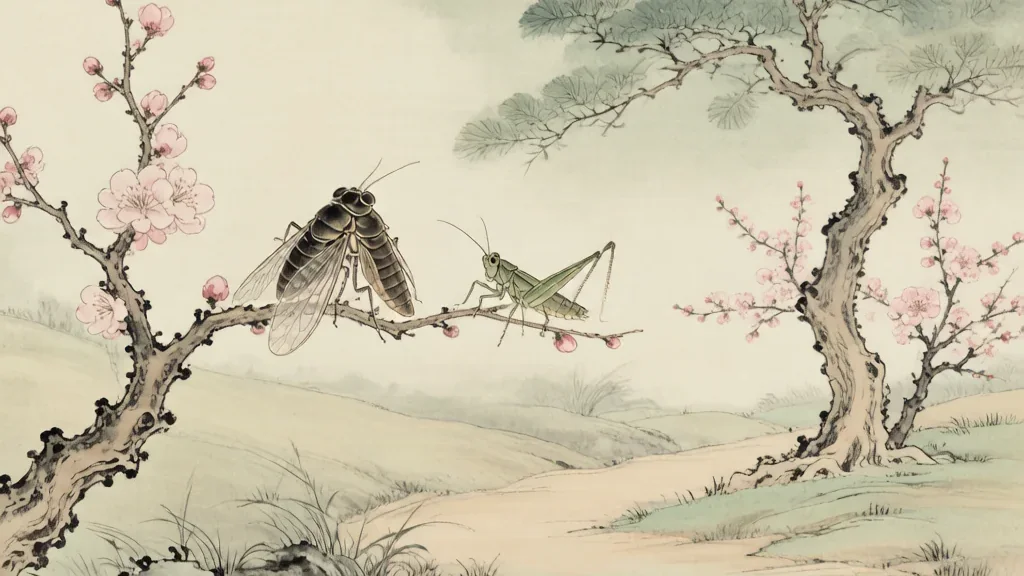
Jingzhe, or the "Awakening of Insects" (惊蛰), is the third solar term in the traditional Chinese calendar, usually arriving around March 5 or 6. The name combines jing (to startle, awaken) and zhe (hidden creatures, insects), referring to the belief that spring thunder rouses hibernating animals from their winter sleep. When the sun reaches the ecliptic longitude of 345 degrees, temperatures rise, the soil thaws, and the first thunder of the year is often heard in the south. Jingzhe thus announced that winter was truly over and the busiest spring farming was beginning. It was a term charged with energy and omen: the stirring of life below ground mirrored the stirring of human work above it, and the season's first storms were read as signals for planting. It is a term that turns the abstract turning of the year into a sudden, audible event.
Name and Calendar Position
Jingzhe is the third term, following Yushui (Rain Water) and preceding Chunfen (Spring Equinox). It typically falls around March 5 or 6, with the sun at 345° of ecliptic longitude.
Historically the term was once called "Qizhe" (启蛰, "opening of hibernating creatures") and was renamed during the Tang dynasty to avoid a taboo on an emperor's name. The change shows how state custom could reshape even the calendar's vocabulary.
The Thunder That Wakes the Earth
The central image of Jingzhe is thunder. In Chinese folk understanding, the season's first thunderclap was the sound that startled dormant insects and creatures from their burrows, ending winter's stillness.
Of course, insects do not literally hear thunder; the term poetically marks the warming that genuinely ends hibernation. The metaphor captured a real ecological shift—soil temperatures rising, sap flowing, and cold-blooded life becoming active again.
Farming Stirs to Life
Jingzhe was a green light for spring fieldwork. With the ground thawing, farmers plowed, sowed early crops, and prepared rice nurseries. The term's arrival meant the slack of winter was decisively over.
Proverbs urged promptness: "At Jingzhe, the plow does not rest." Delays risked missing the narrow window before spring rains and heat. The term thus carried both invitation and gentle pressure to begin the year's labor.
Pest Control Customs
Because awakening insects included crop pests, Jingzhe inspired protective customs. People burned herbs or incense at doorways to drive away bugs, and some ate pears, believing the fruit soothed the dry throat of the season.
In places, a custom of "beating the insects" involved patting tools or walls to scare pests away. These acts blended practical pest management with symbolic warding, expressing human agency against the season's hidden threats.
Weather Lore and the First Thunder
The direction and timing of the first thunder were read as omens. "If thunder comes before Jingzhe, there will be misfortune in the clouds" ran one saying, reflecting anxiety when nature seemed out of step.
Farmers also watched whether the term brought rain; timely moisture promised good germination. Such lore turned the abstract term into a practical forecast tool grounded in long observation. It also gave villagers a shared grammar for reading an unpredictable sky together.
Nature's Signs
The classical three pentads of Jingzhe describe the peach blossom opening, the oriole singing, and hawks turning into cuckoos—again a mix of real observation and symbolic transformation beloved of early naturalists.
These signs painted spring's arrival in color and sound: pink petals, bright birdsong, and the busy air of awakening. They helped households and farmers confirm that the season had truly turned.
Health and Diet
Traditional health guidance for Jingzhe noted the season's dryness and rising "liver fire," recommending moistening foods like pears and light meals. The shift from cold to warm asked the body to adjust.
Moderate activity was encouraged as people emerged from winter inertia. The term's regimen supported the broader spring theme of renewal—awakening the body as nature awakens the earth.
Literary and Cultural Meaning
Poets evoked Jingzhe with images of sudden rain, startled creatures, and the exhilaration of spring's force. The term symbolized awakening in general—of nature, of ambition, of feeling.
In popular culture, the "startled" creatures became whimsical motifs in calendar art. The term's drama—a single thunderclap breaking winter's silence—made it a favorite emblem of renewal's suddenness.
Jingzhe in Modern Life
Today Jingzhe appears in almanacs and seasonal media, often with notes about agriculture and the first thunder. Nature apps may flag it as a time when local wildlife becomes active.
Though few burn herbs at their doors now, the term remains a poetic marker of spring's awakening. It invites city dwellers to notice the first blossoms, birdsong, and storms as signs that the year has truly begun.
Jingzhe in Folk Belief
Beyond farming, Jingzhe carried a layer of popular belief about the hidden world. The idea that thunder woke sleeping creatures shaded into notions of spirits and omens, and the term was sometimes linked to rituals for protection and good fortune as the active season resumed.
In some localities, the first thunder prompted households to perform small rites—closing doors against misfortune or offering a simple prayer for a safe, productive year. These acts expressed the awe people felt at nature's sudden reawakening and their desire to align with it.
Such beliefs show Jingzhe as more than agronomy: it was a moment when the boundary between dormant and active, unseen and seen, seemed to thin. The term invited both labor and reverence, a recognition that the forces stirring the earth were larger than human planning.
Modern science explains the awakening differently, through warming soil and lengthening days rather than thunder's command, yet the poetic image endures. Jingzhe remains a lovely example of how observation and imagination met in the traditional calendar, turning a measurable shift in temperature into a story of the whole world shaking off winter's sleep.
❓ Frequently Asked Questions
When does Jingzhe occur?
Jingzhe typically falls around March 5 or 6, when the sun reaches 345° of ecliptic longitude.
Why is it called Awakening of Insects?
Folk belief held that the first spring thunder startles hibernating creatures awake, marking winter's end.
What farming begins at Jingzhe?
Spring plowing and sowing intensify, as the thawing ground opens the busiest planting window of the year.
What foods are associated with Jingzhe?
Pears are traditional, eaten to moisten the throat against the season's dryness; light meals are also advised.
Was the term always called Jingzhe?
No. It was earlier named Qizhe ("opening of hibernation") and renamed in the Tang dynasty to avoid a naming taboo.
What comes before and after Jingzhe?
It follows Yushui (Rain Water) and precedes Chunfen (Spring Equinox).