More About This Solar Term
This solar term has been observed in Chinese culture for thousands of years. Ancient Chinese farmers relied on these seasonal markers to plan their agricultural activities with remarkable precision. The 24 solar terms, originating in the Yellow River basin during the Zhou Dynasty (1046–256 BCE), represent one of humanity's earliest systematic approaches to understanding seasonal change.
In 2016, UNESCO recognized the Twenty-Four Solar Terms as an Intangible Cultural Heritage of Humanity, acknowledging their enduring importance in Chinese cultural identity and agricultural wisdom. Each solar term reflects a specific astronomical event or natural phenomenon — the sun's position at 15° intervals along the ecliptic — dividing the year into 24 equal segments of approximately 15 days each.
Traditional Chinese medicine closely aligns health practices with the solar terms. During each term, specific foods, exercises, and lifestyle adjustments are recommended to maintain harmony with nature. This philosophy, known as "yang sheng" (养生), or the art of nurturing life, remains widely practiced across China today. Seasonal ingredients are chosen not just for flavor but for their perceived medicinal properties — warming foods in winter, cooling foods in summer.
In literature and art, the solar terms have inspired countless poems, paintings, and musical compositions throughout Chinese history. Tang Dynasty poets like Du Fu and Li Bai frequently wove seasonal imagery into their verses, using the specific characteristics of each solar term to evoke mood and meaning. The famous Song Dynasty scroll painting "Along the River During the Qingming Festival" (清明上河图) takes its very name from one of the 24 solar terms — Qingming — capturing the vibrant life of a Chinese city during this spring moment.
Today, the solar terms continue to guide daily life in China. Farmers still consult the traditional calendar for planting and harvesting. Families observe customs passed down through generations — eating spring pancakes at Lichun (Start of Spring), honoring ancestors at Qingming (Clear and Bright), and gathering for family feasts at Dongzhi (Winter Solstice). Schools teach children about the solar terms, ensuring this ancient knowledge system remains alive for future generations. Weather forecasts on Chinese television often reference the current solar term, connecting modern meteorology with traditional wisdom.
The Beginning of Summer (立夏, Lìxià) arrives as the seventh solar term in the Chinese calendar, typically falling between May 5th and 7th. The character 立 (lì) means "to establish" or "to begin," while 夏 (xià) means "summer" — together declaring that the season of heat and vigorous growth has officially arrived. For the ancient agricultural civilization of China, this transition from spring to summer was a moment of profound significance, marking the period when the year's crops would make their decisive push toward maturity under the strengthening sun.
When the sun reaches 45 degrees of celestial longitude, Lixia begins, and the natural world undergoes a visible transformation. Spring's tender greens deepen into summer's richer hues. The chirping of insects grows louder, frogs begin their evening choruses in flooded rice paddies, and the air carries the first hints of the heat that will dominate the months ahead. The ancient text "The Monthly Ordinances" (月令) records the phenological signs of Lixia: crickets begin to chirp in the first pentad, earthworms emerge from the warming soil in the second, and the climbing vine known as 王瓜 (wáng guā) sends out its vigorous shoots in the third — each sign confirming summer's unstoppable advance.
The Weighing Custom: Measuring Summer's Blessings
Perhaps the most charming and distinctive Lixia custom is the tradition of 称人 (chēng rén), literally "weighing people." On the day of Lixia, communities would set up large steelyard scales in public spaces, and everyone — from the youngest infants to the oldest grandparents — would take turns sitting in a basket or chair suspended from the scale beam while their weight was announced to the gathered crowd. This practice, which dates back at least to the Three Kingdoms period, was far more than a simple health check; it was a ritual of blessing and community celebration.
The weighing ceremony followed precise protocols rich with symbolic meaning. The person conducting the weighing would chant auspicious phrases as the scale beam was adjusted, declaring blessings for the person being weighed. For children, the chants might wish for healthy growth and protection from summer illnesses. For the elderly, the blessings invoked longevity and continued vigor. For young adults, the words promised prosperity and success. After the weighing, families would often share a festive meal, with the recorded weights serving as a baseline to measure against at the next year's Lixia — a gain in weight was considered a sign of a fortunate, healthy year.
The origins of the weighing custom are intertwined with a famous story from the Three Kingdoms era. According to legend, the warlord Liu Bei entrusted his son, Liu Adou, to the care of his general Zhao Yun, who needed to prove that the child had been well cared for during the year. Zhao Yun devised the public weighing ceremony as a transparent demonstration of the child's healthy growth, and the custom spread from this origin story throughout Chinese culture. While historians debate the tale's accuracy, the practice it inspired has endured for nearly two thousand years, a testament to the Chinese cultural genius for transforming practical acts into meaningful rituals.
Lixia Eggs: Symbols of Strength and Vitality
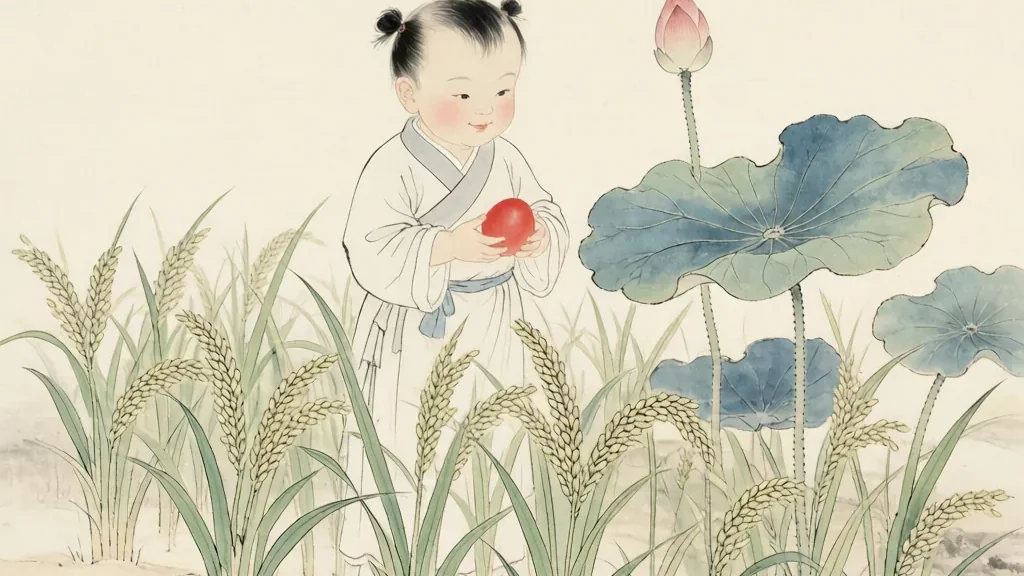
Eggs occupy a central place in Lixia culinary traditions, reflecting the ancient belief that the oval shape symbolizes completeness and the rich nutrition within provides strength for the demanding summer ahead. The most widespread practice is eating 立夏蛋 (lìxià dàn) — Lixia eggs — which are typically hard-boiled, often with tea leaves, star anise, and soy sauce to create a savory, aromatic snack. Families prepare large batches of these eggs on Lixia morning, and children in particular are encouraged to eat them for the energy and protein they provide during the season of rapid growth.
The tradition of eating Lixia eggs carries layers of folk belief and practical wisdom. In traditional Chinese medicine, eggs are considered a perfectly balanced food — neither too hot nor too cold in nature — making them ideal for the transitional period when the body must adapt to summer's rising temperatures. The round shape of the egg also symbolizes wholeness and the cyclical nature of the seasons. In some regions, parents would place a cooked egg in a small, colorful mesh bag and hang it around their child's neck, both as a portable snack and as a protective amulet against the "summer fatigue" (疰夏, zhù xià) that was believed to afflict children during the hot months.
Complementing the eating of eggs is the delightful game of 斗蛋 (dòu dàn) — egg fighting. Children select their strongest hard-boiled eggs and challenge each other to head-to-head combat, each holding their egg firmly and tapping it against their opponent's. The egg that remains uncracked wins, and its owner is celebrated as the "Egg King" or "Egg Queen" of the day. This game, still played in schools and families across China, transforms the simple act of eating into a joyful communal activity. The cracked eggs are then peeled and eaten, their contents providing the nourishment that the game playfully celebrated. The egg-fighting tradition teaches children about competition, resilience, and the pleasure of seasonal rituals — lessons delivered through laughter rather than lectures.
The Imperial Welcome to Summer
In ancient China, the Beginning of Summer was an occasion for state ceremony and imperial ritual. The emperor, accompanied by his full court, would lead a procession to the southern suburbs of the capital to perform the 迎夏 (yíng xià) ceremony — the formal "welcoming of summer." This ritual, documented in texts dating back to the Zhou Dynasty, reflected the Chinese understanding that the emperor, as the Son of Heaven, was responsible for maintaining harmony between human society and the cosmic order. By ritually greeting each season, the emperor aligned the empire with the fundamental rhythms of the universe.
The welcoming ceremony followed elaborate protocols prescribed in the classical Book of Rites. The emperor and his attendants would wear red robes — the color associated with summer, the south, and the fire element. Sacrifices were offered to the Vermilion Emperor (赤帝), the divine ruler of the summer season, and to the deity Zhurong (祝融), the god of fire. Musicians played compositions in the summer mode of the ancient pentatonic scale, and dancers performed movements symbolizing the vigorous, upward-reaching energy of the season. After the ceremony, the emperor would distribute summer-appropriate clothing and supplies to his officials, marking the official transition of the court's seasonal rhythm.
While the imperial ceremony has long since faded into history, its underlying philosophy continues to influence Chinese seasonal practices. The idea that seasonal transitions require conscious acknowledgment and adjustment — that human life should align with nature's rhythms rather than resist them — remains a cornerstone of Chinese health practices and cultural observances. Modern Chinese families may not sacrifice to the Vermilion Emperor, but they still mark Lixia with special foods, health precautions, and an awareness that the season has turned. This continuity between ancient ritual and modern practice is one of the most remarkable features of Chinese cultural tradition.
Agricultural Awakening and Summer Foods
Lixia arrives at a critical moment in the agricultural calendar. In northern China, winter wheat stands tall in the fields, its heads swelling with developing grain that will be harvested in just over a month. Farmers walk their fields daily during this period, checking for signs of pest damage or disease and ensuring that irrigation channels remain clear. In the rice-growing south, the transplanting of rice seedlings is in full swing, with entire villages mobilized for the labor-intensive work of transferring young plants from nursery beds to the flooded paddies where they will mature. The agricultural proverb "立夏不下,犁耙高挂" (lìxià bù xià, lí pá gāo guà) warns that "if it doesn't rain at Lixia, the plows will hang idle" — a reminder of the season's crucial role in agricultural success.
Lixia cuisine extends well beyond eggs to encompass a variety of seasonal delicacies. Fresh bamboo shoots, at their peak tenderness during this period, feature in dishes from simple stir-fries to elaborate banquet preparations. Cherries and loquats, the first tree fruits of the year, ripen during Lixia and are eagerly consumed as symbols of summer's approaching abundance. In Jiangnan (the region south of the Yangtze River), the tradition of eating "Lixia rice" (立夏饭) brings families together around a dish of rice cooked with fresh peas, bamboo shoots, and cured pork — each ingredient representing an aspect of the season's bounty. Green soybeans (毛豆, máodòu), fresh from the fields, are boiled in their pods and enjoyed as a simple snack that celebrates the season's freshness.
Health Wisdom for Summer's Beginning
Traditional Chinese medicine offers detailed guidance for maintaining health during the Lixia transition. As summer's heat begins to build, the heart — associated with the fire element and the summer season — requires particular attention. Practitioners recommend focusing on "nourishing the heart" (养心, yǎng xīn) through diet and lifestyle. Foods with cooling properties — mung beans, lotus seeds, lily bulb, and bitter melon — help balance the body's rising internal heat. Mildly sour foods support the liver's function during this transitional period, while excessively spicy or greasy foods should be reduced to prevent the accumulation of internal heat and dampness.
The concept of 疰夏 (zhù xià) — summer fatigue or summer sickness — was a serious concern in traditional Chinese health culture, particularly for children and the elderly. This condition, characterized by loss of appetite, lethargy, and weight loss during the hot months, was believed to result from the body's struggle to adapt to summer's demands. Lixia customs like eating eggs and the public weighing ceremony were, in part, preventive measures against zhù xia — the eggs provided concentrated nutrition, while the weighing established a baseline against which summer weight loss could be measured and addressed. The traditional advice to take afternoon rests during summer, to avoid excessive physical exertion in the midday heat, and to maintain emotional calmness all trace back to this awareness of summer's particular health challenges.
As modern China has transformed, Lixia has adapted while maintaining its essential character. Children still play egg-fighting games in schoolyards, families still prepare seasonal dishes with fresh spring ingredients, and the cultural awareness that summer has begun remains embedded in the national consciousness. The ancient wisdom of seasonal living — of eating what the season provides, of adjusting activity levels to the weather, of marking time by nature's rhythms rather than just the calendar — continues to offer relevant guidance in an era of climate-controlled environments and year-round produce availability. Lixia reminds us that, despite all our technology, we remain creatures of the seasons, and our wellbeing depends on acknowledging that fundamental truth.
The Tasting-the-New Custom
A gentle counterpart to Lixia's weighing and egg games is the custom of 'tasting the new,' in which families sample the season's earliest produce to honor the arrival of summer. The 'three new things' typically included cherries, green plums, and the season's new wheat, though the exact trio varied by region. Offering and eating these first fruits was a way to give thanks for the year's initial abundance and to let the body adjust to the lighter, fresher foods of the warm season. In some villages the new grain was first presented at the family altar before anyone tasted it, blending gratitude, seasonal eating, and respect for ancestors into a single quiet rite.
Lixia Proverbs and Summer Farming
Lixia arrives as the fields enter their most active phase, and proverbs captured the urgency. Sayings urged farmers to weed and irrigate without delay, since warm soil and lengthening days now push crops toward rapid growth. Others warned that the transition into summer heat could bring 'summer fatigue,' a sluggishness both plants and people might feel, so the term doubled as a health reminder to rise early, avoid noon sun, and eat lightly. The proverbs tied the calendar directly to the rice, wheat, and vegetable cycles, reminding rural households that Lixia was not a holiday but a signal to work steadily through the long, productive days ahead.
❓ Frequently Asked Questions
📝 Chinese Vocabulary
- 立夏 (lì xià) — Beginning of Summer; the seventh solar term
- 称人 (chēng rén) — "Weighing people"; the traditional Lixia custom of public weighing
- 立夏蛋 (lì xià dàn) — Lixia eggs; hard-boiled eggs eaten for strength and vitality
- 斗蛋 (dòu dàn) — Egg fighting; the children's game of tapping hard-boiled eggs against each other
- 疰夏 (zhù xià) — Summer fatigue; a traditional diagnosis for summer-related lethargy and appetite loss
🎉 Fun Facts
- The Lixia weighing custom dates back to the Three Kingdoms period (220–280 CE), when it was reportedly used to prove that a royal child had been well cared for during a year of guardianship.
- In some regions of China, Lixia is called "People's Summer" and was traditionally considered more important for ordinary people than the astronomical summer solstice.
- The egg-fighting game has a competitive ranking system: the undefeated egg is declared "Egg King" (蛋王, dàn wáng), and its owner enjoys neighborhood fame until the next Lixia.
- Ancient Chinese medical texts specifically warn against sleeping in drafty places during Lixia, as the body's pores are believed to open with summer's warmth, making one vulnerable to "wind invasion."
- Lixia was one of the most important state ceremonies in the ancient agricultural calendar, with the emperor himself performing rites to welcome summer in the southern suburbs.
- The custom of children wearing egg necklaces on Lixia was believed to protect them from summer lethargy and to wish them strength through the hot months ahead.