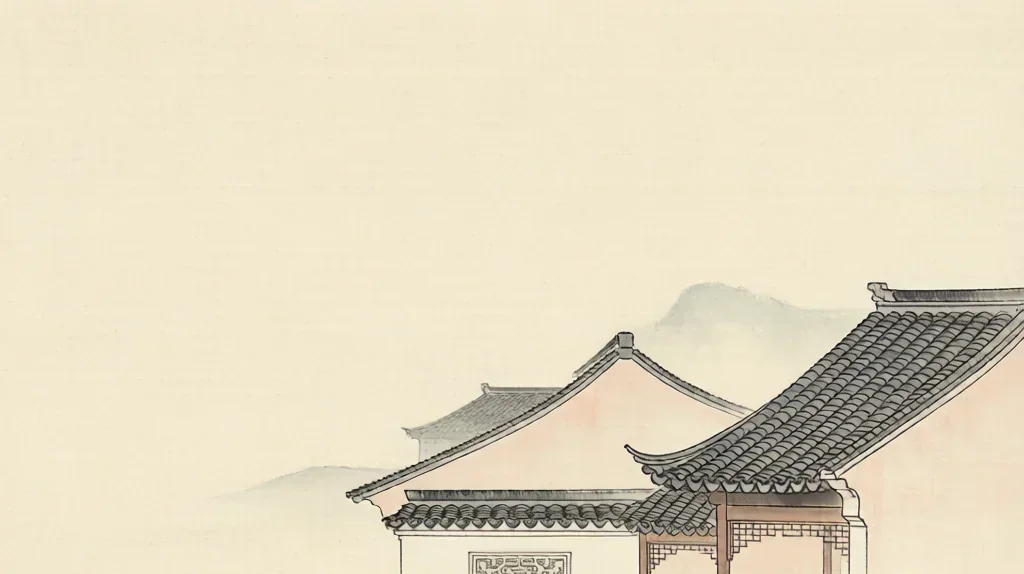
There is an old Chinese saying: "In heaven there is paradise; on earth, Suzhou and Hangzhou" (上有天堂,下有苏杭). For over a thousand years, the city of Suzhou, located in the lush Yangtze River delta west of Shanghai, has been synonymous with refinement, culture, and beauty. But Suzhou's greatest treasures are not its silk or its cuisine — extraordinary as both are — but its classical gardens, a series of masterpieces that represent the pinnacle of Chinese garden design.
A Suzhou garden is not a garden in the Western sense. It is not a collection of flower beds and manicured lawns arranged for display. It is a microcosm — a complete, self-contained world in miniature, where every rock, pond, pavilion, and tree is placed with philosophical intention. To walk through a Suzhou garden is to enter a three-dimensional landscape painting, a living poem composed in stone, water, and vegetation.
The Scholar's Retreat: Origins of Suzhou Gardens
Suzhou's garden tradition began in earnest during the Song dynasty (960–1279 CE), but its deepest roots lie in the tension that defined the lives of China's scholar-official class. These men spent their careers in the competitive, dangerous world of imperial politics, where a single misstep could mean demotion, exile, or execution. The garden was their refuge and consolation — a private world where they could cultivate the arts, write poetry, and live according to Daoist and Buddhist ideals of harmony with nature.
The 11th-century poet and official Su Shunqin perfectly expressed this ethos when he built the Canglang Pavilion (Blue Wave Pavilion), one of Suzhou's oldest surviving gardens. Dismissed from office on a minor charge, he used his modest severance pay to buy an abandoned property and transform it into a garden. He named it after a line from an ancient poem: "When the Canglang waters are clear, I wash my hat-strings; when muddy, I wash my feet" — meaning that a wise man adapts to the times but never compromises his integrity. The garden, in other words, was a moral statement as much as an aesthetic one.
The Humble Administrator's Garden: Water as Soul
The Humble Administrator's Garden (Zhuozheng Yuan, 拙政园) is the largest and arguably the greatest of Suzhou's gardens. Covering approximately 5.2 hectares, it was built in the early 16th century by Wang Xianchen, a government official who had retired from the civil service after a career of disappointments. The name is characteristically self-deprecating — the "humble administrator" is a man who prefers gardening to governing, implying that he was too simple-minded for the complexities of political life. But the modesty of the name belies the garden's breathtaking beauty.
Water is the dominant element here, occupying about one-third of the total area. The garden is organized around a series of interconnected ponds and streams, their surfaces reflecting the changing sky and the elegant pavilions that line their banks. Lotus flowers bloom in summer, their broad leaves catching droplets of rain; in winter, the bare branches of scholar trees trace calligraphic patterns against pale skies. Every season, every time of day, offers a different garden.
The garden's architecture is carefully integrated into the landscape. The Fragrant Isle, a boat-shaped pavilion that appears to float on the central pond, is a classic example of the Chinese garden pavilion (ting, 亭) — not a place of permanent residence but a waystation for viewing, for pausing, for composing poetry. The Hall of Distant Fragrance takes its name from the lotus that surround it, their scent carried on summer breezes. Every building is oriented to frame a specific view, turning the entire garden into a sequence of carefully composed pictures.
The Lingering Garden: Space Unfolding
If the Humble Administrator's Garden is about expansiveness, the Lingering Garden (Liu Yuan, 留园) is about the art of concealment and revelation. Built in the late 16th century and extensively remodeled in the 19th, it occupies just over 2 hectares — less than half the size of the Humble Administrator's Garden. Yet it feels larger, because the designer understood that in Chinese garden aesthetics, small can feel vast if space is handled correctly.
The Lingering Garden is a masterclass in spatial manipulation. Entering through a narrow, unremarkable doorway, the visitor passes through a series of constricted corridors and small courtyards. The effect is intentionally frustrating — you feel enclosed, almost claustrophobic. Then, suddenly, the corridor opens onto the main pond, and the garden bursts into view in a moment of dramatic revelation. This technique of "desire before satisfaction" (欲扬先抑) is one of the fundamental principles of Chinese garden design.
The garden's most famous feature is its Cloud-Capped Peak (Guanyun Feng, 冠云峰), a 6.5-meter-tall Taihu Lake rock that is considered one of the supreme examples of Chinese scholar's rock aesthetics. Formed by water erosion over millennia, Taihu rocks are prized for their twisted, perforated forms — the more holes and convolutions, the better. This particular specimen was reportedly intended for the imperial garden of Emperor Huizong (the famously artistic Song emperor) but was abandoned when his dynasty fell to Jurchen invaders.
Design Principles: How to Build a Universe
Chinese garden design is governed by a sophisticated set of aesthetic principles, refined over centuries of practice. The most important is borrowed scenery (jiejing, 借景) — the technique of incorporating views outside the garden into the garden's composition. A distant pagoda, a neighboring grove of bamboo, even the changing clouds — all become part of the garden through the simple act of framing. The Humble Administrator's Garden famously borrows the view of the North Temple Pagoda, which appears to rise from within the garden itself though it stands far beyond its walls.
Opposition and complementarity — the yin-yang principle — governs every design choice. Still water (yin) is contrasted with dynamic rock formations (yang). Dark, enclosed corridors alternate with bright, open courtyards. Straight lines (architecture) are softened by irregular natural forms (plants and rocks). The garden is never monotonous because it is built on the principle of constant change and contrast.
Framed views (kuangjing, 框景) turn the garden into a series of living paintings. Windows and doorways are deliberately shaped — circular (moon gates), hexagonal, flower-shaped — to crop the landscape beyond into a composition. As you move through the garden, these framed views shift and change, offering an endless sequence of pictures. A single window might frame a banana leaf in the morning, a flowering plum in spring, and snow-dusted rocks in winter.
The use of rockeries (jiashan, 假山) is perhaps the most distinctively Chinese element. These artificial mountains, built from carefully selected and assembled rocks, are not attempts at geological realism but idealized landscapes — mountains of the imagination. The Lion Grove Garden (Shizi Lin, 狮子林) contains a labyrinthine rockery said to resemble lions in various poses, through which visitors can wander as if exploring a real mountain range.
UNESCO and the Modern Garden
In 1997 and 2000, UNESCO inscribed nine of Suzhou's classical gardens on the World Heritage List, recognizing them as "masterpieces of Chinese landscape garden design in which art, nature, and ideas are integrated perfectly to create ensembles of great beauty and peaceful harmony." This designation has helped preserve gardens that might otherwise have been lost to the rapid urbanization that has transformed Suzhou into a modern industrial powerhouse.
Today, the Suzhou gardens face a paradox. Their beauty attracts millions of visitors each year, but those crowds threaten the very quality — tranquility — that makes the gardens special. On a busy holiday, the Humble Administrator's Garden can feel more like a subway station than a scholar's retreat. Preservationists and the Chinese government are working on solutions, including timed entry, visitor caps, and the restoration of lesser-known gardens to distribute tourist pressure.
Yet the gardens endure, as they have endured for centuries through war, revolution, and neglect. They remain what they have always been: visions of paradise created by mortals, proof that human hands can shape nature into something that approaches the divine. To sit in a Suzhou garden pavilion as rain falls on lotus leaves, to watch koi glide through dark water, to smell the fragrance of osmanthus on autumn air — this is to understand why the ancients said that Suzhou was heaven on earth.
📝 Chinese Vocabulary
- 园林 (yuánlín) — Garden; specifically a classical Chinese landscape garden
- 借景 (jièjǐng) — Borrowed scenery; incorporating external views into garden composition
- 假山 (jiǎshān) — Artificial mountain or rockery; literally "false mountain"
- 亭 (tíng) — Pavilion; an open-sided structure for viewing and rest
- 太湖石 (Tài Hú shí) — Taihu Lake rock; prized eroded limestone used in scholar's gardens
The Master of the Nets Garden
The Master of the Nets Garden, or Wangshi Yuan, proves that a Suzhou garden need not be large to be perfect. Covering barely half a hectare, it is the smallest of the celebrated gardens, yet connoisseurs prize it as the purest example of classical design. Its creator used the same principles found in grander sites but compressed them: a central pond reflects a handful of pavilions, a long corridor threads past windows that frame single branches or rocks, and a tiny inner court hides a study for reading. Because every view is carefully composed, the small space feels complete rather than cramped. The garden shows that in Suzhou aesthetics, refinement of relationship matters more than acreage, and that a restrained hand can make a few square meters feel like a whole countryside.
Scholar's Rocks and the Cult of Taihu Stone
No Suzhou garden is complete without its scholar's rocks, and none is more prized than the Taihu stone pulled from the bed of Lake Tai. These limestones are valued for being瘦 (lean), 皱 (wrinkled), 漏 (perforated), and 透 (translucent), qualities that make a single rock read like a miniature mountain. Collectors judged a specimen by the number and elegance of its holes, and the finest were set on pedestals as objects of contemplation, equal to a painting or a poem. The Lingering Garden's Cloud-Capped Peak, more than six meters tall, is a supreme example. Such rocks were never mere decoration; they were companions for the scholar, embodying the Daoist idea that a fragment of wild nature, properly placed, can stand for the entire landscape.
Gardens and the Literati Imagination
Suzhou gardens were born of the scholar-official's mind as much as of the builder's hand. Their owners were poets, painters, and calligraphers, and they designed gardens to be read like a scroll or recited like a verse. Pavilions carry couplets carved on their beams, rocks are named after literary allusions, and the route through the garden is staged like the lines of a poem, moving from restraint to release. A garden was a place to host friends for wine and verse, to practice calligraphy by a lotus pond, or simply to watch light move across a white wall. In this way the Suzhou garden fused three arts, poetry, painting, and architecture, into one lived experience, making the cultivated person's inner world visible in stone, water, and shadow.
❓ Frequently Asked Questions
🎉 Fun Facts
- Suzhou once had over 200 classical gardens. Today, 69 are preserved, and 9 are UNESCO World Heritage sites. The city was also the home of I.M. Pei, the architect who designed the Louvre Pyramid — and who credited Suzhou's gardens as a lifelong inspiration.
- The "moon gate" — a circular doorway found in many Chinese gardens — is not just decorative. It frames a view like a painting and symbolizes the full moon, associated with family reunion and completeness in Chinese culture.
- Taihu Lake rocks were traditionally harvested by boatmen who chiseled limestone from underwater formations. The most prized specimens were then further "improved" by being placed in the lake for additional years of natural erosion — a process that could span a human lifetime.
- The Master of the Nets Garden is the smallest of the famous Suzhou gardens yet is often called a perfect model of proportion.
- Suzhou garden design directly inspired the Astor Court, a classical Chinese garden built inside New York's Metropolitan Museum of Art.
- Emperor Qianlong so admired Suzhou gardens that he had copies built in the Summer Palace and at the Chengde resort.