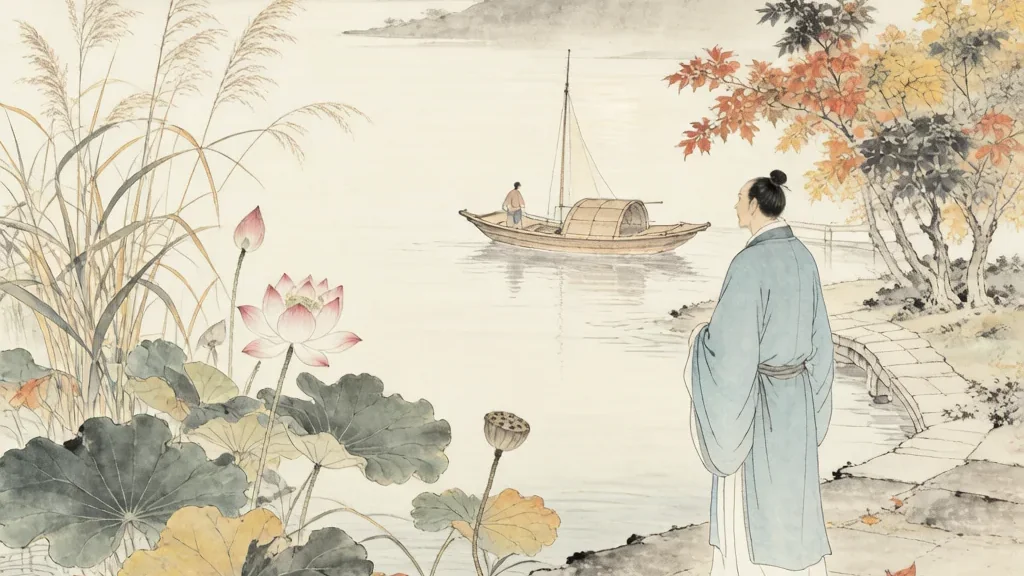
Chushu, meaning "End of Heat," is the fourteenth of the twenty-four traditional Chinese solar terms and typically begins around August 23. As its name declares, Chushu marks the moment when the intense summer heat begins to retreat and the first breath of autumn arrives. It sits between Liqiu (Beginning of Autumn) and Bailu (White Dew) in the late-summer calendar. Though daytime can still feel warm, the nights grow noticeably cooler, and the sweltering dog days lose their grip. For farmers, Chushu is a transitional term: the summer crops are gathered or ripening, and the planting of autumn vegetables gets underway, all under a sky that begins, at last, to feel less heavy.
Position Between Summer and Autumn
Chushu is the second solar term of autumn, following Liqiu and preceding Bailu. The sun reaches a celestial longitude of 150 degrees at its start. The character chu means "to stop" or "to leave," so the term literally announces that the heat is departing.
In practice the change is gradual. Chushu rarely brings an abrupt cool front; instead, the difference is felt most in the mornings and evenings. The term thus captures a liminal quality — summer not yet gone, autumn not yet fully present — that the solar calendar marks with quiet precision.
The Three Pentads of Chushu
Chushu's pentads trace the retreat of summer life. The first is "eagles offer sacrifices of birds" (ying nai xiang shi), an old observation that hawks become active hunters as smaller birds gather for migration. The second is "heaven's qi rises and earth's qi descends" (tian qi shang, di qi jiang), describing the cooling air above and the settling warmth below.
The third pentad is "heaven and earth begin to converge, and the myriad things mature" (tian di shi su, wu xiu). With the separation of warm and cool energies, plants and grains reach completion. These images offered farmers a schedule written in the behavior of birds and the feel of the air.
The Cooling of the Dog Days
In much of China, the hottest period of the year — the "dog days" (fu tian) — overlaps with late July and early August. Chushu arrives as those days end. While afternoons can still be hot, the steady, oppressive humidity begins to break, and a freshness returns to the evenings.
This relief is celebrated culturally. The phrase "autumn tiger" (qiu lao hu) warns that a late burst of heat may still appear after Chushu, but the overall direction is downward. The term reassures people that the worst of summer is behind them and the harvest season is at hand.
Harvest Activities
Chushu is a busy harvest term in many regions. Early rice in the south is cut and threshed; corn and sorghum in the north approach ripeness; and cotton bolls open for picking. The work is often done in the cooler parts of the day to avoid the lingering heat.
At the same time, autumn sowing begins. Farmers prepare fields for winter wheat and for cold-tolerant vegetables. The overlapping of reaping and sowing makes Chushu a term of continuous motion, where one crop's end is another's beginning.
Fish and the Coastal "Liqiu Boats"
Along the coast, Chushu and the surrounding weeks bring a peak in fishing as fish that sought deeper, cooler water in midsummer return closer to shore. Fishing communities historically marked the season's opening with ceremonies blessing the boats and the catch.
This coastal rhythm adds another layer to the term. While inland fields ripen, the sea yields its own abundance, and markets fill with fresh fish. The shared theme is provision: Chushu is when the earth and water both offer their stores before the quiet of deep autumn.
Floods and Late-Summer Rain
Chushu can still bring heavy rain, especially from lingering monsoon systems in the south. Late-summer downpours are a known hazard, capable of damaging the standing rice and flooding low fields just before harvest. Communities therefore keep drainage ready even as the heat fades.
The term teaches a double awareness: enjoy the cooling, but stay watchful. The same skies that lift the humidity can also unleash a storm, and the margin between a good harvest and a lost one is often a single week of weather.
Diet and Seasonal Health
Traditional dietary advice for Chushu emphasizes moistening and light foods as the dry autumn air approaches. Pears, lilies, and white fungus soups are favored to soothe the lungs, which in Chinese medicine are linked to the autumn season and to dryness.
People are also cautioned against overeating cooling foods too quickly, since the stomach may still be adjusted to summer heat. The guidance reflects a nuanced view of the body as needing a gradual transition, mirroring the gradual transition of the weather itself.
Folk Customs and Temple Fairs
In some areas, Chushu was a time for small temple fairs giving thanks for the completed summer harvest and praying for the autumn one. These gatherings mixed worship with markets, opera, and food, providing social rest after weeks of labor.
Other customs included burning incense for ancestors and tending family graves, as the cooling weather made travel and outdoor ritual more comfortable than in midsummer. Such practices anchored the agricultural calendar in a wider web of family and community obligation.
Chushu in Modern Awareness
Today Chushu is noted mostly for the relief it brings from summer and for the foods associated with the turning season. Offices and schools feel the change as air conditioners run less, and markets display the first autumn pears and pomegranates.
The term retains poetic appeal as the moment heat "ends." In a culture that names time by the body's experience of weather, Chushu is a small celebration — the calendar's way of saying the long summer is over, and the harvest may begin in peace.
❓ Frequently Asked Questions
When does Chushu begin?
Chushu usually starts around August 23, when the sun reaches a celestial longitude of 150 degrees.
What does Chushu mean?
It means "End of Heat" and marks the retreat of summer's intense warmth toward early autumn.
Is it cool right after Chushu?
Nights and mornings cool noticeably, but afternoons can stay warm, and an "autumn tiger" heat spell is possible.
What farm work happens at Chushu?
Early rice is harvested, corn and cotton are gathered, and sowing of winter wheat and autumn vegetables begins.
What foods are eaten at Chushu?
Moistening foods like pears, lilies, and white fungus soup are favored as the air turns dry.
What are Chushu's three pentads?
They are hawks offering bird sacrifices, heaven's qi rising as earth's qi descends, and grains maturing.