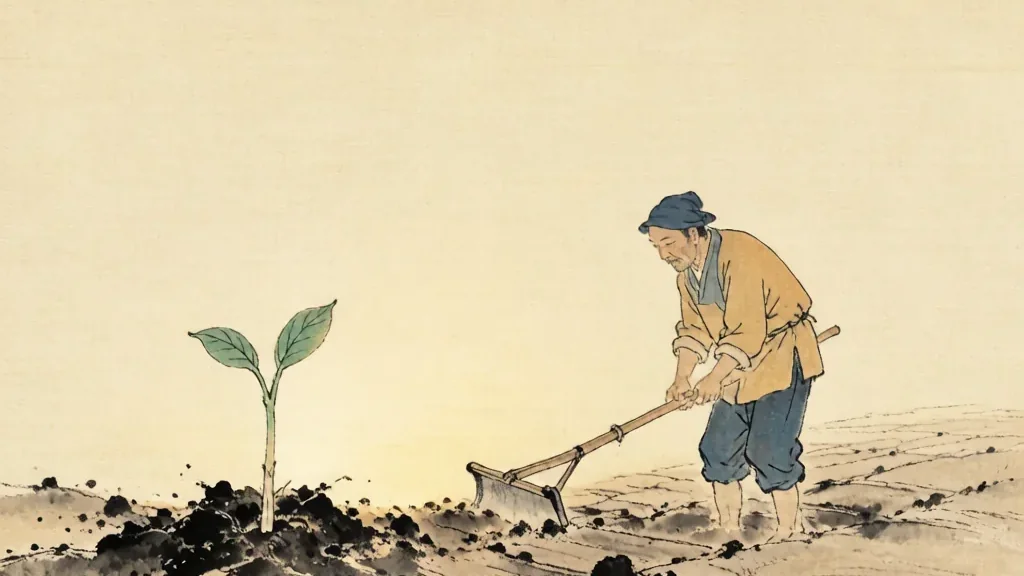
Among all twenty-four solar terms of the traditional Chinese calendar, none carries quite the weight of anticipation as Lichun. Occurring annually between February 3rd and 5th, this first solar term heralds the end of winter's grip and the stirring of life beneath the frozen earth. For millennia, Chinese civilization has marked this moment not merely as a seasonal transition but as a profound cosmic pivot point — the instant when yang energy begins its triumphant ascent over the receding yin of winter.
The Astronomical Heart of Spring
The ancient Chinese understood Lichun not through thermometers but through the precise observation of celestial bodies. When the sun reaches 315 degrees of celestial longitude, Lichun officially begins. This astronomical precision, developed over thousands of years of meticulous sky-watching, allowed farmers to predict planting seasons with remarkable accuracy long before modern meteorology existed. The term itself — 立春 (lì chūn) — speaks directly to its meaning: 立 (lì) means "to establish" or "to begin," while 春 (chūn) is simply "spring." Together they declare: spring is established.
What makes Lichun particularly fascinating is that it often arrives while winter still visibly holds sway. Snow may still blanket northern fields, and frost might yet cling to morning windows. Yet the ancient sages knew that the turning point had been reached. The days were growing imperceptibly longer, the angle of sunlight steeper, and deep underground, roots were stirring. This invisible transformation captures the essence of Chinese philosophical thought — that the most powerful changes often begin unseen.
The Spring Pancake Tradition
Perhaps the most beloved culinary tradition of Lichun is the eating of spring pancakes, known as 春饼 (chūn bǐng). These thin, crepe-like pancakes are served alongside an array of fresh seasonal vegetables and meats, which diners wrap together into savory bundles. The practice, dating back to the Tang Dynasty, carries deep symbolic meaning: wrapping fresh spring ingredients represents embracing the new season's vitality and consuming its promised abundance.
The preparation of spring pancakes is itself a communal art. Families gather to roll dough paper-thin, cook each pancake on a hot griddle until it blisters with golden spots, and prepare an assortment of fillings — shredded scrambled eggs, julienned cucumbers, mung bean sprouts, thin slices of braised pork, and sweet bean paste. Each ingredient represents an aspect of spring's awakening. The crisp vegetables speak to freshness, the eggs to new life, and the round pancakes to the wholeness of seasonal cycles.
In many regions, another spring delicacy takes center stage: spring rolls (春卷, chūn juǎn). Unlike their year-round restaurant counterparts, authentic Lichun spring rolls are filled with the first tender vegetables of the season — young leeks, fresh bean sprouts, and aromatic Chinese chives — then fried to golden perfection. The cylindrical shape is said to resemble gold bars, making them an auspicious food that invites prosperity for the year ahead.
Beating the Spring Ox
One of the most visually dramatic Lichun customs is 打春 (dǎ chūn), or "beating the spring." In this ancient ritual, a ceremonial ox made of clay or paper — the spring ox, or 春牛 (chūn niú) — is paraded through village streets before being symbolically beaten with colorful sticks by community members. The ceremony, dating back over two thousand years to the Zhou Dynasty, serves multiple purposes: it ritually awakens the earth from winter slumber, drives away lingering cold spirits, and encourages the ox — the farmer's most essential companion — to prepare for the plowing season ahead.
The spring ox itself is a work of folk art. Its construction follows precise traditional guidelines: the color of the ox's body, horns, and tail varies according to the sexagenary cycle of that particular year, determined by the Heavenly Stems and Earthly Branches. A local elder or official would traditionally lead the ceremony, striking the ox first before the gathered crowd joined in. After the beating, fragments of the ox were eagerly collected by farmers, who would scatter them in their fields as a fertility charm, or place them in their homes to ward off pestilence.
This custom reflects the profound agrarian roots of Chinese civilization. The ox was never merely livestock — it was a partner in survival, a symbol of patience, strength, and the cooperative relationship between humanity and nature that sustained Chinese society through countless generations.
Welcoming Spring in the Home
Households across China observe Lichun with practices designed to align domestic life with the season's emerging energy. Red paper couplets bearing the character 春 (spring) are pasted on doorframes and walls, but with a distinctive Lichun twist — the character is often written upside down. This is no mistake; the Chinese phrase "春倒了" (spring is upside down) sounds identical to "春到了" (spring has arrived), creating a playful linguistic charm that delights children and adults alike.
In many homes, a spring platter (春盘, chūn pán) is prepared and shared. This decorative arrangement of seasonal produce — radishes shaped like flowers, fresh herbs, and early vegetables — serves as both a centerpiece and a symbolic offering. The platter embodies the concept of "咬春" (yǎo chūn), literally "biting spring," the act of consuming fresh, raw vegetables to internalize the season's vigor. Biting into a crisp radish on Lichun morning is said to sharpen the senses and invigorate the body for the year ahead.
Parents also practice the charming custom of hanging small spring roosters (春鸡, chūn jī) — tiny fabric roosters stitched in bright colors — on children's clothing. The rooster, whose crowing announces the dawn, symbolizes the awakening of the world and protects the young from the lingering chill. These handmade talismans, often crafted by grandmothers in the weeks before the festival, represent the passing of seasonal wisdom from one generation to the next.
Lichun in Poetry and Philosophy
Chinese poets have celebrated Lichun for centuries, finding in its themes of renewal a mirror for the human spirit. The Tang Dynasty poet Du Fu wrote of Lichun with characteristic depth, observing that even as the calendar declares spring, the heart must also undergo its own thawing. Song Dynasty scholars composed verses about the first green shoots pushing through snow, seeing in their determination a model for human perseverance.
In traditional Chinese medicine, Lichun marks a critical transition point. Practitioners advise rising earlier to absorb the season's emerging yang energy, engaging in gentle exercise to stimulate circulation, and eating foods with upward-growing energy — sprouts, young greens, and pungent herbs like garlic chives. The liver, associated with the wood element and the spring season, requires particular attention during this period. Emotional balance is emphasized, as spring's rising energy can manifest as irritability if not properly channeled.
Today, as China has transformed into a modern nation, Lichun endures. Urban residents may not plow fields or beat clay oxen, but they still gather for spring pancakes, post spring couplets on apartment doors, and feel that unmistakable quickening of spirit when the first solar term arrives. In a world of climate-controlled environments and digital calendars, Lichun remains what it has always been: a reminder that we are still creatures of the seasons, bound to the eternal rhythm of the turning year.
The Four Beginnings of the Year
Lichun is the first of four 'beginning' solar terms, the others being Lixia, Liqiu, and Lidong, each opening one of the four seasons. Together they form the skeleton of the Chinese year, points at which the sun's position marks a decisive turn in light, temperature, and agricultural work. Among the four, Lichun held special weight because it ended the dormancy of winter and launched the farming year. The imperial state treated the four beginnings as occasions for ritual, but Lichun's ceremony was the grandest, reflecting the belief that how the year began set the tone for everything that followed, from the rice paddies to the stability of the realm.
Lichun Proverbs and Farming Wisdom
Generations of farmers distilled Lichun into short, memorable proverbs that functioned as practical advice. Sayings warned that 'a spring rain is worth its weight in oil,' stressing how precious early moisture is for the just-waking fields, and urged people not to abandon warm clothing too soon, since spring cold can return overnight. Other proverbs tied Lichun's weather to the harvest to come, reading the wind direction and cloud cover as omens for the months ahead. These compact phrases were how rural knowledge traveled across regions and centuries, letting a farmer who had never met his grandfather still plant by the same seasoned wisdom encoded in a handful of rhyming words.
Lichun and the Start of the Lunar Year
Although the Chinese Lunar New Year usually falls in the weeks before or around Lichun, the solar term rather than the lunar holiday marks the astronomical start of spring. This created a fascinating overlap: families might still be in the middle of New Year celebrations when Lichun arrived, blending the personal, family-centered festival with the cosmic turning of the season. In some years the lunar new year falls after Lichun, a quirk that traditional almanac makers called a 'year without spring' and that folk belief once viewed as inauspicious for weddings. The relationship between the two calendars shows how the solar terms anchored time to the sky even as the lunar festival anchored it to family and custom.
❓ Frequently Asked Questions
📝 Chinese Vocabulary
- 立春 (lì chūn) — The Beginning of Spring; the first of the 24 solar terms
- 春饼 (chūn bǐng) — Spring pancakes, thin crepes wrapped around fresh vegetables
- 打春 (dǎ chūn) — "Beating the spring," the ritual striking of the spring ox
- 春牛 (chūn niú) — The spring ox, a ceremonial clay or paper ox figure
- 咬春 (yǎo chūn) — "Biting spring," eating fresh raw vegetables to welcome the season
🎉 Fun Facts
- In some regions, an egg-standing tradition is practiced on Lichun — it's believed that the balance of cosmic forces on this day makes it easier to stand an egg upright on a flat surface.
- The spring ox ceremony was so important historically that the imperial court would issue an official "Spring Ox Picture" (春牛图) each year, distributed nationwide as a kind of agricultural almanac.
- The character 春 (spring) appears in Chinese oracle bone inscriptions dating back over 3,000 years, originally depicting plants sprouting under the sun.
- Lichun is one of the four 'beginning' solar terms that open the four seasons, and in the imperial calendar it carried the most elaborate state ritual of the year.
- The custom of eating radishes on Lichun, part of 'biting spring,' was believed to prevent spring sleepiness and sharpen the mind for the year's work.
- In southern China, Lichun is sometimes marked by flying kites shaped like the spring ox or swallows, combining play with the hope for a favorable growing season.