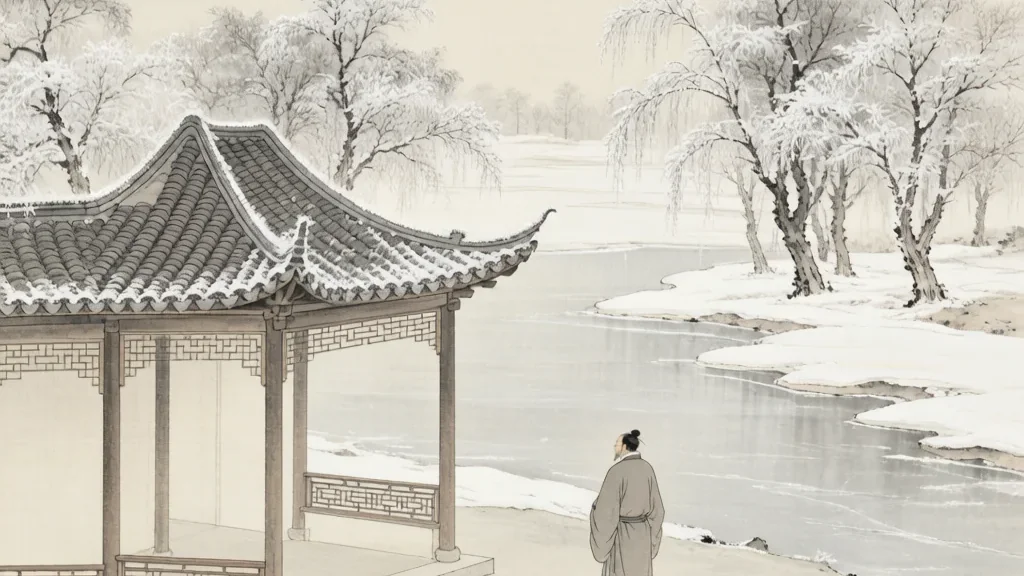
Shuangjiang, "Frost's Descent," is the eighteenth of the twenty-four traditional Chinese solar terms and usually begins around October 23 or 24. It is the last term of autumn, sitting between Hanlu (Cold Dew) and Lidong (Beginning of Winter). The name refers to the first appearance of frost on the ground as nighttime temperatures drop near freezing in the north. Shuangjiang marks the true onset of cold: leaves fall, the last crops are gathered, and the natural world prepares for winter's rest. It is a term of endings and of quiet beauty, when the clear, cold air and tinted foliage make it a favorite season for poets and painters alike.
The Final Autumn Term
Shuangjiang is the sixth and last solar term of autumn. The sun reaches a celestial longitude of 210 degrees at its start. After it comes Lidong, the Beginning of Winter, so Shuangjiang is the threshold over which the year steps from autumn into the cold half.
This position gives the term a valedictory mood. It is the last chance to complete the harvest and the last display of autumn color before the trees go bare. In the traditional mind, it is a moment to finish, to store, and to let go.
The Three Pentads of Shuangjiang
Shuangjiang's pentads describe the closing of the growing world. The first is "jackals sacrifice beasts" (shi shou shi), an old observation of predators hunting as prey fattens for winter. The second is "grass and trees turn yellow and drop" (cao mu huang luo). The third is "insects all hide" (zhong chong xian fu), as cold drives creatures into dormancy.
These images form a clear sequence of withdrawal. The hunting, the falling leaves, and the hidden insects together announce that the active season is over and the time of concealment has begun.
The First Frost
The defining feature of Shuangjiang is frost. In the north, clear autumn nights radiate heat quickly, and when the temperature near the ground falls below freezing, water vapor condenses into ice crystals on surfaces. The first frost is a hard boundary for many plants.
Frost also varies by region. In the south, Shuangjiang may bring only cool mornings without true frost; in the far north, frost may have come earlier. The term thus names a northern baseline, and local farmers adjusted their schedules to their own first-frost dates.
The Last Harvest
Shuangjiang is the deadline for gathering the last of the autumn crops before frost ruins them. Late vegetables, sweet potatoes, and peanuts are pulled; apples and persimmons are picked; and any remaining corn is brought in. The work is urgent and final.
After the harvest, the fields are cleared and often plowed, and the stalks burned or composted. The term ends the year's outdoor labor in most regions, leaving the land bare and ready for the winter rest that Lidong will formally begin.
Persimmons and Seasonal Eating
A signature food of Shuangjiang is the persimmon, which ripens to its sweetest after the first frost. In many places, eating frost-kissed persimmons at this term is a small tradition, and the bright orange fruit against bare branches is a classic autumn image.
Other seasonal foods include chestnuts, chestnut-flavored dishes, and warming broths. The dietary turn is toward richer, hotter foods as the body needs fuel against the cold. The persimmon, however, remains the term's emblem — beautiful, sweet, and available only in this narrow window.
Chrysanthemums and Autumn Beauty
Shuangjiang is also the season of full chrysanthemum bloom. These hardy flowers, which open as other plants fade, have long been symbols of resilience and elegance in Chinese culture. Enjoying the "late chrysanthemum" (wan ju) became a refined pastime associated with the term.
Poets and painters prized the clear, crisp air and the red and gold leaves of Shuangjiang. The term's beauty is poignant precisely because it is passing — the last splendor before winter's plainness, a theme that runs through much Chinese autumn art.
Health and Seasonal Care
Traditional health advice for Shuangjiang stresses warming the body and protecting against the dry, cold air. The season's dryness can irritate the lungs and skin, so moistening foods and soups are recommended, along with avoiding cold drinks.
People are also cautioned to dress warmly as temperatures swing between mild days and near-freezing nights. The term's lesson for the body parallels its lesson for the fields: prepare, cover, and conserve before the deep cold arrives.
Folk Observances
In some areas, Shuangjiang was a time to honor ancestors and to hold small local festivals marking the year's agricultural close. The killing of livestock for winter provision sometimes coincided with the term, turning the harvest's end into a communal meal.
These customs reinforced community bonds at the moment of withdrawal. As the social world, like the natural one, moved indoors, the shared meal and the shared gratitude kept people connected through the coming isolation of winter.
Shuangjiang in Modern Life
Today Shuangjiang is appreciated mostly through its scenery and foods. Urbanites travel to see autumn leaves, buy persimmons and chestnuts from street vendors, and post about the first cold mornings. The term survives as a cultural cue to notice the season's end.
Its deeper message — finish what you started, store what you have, and appreciate beauty even as it fades — remains a gentle philosophy for the close of any cycle, agricultural or personal.
❓ Frequently Asked Questions
When does Shuangjiang occur?
Shuangjiang usually begins around October 23 or 24, when the sun reaches a longitude of 210 degrees.
What does the name mean?
It means "Frost's Descent" and refers to the first frost on the ground as nights turn near-freezing.
What are Shuangjiang's three pentads?
They are jackals sacrificing beasts, grass and trees turning yellow and falling, and insects hiding.
What foods are linked to Shuangjiang?
Frost-sweetened persimmons and chestnuts are signature foods, alongside warming autumn broths.
Why is Shuangjiang important for farming?
It is the last deadline to harvest remaining crops before frost, after which fields are cleared for winter.
How is Shuangjiang enjoyed today?
Through autumn-leaf viewing, persimmon and chestnut eating, and appreciating the season's clear beauty.