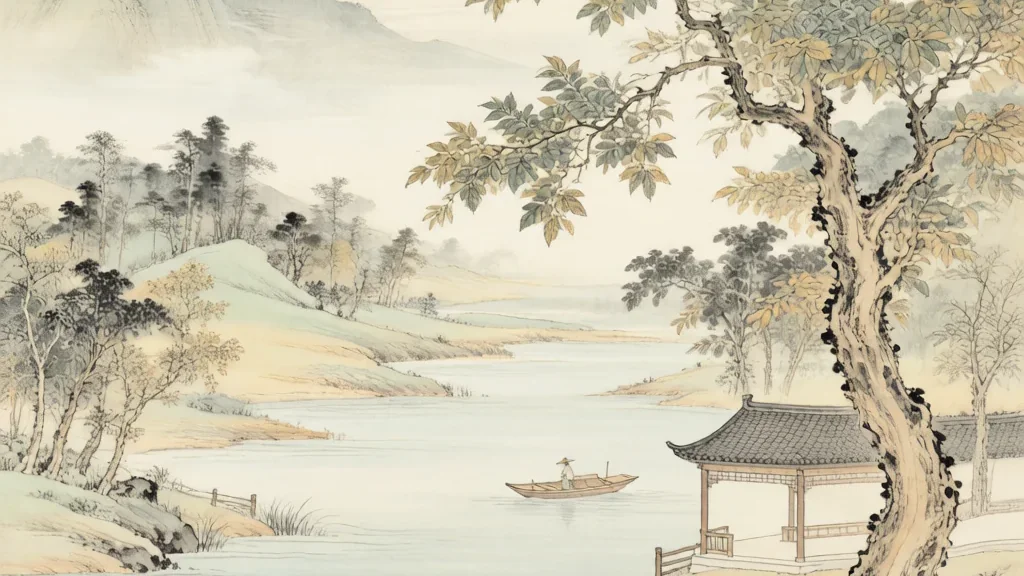
Xiaoshu, "Lesser Heat," is the eleventh of the twenty-four traditional Chinese solar terms and typically begins around July 7. It marks the onset of the hottest part of summer, though the most extreme heat is still to come at Dashu (Greater Heat). Xiaoshu lies between Xiazhi (Summer Solstice) and Dashu in the deep-summer calendar. The term announces that the weather is now steadily, intensely hot, with high humidity across much of the country. For farmers, Xiaoshu is a term of vigilance: the rice must be tended, the weather watched, and the body protected from the oppressive combination of heat and moisture that defines the season.
Deep Summer on the Calendar
Xiaoshu is the fifth solar term of summer, following Xiazhi and preceding Dashu. The sun reaches a celestial longitude of 105 degrees at its start. By this point the longest day has passed, but the accumulated heat of the land and water is still building toward its peak.
The name "lesser" heat signals that this is the beginning of the hot peak rather than its crown. It is a gentle warning: the worst is yet to come, so prepare now. The term belongs to the part of the year when daily life is most governed by the effort to stay cool.
The Three Pentads of Xiaoshu
Xiaoshu's pentads capture the humid, teeming summer. The first is "warm winds arrive" (wen feng zhi), as the breezes themselves feel heated. The second is "cicadas chirp loudly" (xiong chan ming), the insects singing from the heat-drenched trees. The third is "hawks learn to fly early" (ying shi zhi xi), young hawks testing their wings in the hot, bright skies.
These signs describe a world at full summer energy. The heat is not dormant or resting; it is loud, busy, and alive, and the farmer reads it as both a challenge and a sign that the crops are growing fast.
Heat, Humidity, and the Dog Days
Xiaoshu overlaps with the "dog days" (fu tian), the traditional name for the hottest, most humid stretch of the year, typically late July into August. The combination of high temperature and high moisture makes this period physically demanding and agriculturally critical.
In such weather, crops like rice grow rapidly but also face threats from pests, mold, and sudden storms. The human cost is real too: traditional advice stresses avoiding overexertion, staying hydrated, and resting during the midday peak. The term thus carries a built-in counsel of moderation.
Rice Care and Field Work
In the south, Xiaoshu is a key time for rice management. The transplanted rice is in active growth and needs ample water; fields must be kept flooded and weeded. In double-cropping areas, the early rice approaches ripening while the late rice is planted, doubling the labor.
The north, meanwhile, tends its corn and other summer crops, watching for drought. Because the heat accelerates both growth and evaporation, water management is the central skill of the term. A farmer's attention to the canals in Xiaoshu often decides the autumn yield.
The Custom of Eating New Rice
In some regions, Xiaoshu was the occasion to taste the season's first newly harvested rice, a modest celebration before the main harvest. The "new rice" was cooked and offered first to ancestors, then shared by the family, marking the turning of the grain year.
This custom, like many tied to the solar terms, blended gratitude with anticipation. The first taste of new grain was a promise of the fuller harvest to come and a moment to honor those who had worked the fields and those who had come before.
Foods for Beating the Heat
Traditional Xiaoshu eating favors light, cooling foods. Cold noodles, cucumber, mung bean soup, and lotus root are common, believed to clear internal heat. In the north, "cold noodles on the dog days" (fu mian) is a well-known dish for the season.
Yet the advice is balanced: too many cold foods can harm the digestion, especially when the body is stressed by heat. The ideal diet at Xiaoshu moistens and cools without shocking the stomach — a nuanced approach that reflects long experience of the season's stresses.
Sun and Storm Weather
Xiaoshu weather is unpredictable in its intensity. Thunderstorms can build quickly in the humid air, bringing brief relief but also hail or wind that damages crops. The contrast between blazing sun and sudden downpour is characteristic of the term.
Farmers learned to read the sky for these shifts, because a single storm could flatten a field of ripening rice. The term's drama — heat one hour, torrent the next — made it one of the more anxious points in the farming year.
Health and the "Fu" Season
In traditional medicine, the dog days of Xiaoshu are a time when the body's yang is outward and the interior is relatively cool, so certain treatments like "fu moxibustion" (tie fu) are applied to strengthen resistance. People are advised to avoid sleeping in drafts and to guard against "summer damp."
These practices show how the solar term structured not only agriculture but preventive health. The calendar told people when to act, eat, rest, and treat the body, integrating seasonal living into daily self-care.
Xiaoshu in Contemporary Life
Today most people meet Xiaoshu with air conditioning rather than canals, but the term still frames summer. Weather reports mention it; restaurants promote cooling dishes; and social media posts note the onset of the dog days with a mix of complaint and humor.
The term's old lesson — prepare for the peak, protect the body, manage the water — remains quietly relevant. Even in cities, the heat of Xiaoshu is a shared experience that connects modern life to the ancient rhythm of the turning year.
❓ Frequently Asked Questions
When does Xiaoshu begin?
Xiaoshu usually starts around July 7, when the sun reaches a celestial longitude of 105 degrees.
Why is it called Lesser Heat?
Because it marks the start of the hot peak; the even greater heat comes at the next term, Dashu.
What are Xiaoshu's three pentads?
They are warm winds arriving, cicadas chirping, and hawks learning to fly.
What foods are eaten at Xiaoshu?
Light cooling foods like cold noodles, cucumber, mung bean soup, and lotus root are traditional.
What farm work happens at Xiaoshu?
Rice fields are flooded and weeded, and in the north corn is tended with close attention to water.
How does Xiaoshu relate to the dog days?
It overlaps the dog days, the hottest humid period, when health and crop care both demand caution.