🔬 Ancient Science & Technology
53 articles — Discover China's remarkable scientific and technological achievements
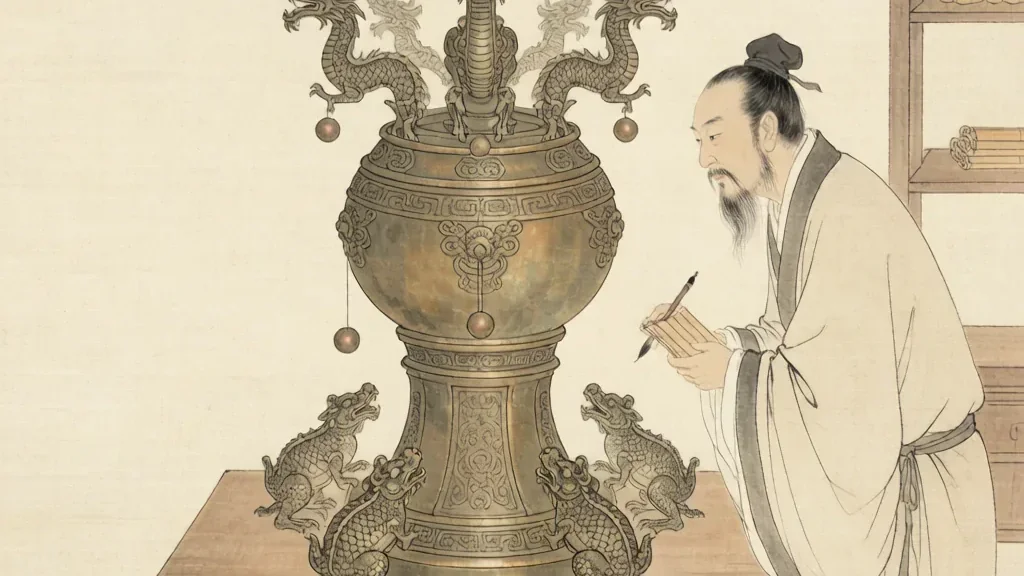
Zhang Heng's Seismograph: The World's First Earthquake Detector
In the year 132 CE, during the Eastern Han Dynasty, a polymath named Zhang Heng (张衡, Zhāng Héng) presented to the imperial court a device so extraordinary that it would not be replicated in the West for another 1,700 years — the world's first seismoscope. Known as the Houfeng Didong Yi (候风地动仪), or 'Instrument for Measuring the Seasonal Winds and Earth's Movements,' this magnificent bronze vessel was designed not merely to register that an earthquake had occurred locally, but to detect seismic events happening hundreds of kilometers away and to indicate their precise direction.
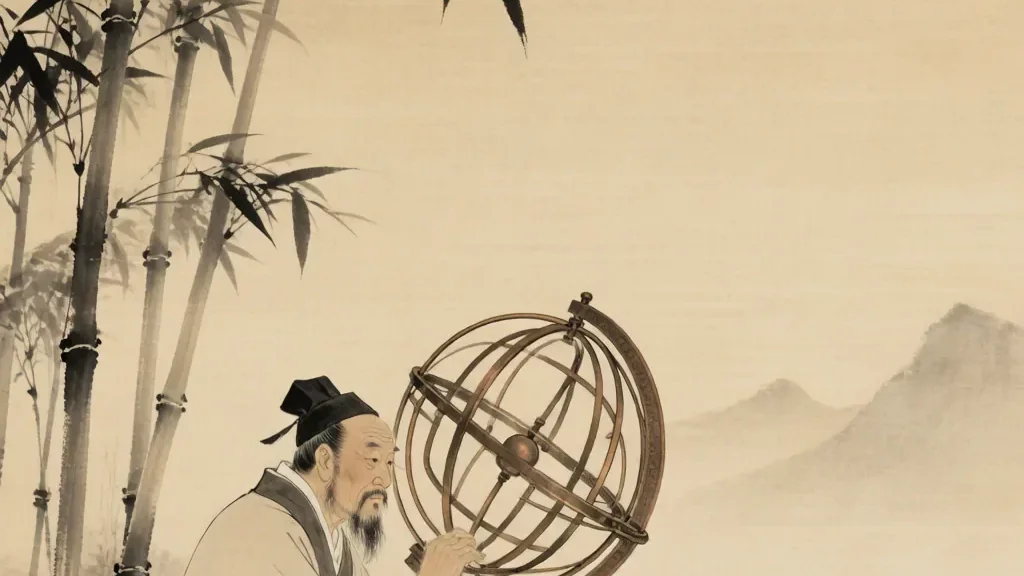
Zu Chongzhi and Pi: A Mathematician 1,000 Years Ahead
In the fifth century CE, while Europe was entering the so-called Dark Ages and mathematical knowledge across the continent was largely confined to the rudimentary arithmetic of monastery schools, a Chinese mathematician working in the southern city of Jiankang (modern Nanjing) accomplished a feat of calculation that would not be matched anywhere in the world for the next thousand years. Zu Chongzhi (祖冲之, Zǔ Chōngzhī, 429–500 CE) determined the value of pi (π) — the ratio of a circle's circumference to its diameter — to an accuracy of seven decimal places: 3.
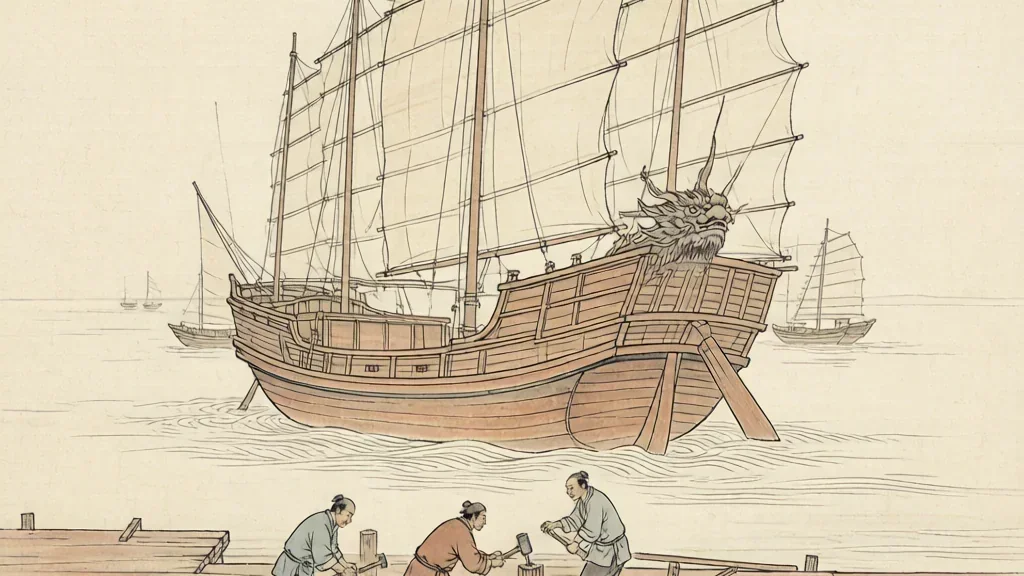
Ancient Chinese Shipbuilding: Masters of the Seas
When Admiral Zheng He (郑和) sailed from the coast of China in 1405 at the head of the largest fleet the world had ever seen — over 300 ships crewed by nearly 28,000 men — he commanded vessels whose size and sophistication would not be matched by any European navy for centuries. The flagship 'treasure ships' (宝船, bǎochuán) of Zheng He's fleet were estimated to be over 120 meters in length, with nine masts, multiple decks, and a displacement of several thousand tons — dwarfing the caravels that Columbus would sail to the Americas nearly a century later.
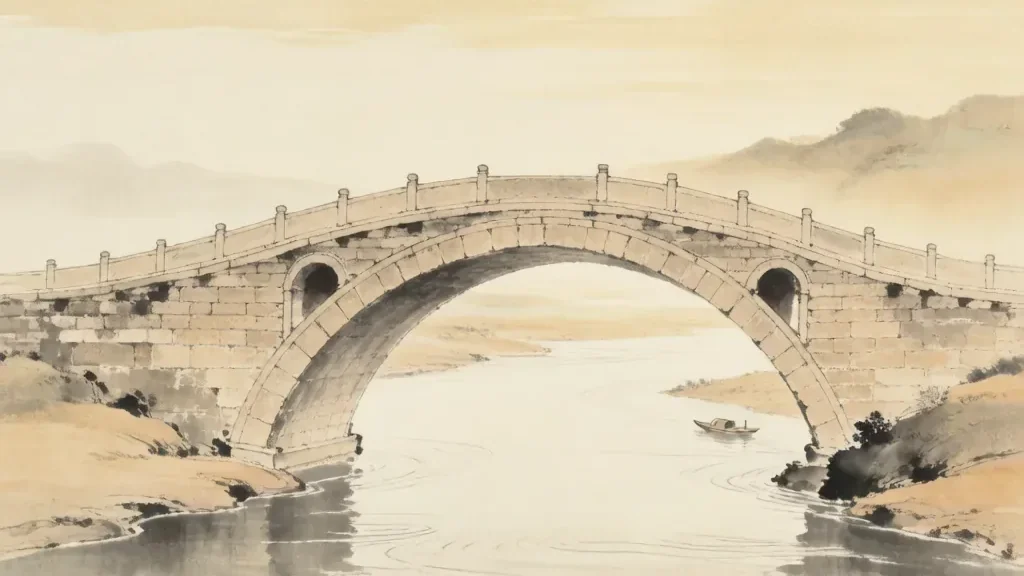
Zhaozhou Bridge: The World's Oldest Open-Spandrel Arch Bridge
Spanning the Xiao River (洨河) in Zhao County, Hebei Province, stands a bridge that has defied the expectations of engineers and the ravages of time for over 1,400 years. The Zhaozhou Bridge (赵州桥, Zhàozhōu Qiáo), also known as the Anji Bridge (安济桥, Ānjì Qiáo, 'Safe Crossing Bridge'), was designed and built between 595 and 605 CE by the master craftsman Li Chun (李春) during the Sui Dynasty.
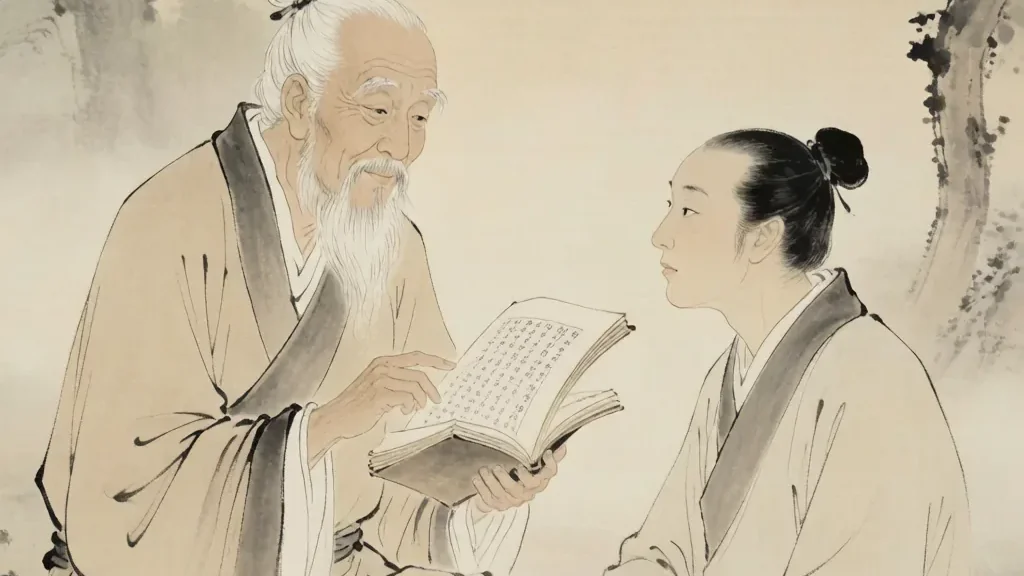
The Nine Chapters on the Mathematical Art: China's Ancient Mathematical Classic
The Jiuzhang Suanshu (九章算术), or 'The Nine Chapters on the Mathematical Art,' stands as the most influential mathematical text in Chinese history and one of the great mathematical works of the ancient world. Compiled over several centuries — with its earliest material dating from the Zhou Dynasty (c.

Guo Shoujing: The Astronomer Who Matched the Gregorian Calendar — 300 Years Early
In 1281 CE, the Yuan Dynasty promulgated a new calendar that represented one of the most extraordinary achievements in the history of astronomy. The Shoushi Calendar (授时历, Shòushí Lì, 'Calendar for Giving the Seasons') calculated the length of the tropical year — the time it takes for the Earth to complete one orbit around the sun — as 365.
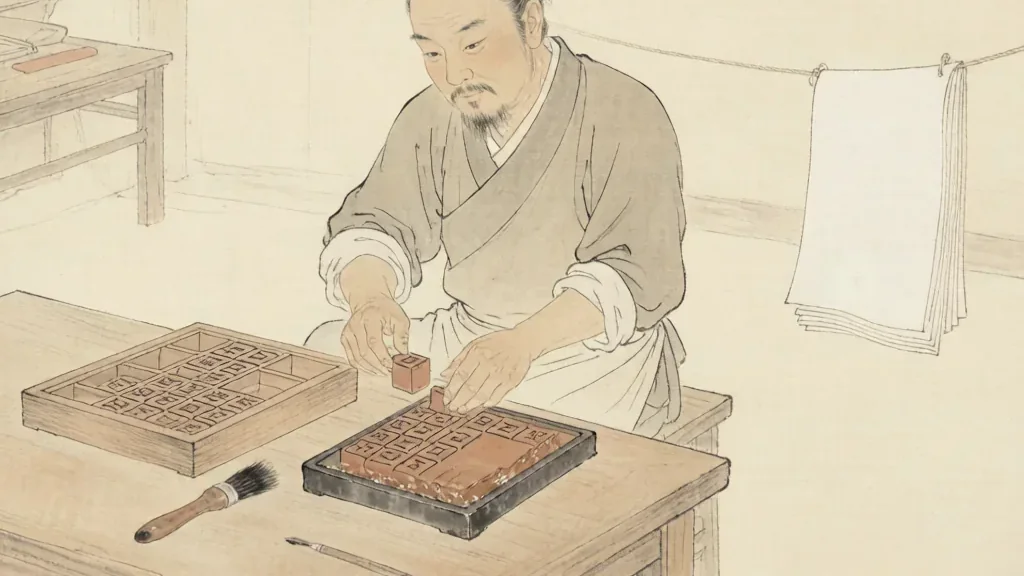
Movable Type Printing: Bi Sheng's Invention 400 Years Before Gutenberg
Between 1041 and 1048 CE, in the city of Hangzhou during the Northern Song Dynasty, a common artisan named Bi Sheng (毕昇, Bì Shēng) accomplished something that would change the course of human history: he invented movable type printing. Using characters carved from fired clay and assembled in an iron frame, Bi Sheng created a system that allowed individual Chinese characters to be rearranged and reused to print different pages — the first known practical application of the movable type concept anywhere in the world.

Ancient Chinese Iron Smelting: Forging a Civilization Ahead of the World
The history of iron metallurgy in China represents one of the most remarkable — and least appreciated — technological achievements of the ancient world. While the Iron Age in the ancient Near East and Europe is conventionally dated to around 1200 BCE, China's iron industry took a fundamentally different technological path that would ultimately prove far more productive and influential.

Hundred-Refined Steel
A famous line in Chinese praises a blade "refined a hundred times," and behind that phrase lies a real technology: 百炼钢 ( Bǎi Liàn Gāng ), "hundred-refined steel. " Long before the blast furnace, Chinese smiths learned to make tough, reliable steel by repeatedly heating, folding, and hammering iron and steel together.

Ge Hong: Alchemist of the Immortals
Somewhere between chemistry and magic, between medicine and mysticism, lived a man who distilled minerals, sought immortality, and accidentally recorded one of the earliest recipes for what would become gunpowder. His name was 葛洪 ( Gé Hóng ), a Daoist alchemist of the Eastern Jin dynasty.
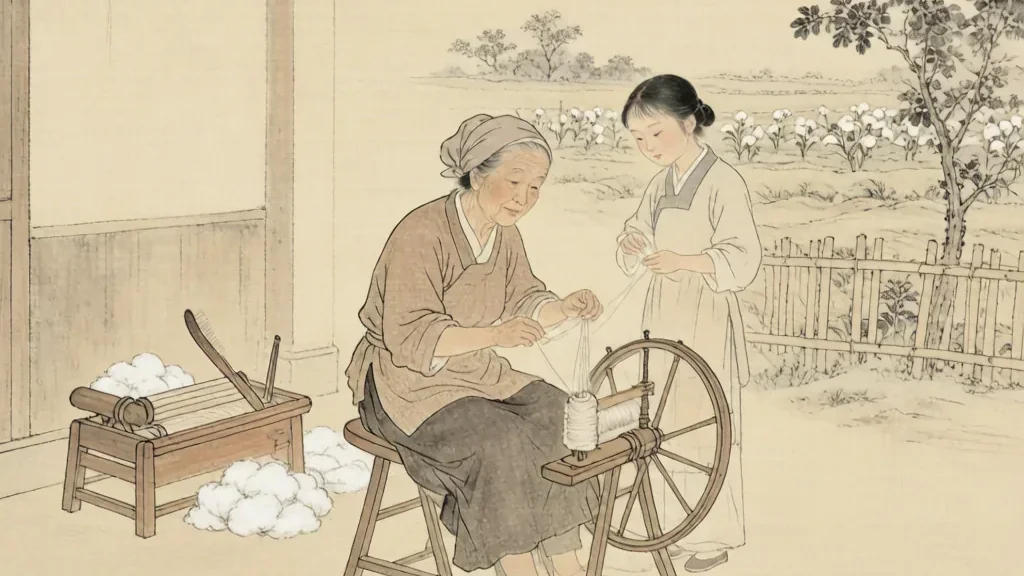
Huang Daopo: Mother of Cotton
In the late thirteenth century, a poor village girl from the Yangtze delta traveled south to Hainan, lived among the Li people, mastered their cotton-weaving craft, and returned home to ignite a textile revolution. Her name was 黄道婆 ( Huáng Dào Pó ), honored as the "Mother of Cotton.
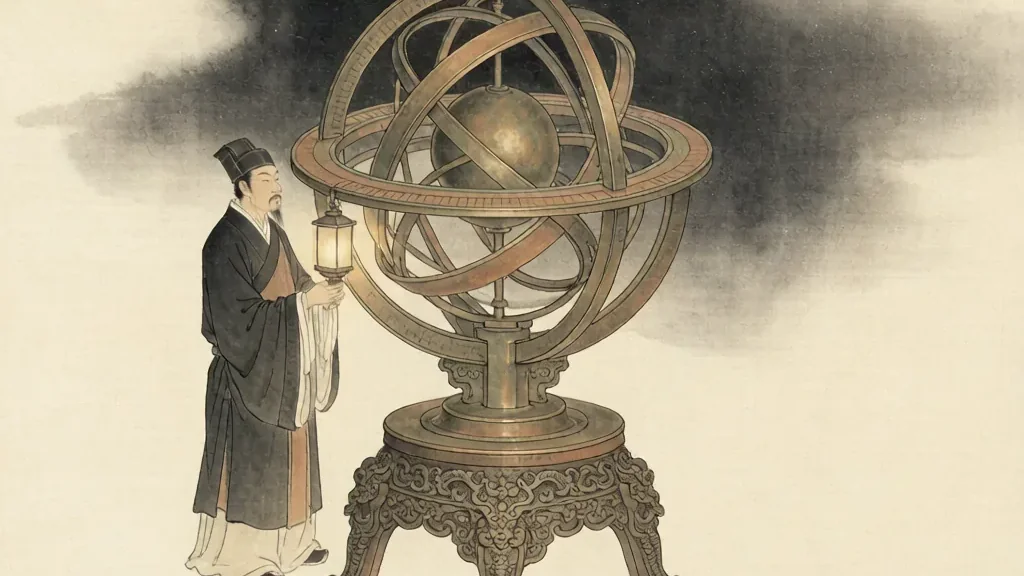
The Armillary Sphere
For two thousand years, Chinese astronomers tried to hold the heavens in their hands. Their favored instrument was the 浑天仪 ( Hún Tiān Yí ), the armillary sphere, a nested set of metal rings representing the celestial circles and the earth at the center.
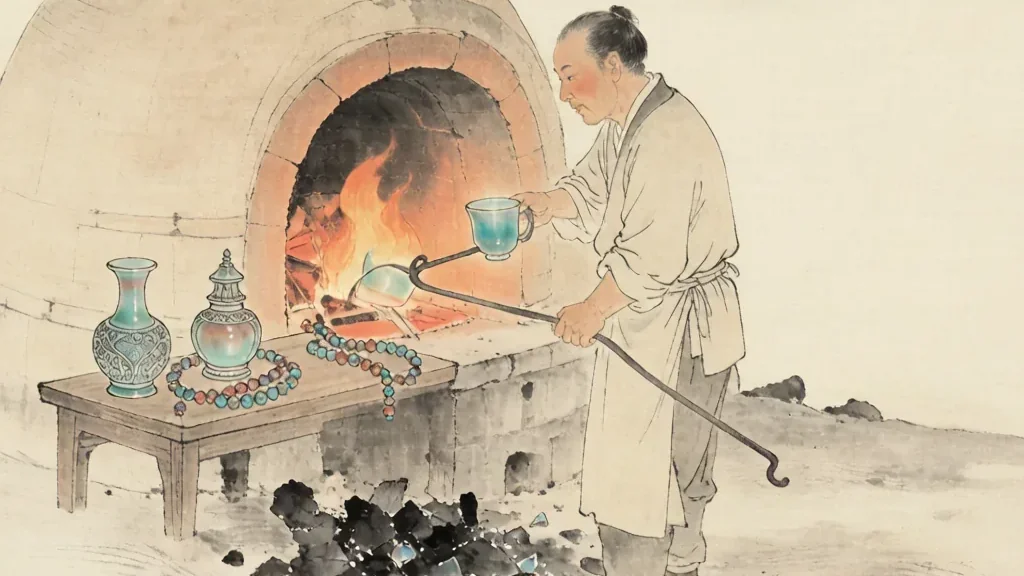
Chinese Glass and Glaze
Translucent, glowing, and faintly otherworldly, 琉璃 ( Liú Lí ) is the Chinese word that covers glass, glaze, and the lustrous colored material used for tiles, beads, and Buddhist relics. Unlike the clear window glass of the West, Chinese liuli often meant richly colored, opaque or semi-translucent objects prized for their hue and sheen.

Pei Xiu: Father of Chinese Cartography
Centuries before Mercator projected the globe onto a flat sheet, a Chinese statesman named 裴秀 ( Péi Xiù ) laid down the rules for making accurate maps. Living in the third century AD, Pei Xiu is remembered as the "Father of Chinese Cartography" for articulating the principles that turn a sketch into a measurement.
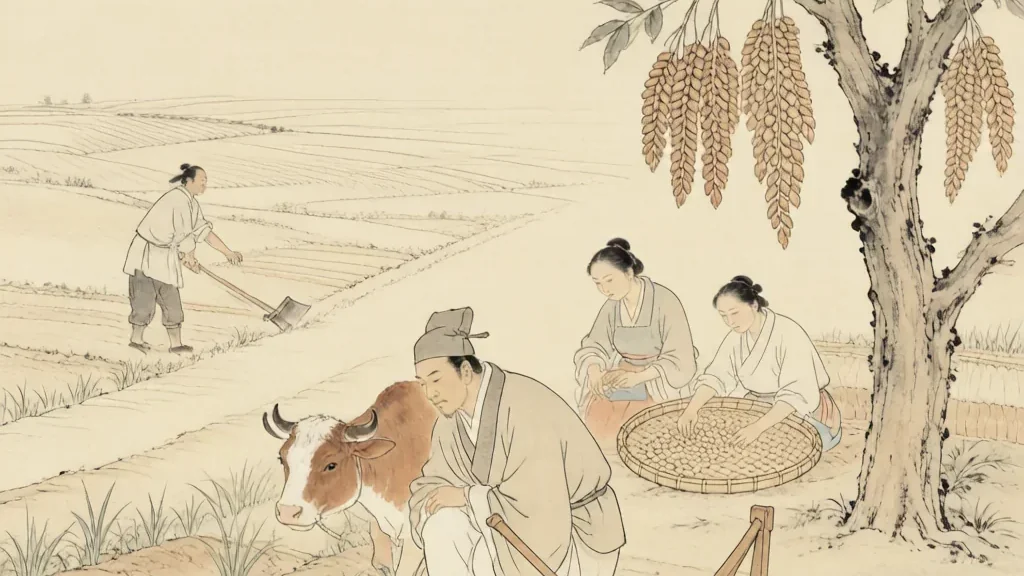
Qimin Yaoshu: The Art of Farming
More than fourteen centuries ago, a Northern Wei official named Jia Sixie sat down to record everything he knew about growing food, raising animals, and preserving the harvest. The result was the 齐民要术 ( Qí Mín Yào Shù ), often translated as "Important Methods for the Common People's Livelihood" or "The Art of Farming.
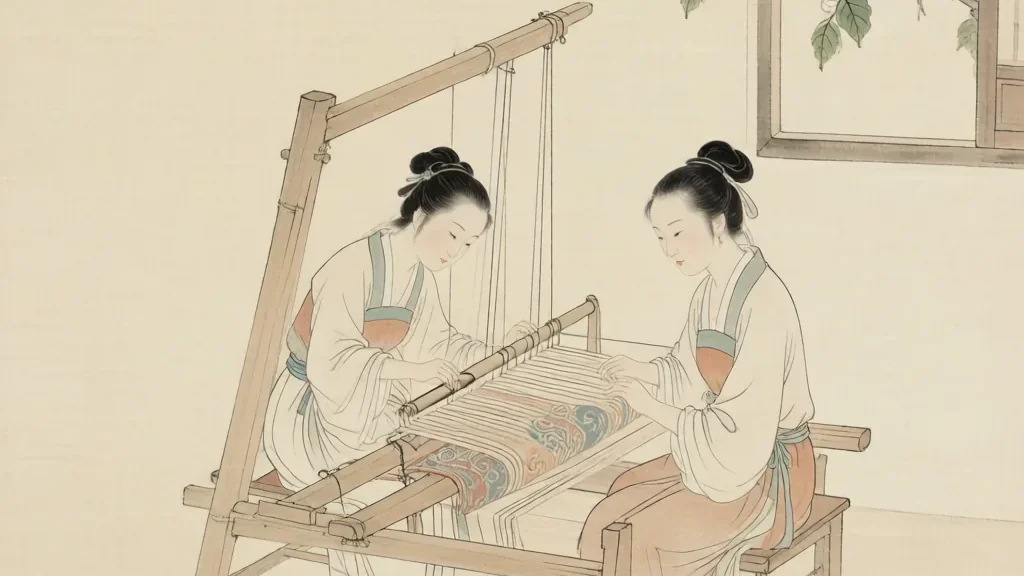
The Silk Loom and Weaving
For thousands of years, the shimmer of 丝 ( sī ), silk, was China's best-kept secret and its most coveted export. The technology of raising silkworms and weaving their filament into cloth, known as 丝织 ( sī zhī ), was guarded so tightly that the penalty for smuggling silkworm eggs abroad was death.

Su Song's Astronomical Clock
In the year 1088, in the Northern Song capital of Kaifeng, a polymath statesman named 苏颂 ( Sū Sòng ) completed a remarkable machine: a tower nearly twelve meters tall that told the time, struck the hours, and displayed the positions of the stars on a rotating celestial globe. This was Su Song's astronomical clock, the most sophisticated mechanical clock of the premodern world.

The Abacus: China's Counting Tool
Long before silicon chips and pocket calculators, merchants along the Silk Road tallied their fortunes on a frame of beads strung on rods. That tool is the 算盘 ( suàn pán ), the Chinese abacus, one of the most enduring calculating instruments in human history.
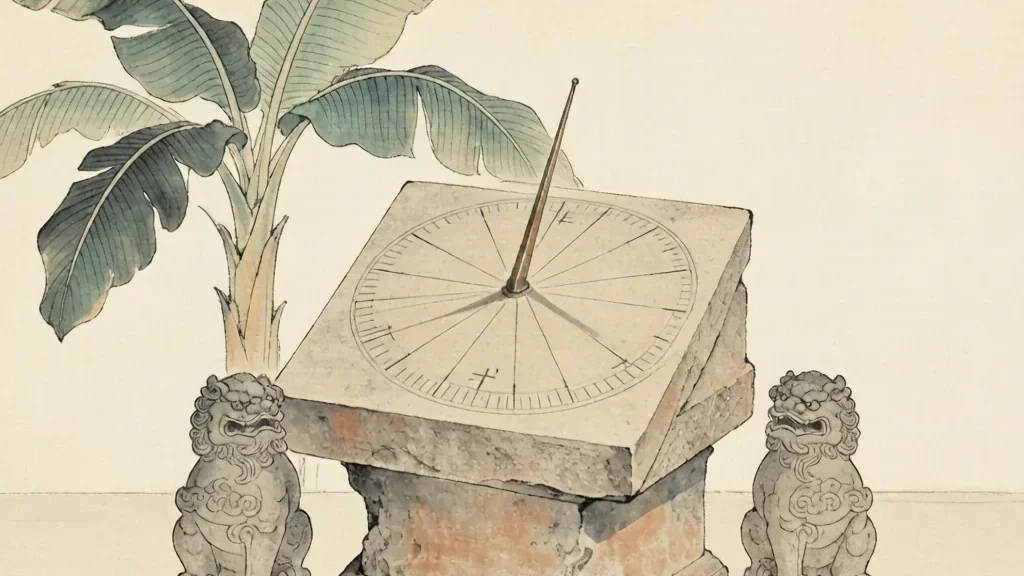
The Sundial: Shadow of Time
Before clocks, before watches, before even the mechanical escapement, humans told time with a stick and a shadow. In China that instrument was the 日晷 ( Rì Guǐ ), the sundial.
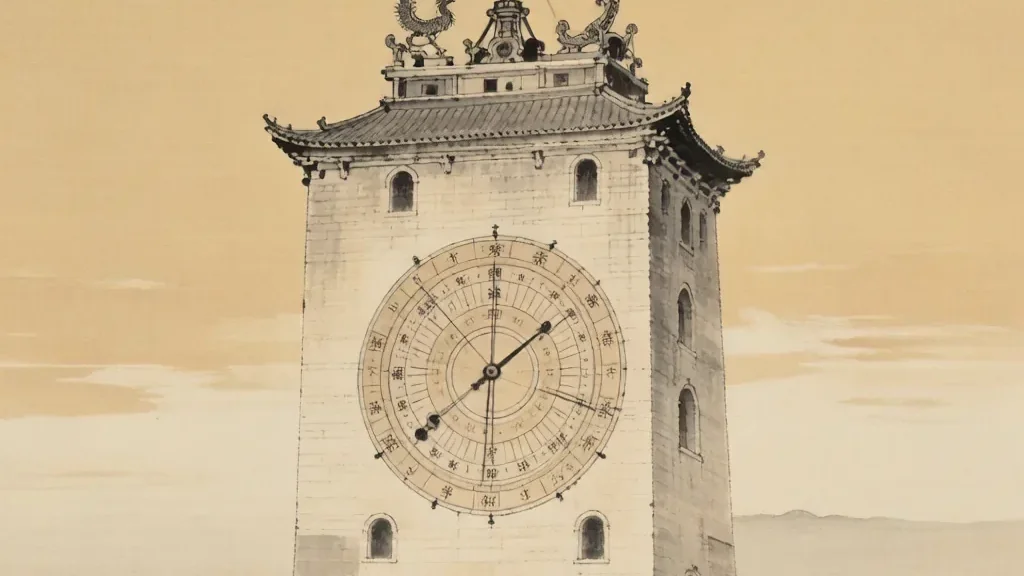
Su Song Astronomical Clock: The Tower of Medieval Science
Su Song's astronomical clock tower (水运仪象台, 1094 CE) was the most complex machine of its age — a water-driven armillary, globe, and time-announcing pagoda.

Bullet Molds: Mass-Producing Ammunition in Ming China
Ming bullet molds show China mass-producing lead ammunition for matchlocks — an early step toward standardized firearms manufacture.

The Chain Pump: Lifting Water with an Endless Belt
The chain pump lifted water with an endless belt of paddles on a loop — a river-powered workhorse for irrigation and drainage across the countryside.

The Crossbow: The Mass-Produced Weapon of the Warring States
The crossbow (弩) gave the Warring States infantry a powerful, easy-to-aim missile — a weapon so effective it was reserved and regulated by the state.
The Fire Lance: The First Gunpowder Weapon
The fire lance (火枪) was the first gunpowder weapon — a bamboo or metal tube that shot flame and pellets, the ancestor of the gun.

Ancient Chinese Mathematics: The Forgotten Pioneers
When we think of the history of mathematics, names like Pythagoras, Euclid, and Newton dominate the Western imagination. Yet on the other side of the world, an equally sophisticated mathematical tradition flourished for over two millennia, producing discoveries that would not appear in Europe for another thousand years. Ancient Chinese mathematics was practical, algorithmic, and astonishingly advanced — a tradition built not on abstract proofs but on solving real problems of taxation, engineering, and astronomy.

Chinese Astronomy: Mapping the Heavens
Long before Galileo turned his telescope to the sky, Chinese astronomers were meticulously recording the movements of stars, planets, comets, and supernovae. For over four thousand years, China maintained the world's longest continuous astronomical observation program — an unbroken chain of sky-watchers whose records have proven invaluable to modern science. When astrophysicists today study the Crab Nebula or map historical solar activity, they consult documents written by Chinese court astronomers who lived centuries before the Common Era.

The Harrow: Breaking the Soil for the Seed
The harrow (耙) broke clods and covered seed after plowing, a simple field tool that raised the yield of China's intensive farming.

The Horse Collar: Letting the Horse Pull Its Full Weight
The breast collar (马项圈) let a horse pull with its chest instead of its windpipe, multiplying the load a single animal could draw.

The Incense Clock: Time by Scent and Ash
The incense clock told time by the slow burn of a scented trail or spiral — a quiet, portable timer for homes, temples, and night watches.
The Inkstone: The Grinding Technology of the Scholar
The inkstone (砚台) is the stone on which ink was ground and pooled — the scholar's indispensable tool and a prized object of art in itself.

The Junk Rig: The Sail That Could Turn Into the Wind
The junk rig was China's balanced, battened sail that could be trimmed from the deck and sailed close to the wind — a feat European ships could not match.
The Matchlock: The First Guns of the Ming Dynasty
The matchlock (鸟铳) was the Ming's first true gun — a metal barrel fired by a smoldering match, adopted from the Portuguese in the 1500s.
Natural Gas in Ancient China: The Flame of the Salt Wells
Ancient Sichuan tapped natural gas at its salt wells, piping the flame through bamboo to boil brine — an early industrial use of fossil fuel.

The Science of Farming: Chinese Agronomy
For over five thousand years, Chinese civilization has been fundamentally agricultural. The need to feed a vast population from limited arable land drove generations of farmers, scholars, and officials to develop agricultural techniques of extraordinary sophistication. Long before the term "agricultural science" existed, Chinese agronomists were conducting experiments, documenting results, and disseminating best practices across an empire. Their work represents one of humanity's most sustained and successful engagements with the challenge of feeding a civilization.
The Paddle Wheel Ship: Mechanical Propulsion in Ancient China
The paddle-wheel ship (车船) used powered wheels instead of oars, a mechanically driven warship that astonished rivals on the Song rivers.
The Paper Mill: Manufacturing Knowledge
The paper mill scaled Cai Lun's craft into an industry — pulping bast fiber, rag, and bark to feed the empire's hunger for books and money.

The Armillary Sphere: Mapping the Heavens in Bronze
The armillary sphere (浑天仪) was a bronze model of the celestial circles used to demonstrate and measure the heavens — part instrument, part orrery.
The Plow: The Technology That Fed a Civilization
The Chinese plow — the angled, iron-shared, moldboard plow — turned heavy soil efficiently and fed the dense farming that built the civilization.
The Fire Arrow: The Birth of Rocketry in China
The fire arrow (火箭) was the first rocket — a gunpowder tube on a stick that launched by recoil, the seed of all rocketry.

Salt Wells: Drilling for Brine in Ancient Sichuan
Sichuan's salt wells were deep boreholes that reached brine far below ground — drilled with bamboo cable and bit centuries before the oil era.
The Seed Drill: Ancient Precision Agriculture
The seed drill (耧车) sowed grain in neat rows through funneled tubes behind one animal — precision farming millennia before Europe's.
Zhang Heng Seismoscope: The First Earthquake Detector
Zhang Heng's seismoscope (地动仪, 132 CE) was a bronze vessel that indicated the direction of a distant quake — the world's first earthquake detector.

The Ship Rudder: Steering the Vessels of the World
The sternpost rudder gave Chinese ships precise steering without a steering oar — a quiet invention that made oceangoing junks manageable.
Water Engineering: Taming China's Rivers
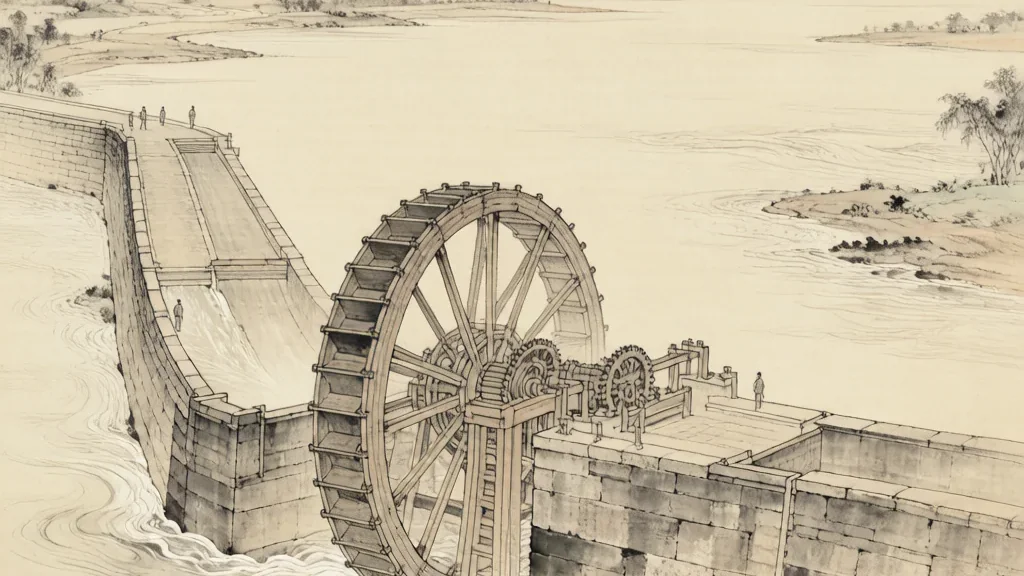
In 256 BCE, an engineer named Li Bing stood on the banks of the Min River in what is now Sichuan province and faced a problem that had plagued the region for generations: devastating floods alternated with crippling droughts. The river was too wild to control by force. Instead of fighting the water, Li Bing devised a system that worked with it — and 2,200 years later, that system is still functioning. Dujiangyan is not just an ancient monument; it is arguably the greatest water engineering project in human history, and it represents a tradition of Chinese hydraulic engineering that has no parallel in the ancient world.

The Trebuchet: The Siege Engine of the Song Dynasty
The traction and counterweight trebuchet (抛石机) was the siege engine of the Song and Mongol wars — hurling stones and gunpowder bombs over walls.
The Water Clock: Measuring Time by the Drop
The water clock (漏刻) measured hours by the steady fall or rise of water — the standard official timekeeper of court and city for two millennia.
The Dragon Bone Water Pump: Lifting Water by Muscle
The dragon-bone pump (龙骨水车) was a human- or pedal-powered chain pump that lifted irrigation water efficiently from low streams to high fields.
The Water Wheel: Irrigating Ancient China
The water wheel (水轮) harnessed streams to grind grain, pound cloth, and power bellows — China's medieval answer to the power problem.
Watertight Bulkheads: The Chinese Ship that Couldn't Sink
Watertight bulkheads divided a hull into sealed compartments so a breached ship would not sink — a Chinese shipbuilding rule later written into law.
Well Technology: The First Clean Water of Ancient China
Well technology — lined shafts and lifting gear — brought clean water and brine to cities and farms, a quiet foundation of settled life.
The Wheelbarrow: The Chinese Invention That Carried a Civilization
The wheelbarrow (独轮车) let one person move loads that would otherwise need two bearers — a single-wheeled pack animal of the Chinese countryside.

The Whippletree: Distributing the Load of the Cart
The whippletree (辕/鞅) was the swinging draught bar that let several animals pull one load evenly without fighting the trace.
The Winnowing Machine: Separating Grain from Chaff
The winnowing fan (风车/扇车) used a hand-cranked blast to blow chaff from grain — mechanizing the oldest step of harvest cleaning.