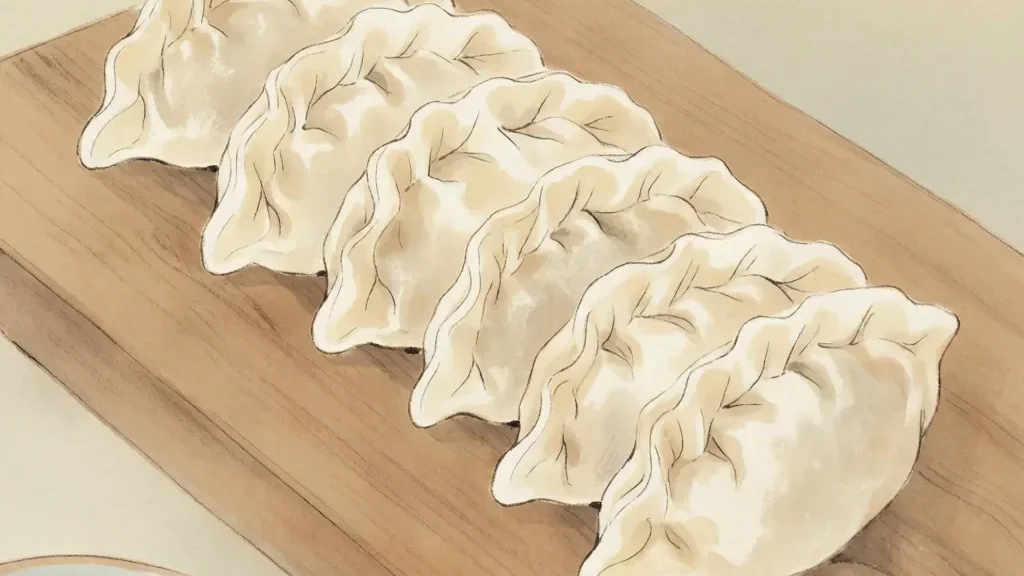
On the stroke of midnight every Lunar New Year's Eve, something remarkable happens simultaneously in millions of Chinese homes. Steaming platters emerge from kitchens across the country, each carrying crescent-shaped parcels of joy that have brought families together for nearly two millennia. These are jiaozi — dumplings so deeply woven into the fabric of Chinese culture that their very shape tells a story of prosperity, their filling whispers of family secrets, and their preparation transforms an ordinary meal into a sacred ritual of togetherness.
The Doctor Who Invented Comfort Food
The origin of jiaozi reads like a beautiful fusion of medicine and cuisine. During the Eastern Han Dynasty, around 200 CE, a renowned physician named Zhang Zhongjing noticed a heartbreaking pattern each winter. The poor in his hometown of Nanyang suffered terribly from frostbite, particularly around their ears. Moved by compassion, Zhang devised an ingenious solution that would echo through the centuries.
He simmered mutton, black pepper, and warming medicinal herbs in a large pot, then wrapped spoonfuls of this healing mixture in thin dough skins shaped like ears. He called them "jiao er" — "tender ears" — and distributed them to the suffering villagers. The combination of warming ingredients and hot broth not only nourished the hungry but actually helped prevent frostbite. As word spread, people began making these "ear dumplings" themselves, and a culinary tradition was born.
Over the centuries, the name evolved from "jiao er" to "jiaozi," and the practice of eating them shifted from a medicinal remedy to a beloved everyday food. Yet the connection to healing and protection never fully faded. To this day, eating jiaozi carries an almost talismanic quality — a belief that these little parcels shield you from harm while filling you with warmth.
Ingots on the Table: The Symbolism of Shape
Walk through any Chinese market during the lead-up to Spring Festival, and you'll hear the rhythmic slap of dough against cutting boards as families prepare for the year's most important meal. The shape of jiaozi is no accident — each crescent dumpling is deliberately crafted to resemble a yuanbao, the boat-shaped gold and silver ingots that served as currency in ancient China. Eating jiaozi at New Year is therefore an act of symbolic consumption: you are quite literally consuming wealth, inviting prosperity to fill your life in the year ahead.
This symbolism extends to the preparation ritual itself. Families gather around the table, flour dusting their hands, as they wrap dumplings together while chatting about the year gone by. The act of wrapping — enclosing filling within dough — represents the wrapping up of the old year and the sealing in of good fortune. Some families even hide a coin inside one dumpling; whoever finds it is blessed with extraordinary luck for the coming year. Others tuck in a date for sweetness, a peanut for longevity, or a chestnut for fertility.
The timing matters too. In northern China, the moment of transition between the old and new year — midnight on New Year's Eve — is the exact moment jiaozi should be eaten. The Chinese word "jiaozi" shares its sound with "jiao zi" (交子), meaning "the transition between the old and new," making the dumpling not just a food but a temporal marker, a delicious way to taste time itself turning.
A Map of China in Every Bite
To travel through China's jiaozi varieties is to trace the country's geography on your tongue. In the cold northeast, you'll find suāncài jiǎozi, filled with pickled Napa cabbage and pork — the fermented tang cutting through the richness of the meat. Beijing favors the classic pork and Chinese chive combination, while Tianjin celebrates the bounty of the sea with fillings of shrimp, crab, and fish.
Move south to Shanghai, and the wrappers grow impossibly thin and delicate, the fillings more refined — perhaps pork with tender bamboo shoots or a whisper of ginger. In Sichuan, true to the region's fiery spirit, dumplings arrive swimming in chili oil and studded with Sichuan peppercorns that numb and tingle the lips. Guangdong's contribution, har gow, features translucent wrappers that reveal the pink shrimp within like jewels behind frosted glass.
The cooking methods tell their own regional stories. Northerners boil their dumplings (shuǐjiǎo), believing the water purifies and the gentle cooking preserves the filling's essence. In the east, pan-frying produces guōtiē — potstickers with crispy golden bottoms and tender steamed tops, a textural masterpiece achieved by first frying, then adding water and covering to steam. Steaming yields the most delicate results, preserving every nuance of the filling.
The Art of the Fold
Ask any Chinese grandmother to demonstrate dumpling folding, and you'll witness a magic trick performed so swiftly your eyes can barely follow. There is no single "correct" way to fold a jiaozi — the variations form a language of their own. The classic crescent fold involves pinching the edges together in small pleats along one side, creating the signature yuanbao shape. The simpler half-moon fold presses the edges flat, sometimes with a decorative crimped pattern.
For special occasions, skilled hands produce the "sisters' dumpling" with its four delicate holes, or the "goldfish dumpling" whose tail fans out in a display of craftsmanship. In Harbin, near the Russian border, some families fold their dumplings in a style reminiscent of pelmeni, a testament to centuries of cultural exchange along the Silk Road. Each family's folding style is a fingerprint, passed down through generations like a secret handshake.
The dipping sauce deserves mention. While each household guards its own recipe, the foundation includes black vinegar, soy sauce, and sesame oil, with garlic, ginger, and chili oil added to taste. The first dumpling is eaten plain, to appreciate the filling in its purest form.
Beyond New Year: Jiaozi Through the Seasons
While New Year's Eve remains jiaozi's most sacred occasion, these dumplings appear throughout the Chinese calendar. During the Winter Solstice Festival, families gather for dumplings to ward off the cold — a direct echo of Zhang Zhongjing's original purpose. When a traveler departs, jiaozi become a farewell meal carrying wishes for success. Upon return, noodles replace dumplings — long strands symbolizing a welcome stay.
In the global diaspora, jiaozi have become ambassadors of Chinese culture. The Japanese gyoza, Korean mandu, Tibetan momo, and Italian ravioli all trace lineage to the tradition Zhang Zhongjing began on those cold streets of Nanyang. What makes jiaozi extraordinary is how they transform eating into communion — every family member contributes, and in their patient rhythm lies the insistence that we slow down, sit together, and remember what matters most.
Jiaozi at the Winter Solstice
While New Year's Eve is the great jiaozi occasion, the Winter Solstice is the second pillar of the dumpling calendar. Families gather to make and eat dumplings on that day specifically to ward off the cold, a practice that reaches straight back to the legend of Zhang Zhongjing, who fed ear-shaped dumplings to frostbitten villagers. The solstice and the New Year thus frame the deep winter with two dumpling meals, each carrying wishes for warmth and protection. In northern homes the habit is so fixed that skipping solstice dumplings feels like neglecting the season itself. The dumpling's round, sealed shape also reads as wholeness and reunion, fitting a day built around family. Across the year, then, jiaozi mark both the coldest turning points and the warmest gatherings.
The Art of the Dipping Sauce
No jiaozi plate is complete without its sauce, and every household guards a slightly different recipe. The foundation is usually black vinegar with soy sauce and a little sesame oil, then built out with minced garlic, grated ginger, and chili oil to taste. The first dumpling is often eaten plain, so the eater can judge the filling before the sauce arrives. A good dip cuts the richness of pork or lamb without drowning the wrapper, and the vinegar's brightness is why it pairs so naturally with boiled or steamed dumplings. Regional habits vary: the north leans garlicky, Sichuan adds numbing heat, and the south may keep it light. However simple, the sauce is the final act of seasoning that the cook hands to the eater, making each bite adjustable at the table.
Jiaozi's Cousins Across Asia
The Chinese dumpling seeded a whole family of folded foods across Asia. Japan's gyoza, Korea's mandu, Tibet's momo, and even Italy's ravioli have all been traced, in spirit or in fact, to the same tradition of enclosing filling in dough. Each took its own path: gyoza grew thinner-skinned and pan-crisped, mandu absorbed Korean seasonings, momo turned to spiced meat in broth, while ravioli met wheat with cheese and herbs. What unites them is the communal, hand-made logic of the original, a dish that brings people around a table to fold together. Looking at these cousins reminds us that jiaozi is less a single recipe than a method, one flexible enough to travel continents and still be recognized, two thousand years after Zhang Zhongjing, as the dumpling that unites a culture.
❓ Frequently Asked Questions
📝 Chinese Vocabulary
- 饺子 (jiǎozi) — Dumpling; literally "tender ear" in its original form
- 元宝 (yuánbǎo) — Gold or silver ingot; the shape jiaozi are meant to resemble
- 交子 (jiāo zǐ) — The transition between old and new; a homophone of jiaozi
- 锅贴 (guōtiē) — Potstickers; pan-fried dumplings with crispy bottoms
- 水饺 (shuǐjiǎo) — Boiled dumplings; the most common cooking method in northern China
🎉 Fun Facts
- The world's largest dumpling was made in China in 2016 and weighed over 1,100 pounds — it took a team of chefs three days to prepare.
- In some northern Chinese villages, families make over 1,000 dumplings for New Year's Eve and freeze them outside in the winter cold — nature's freezer.
- The record for the most dumplings eaten in one sitting is 137, set by competitive eater Joey Chestnut — though any Chinese grandmother would tell you that's far too few.
- In northern China a traveler leaving home is sent off with jiaozi, while noodles are served on return, symbolizing a long, smooth stay away.
- The custom of hiding a coin in one dumpling continues in many families, with the finder blessed with luck for the coming year.
- A single jiaozi meal can show dozens of folding variations across China, each region or household favoring its own pleat.