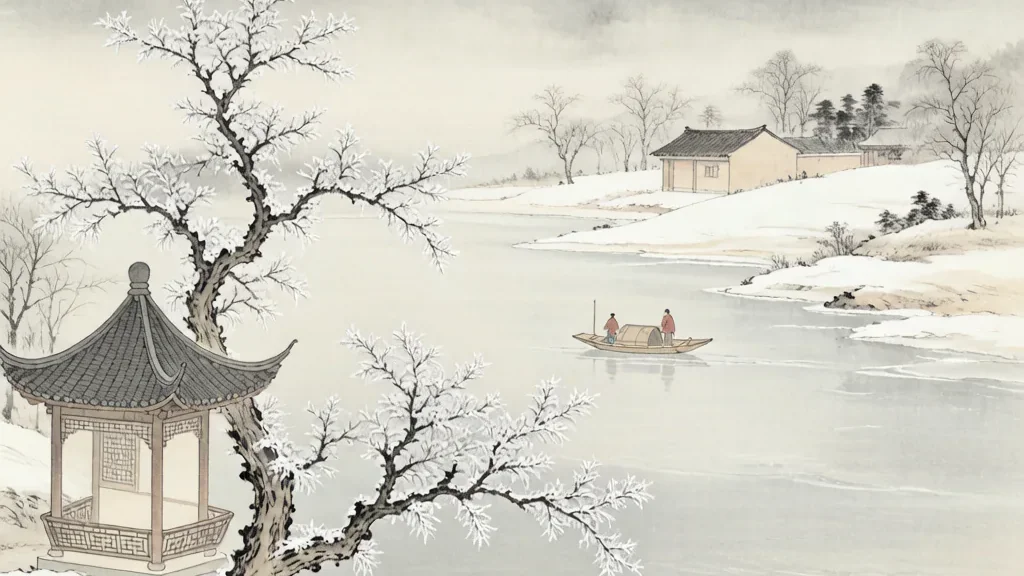
Xiaohan, or "Minor Cold" (小寒), is the twenty-third solar term in the traditional Chinese calendar, usually arriving around January 5 or 6. When the sun reaches the ecliptic longitude of 285 degrees, winter's cold deepens, though the term's name suggests it is the lesser of the two cold peaks—its counterpart Dahan, Major Cold, follows. In practice, however, many parts of China actually experience their lowest temperatures during Xiaohan rather than Dahan, because the land is already at its coldest from accumulated winter chill. The name combines xiao (minor, small) and han (cold), placing it just before the year's final and formally "major" cold. For households, Xiaohan was a time of layered clothing, warming foods, and quiet endurance as the calendar approached its end. Its cold was the prelude to the year's closing act, a final test of endurance before the renewal that spring would bring.
Place in the Solar Term Order
Xiaohan follows Dongzhi (Winter Solstice) and precedes Dahan (Major Cold), the last term. It typically falls around January 5 or 6, with the sun at 285° of ecliptic longitude.
The "minor–major" pairing with Dahan reflects the Chinese habit of grading seasonal intensity. Yet the naming is conventional: real temperatures depend on region and year, and Xiaohan often proves the colder of the two in the north.
Coldest Days Often Here
Because the earth has radiated heat through the long winter, its stored warmth is at a minimum by early January. Thus, even though Dahan is "major," the brutal cold frequently peaks during Xiaohan across the North China Plain and Northeast.
Southern China, by contrast, may save its deepest chill for later. The variation shows why the terms describe a normative pattern rather than a guaranteed weather schedule, a point folk weather lore well understood.
Farming in the Grip of Cold
With fields frozen solid, Xiaohan left little field work in the north. Farmers focused on livestock warmth, tool repair, and safeguarding stored grain from damp and rodents during the long indoor season.
In the milder south, winter crops like rape and wheat still needed watching against frost, and orchards were pruned in dormancy. The term's quiet allowed planning for the spring that Lichun would soon announce.
Food and Warming the Body
As with other deep-winter terms, diet emphasized warmth and nourishment. Mutton, beef, and chicken simmered with ginger and herbs were common, following the traditional principle of "warming tonic" (温补) to resist cold.
In the south, preserved meats and rice wines appeared on tables, while congees fortified with nuts and dates offered gentle sustenance. These foods were both comfort and preventive care against the season's rigors.
Health Traditions
Health advice for Xiaohan stressed guarding warmth—especially the neck, lower back, and feet—and avoiding sudden chilling after sweating. Calm, regular routines were recommended to conserve the body's energy.
The term also cautioned against overindulgence during nearby New Year feasting. Balancing rest, warmth, and moderation reflected the medical ideal of keeping the body's equilibrium through winter's depths.
Nature's Signs
The classical three pentents of Xiaohan note that geese begin to fly north, magpies start to build nests, and pheasants crow—subtle signs, recorded by early observers, that even in deep cold life quietly prepares to turn.
Such markers were symbolic as much as literal, expressing the belief that yang, though weak, is already stirring after the solstice. They gave the bleak term a hidden current of approaching renewal.
Year-End and Festival Proximity
Xiaohan often sits close to the Lunar New Year preparations, especially in years when the holiday falls in late January or February. Households might begin cleaning, stocking, and making preserves during this term.
This overlap lent Xiaohan a double character: it was the coldest, most dormant point of nature, yet the human world was beginning to stir with festive anticipation. The contrast is a recurring theme of the season.
Xiaohan in Modern Life
Today Xiaohan appears on calendars and weather apps as a marker of peak winter, often accompanied by health tips about dressing warmly and eating nourishing food. It is less a festival than a quiet cue.
Still, its foods and sayings persist in almanacs and family kitchens. Noticing Xiaohan is a small way to stay attuned to the year's rhythm and to appreciate the stillness before spring's return.
From Xiaohan to the Cycle's End
Xiaohan is the penultimate term, the last stop before Dahan closes the wheel. Together they represent winter's full weight, the darkest, coldest chapter before Lichun reopens the year.
Understanding Xiaohan's place helps one see the solar terms as a narrative of decline and return. The "minor" cold is not minor in feeling; it is simply the threshold to the final, fullest cold—and then, release.
Xiaohan Sayings and Local Life
A store of folk sayings grew around Xiaohan, many pointing out that the "minor" cold often bit hardest. Rhymes compared it with Dahan, noted the behavior of birds, and advised on reading the sky for the cold weeks ahead.
In daily life, the term shaped routines: later risings, extra layers, and the slow cooking of warming broths that filled homes with steam against the dry chill. Markets offered seasonal preserves and nuts, and families stocked what they could against the deepest part of winter.
These small practices gave Xiaohan a texture of quiet endurance. It was not a festival of spectacle but a season of steady coping, where the calendar's cold label translated into the ordinary comforts of food, clothing, and the company of those sharing the same fire through the long, still days.
The term also invited reflection on patience. With little outward growth in nature, Xiaohan was a time to tend what was stored and to wait—a discipline the solar system implicitly taught. In a culture that valued preparation as highly as action, the quiet of the "minor cold" was itself a form of productivity, the stillness that makes the coming spring possible.
❓ Frequently Asked Questions
When does Xiaohan occur?
Xiaohan typically falls around January 5 or 6, when the sun reaches 285° of ecliptic longitude.
Is Xiaohan colder than Dahan?
Often in the north yes: accumulated winter chill makes early January the coldest, even though Dahan is named "major."
What comes before and after Xiaohan?
It follows the Winter Solstice (Dongzhi) and precedes Major Cold (Dahan), the final term.
What foods are traditional at Xiaohan?
Warming dishes such as mutton, beef, and ginger broths follow the "warming tonic" principle for cold weather.
What natural signs mark Xiaohan?
Its three pentads note wild geese turning north, magpies starting nests, and pheasants crowing.
Is Xiaohan a festival?
Not a major one; it is mainly a calendar and weather marker, sometimes overlapping with New Year preparations.