👘 Traditional Clothing
49 articles — Hanfu, qipao, and Chinese attire

Chinese Embroidery: Painting with Needle and Thread
Imagine holding a piece of silk so finely embroidered that you cannot tell which side is the front and which is the back. Turn it over and you find a completely different image — a peony on one side, a cat on the other — both perfectly rendered, with no trace of the thread that created the opposite picture.
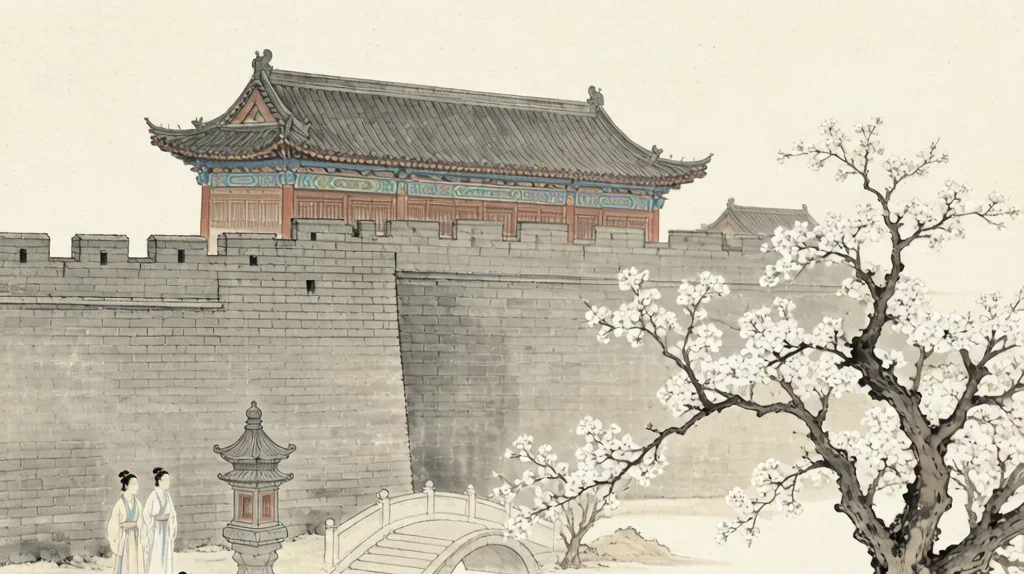
Hanfu: The Clothing of the Han People
Walk through any major Chinese city today, and you might spot something unexpected among the sea of jeans and T-shirts: young people gliding through parks and ancient streets in flowing robes with wide sleeves and crossed collars. This is hanfu (汉服), the traditional clothing of the Han Chinese people, and it is experiencing one of the most remarkable cultural revivals of the twenty-first century.
Qipao: The Iconic Dress of Shanghai
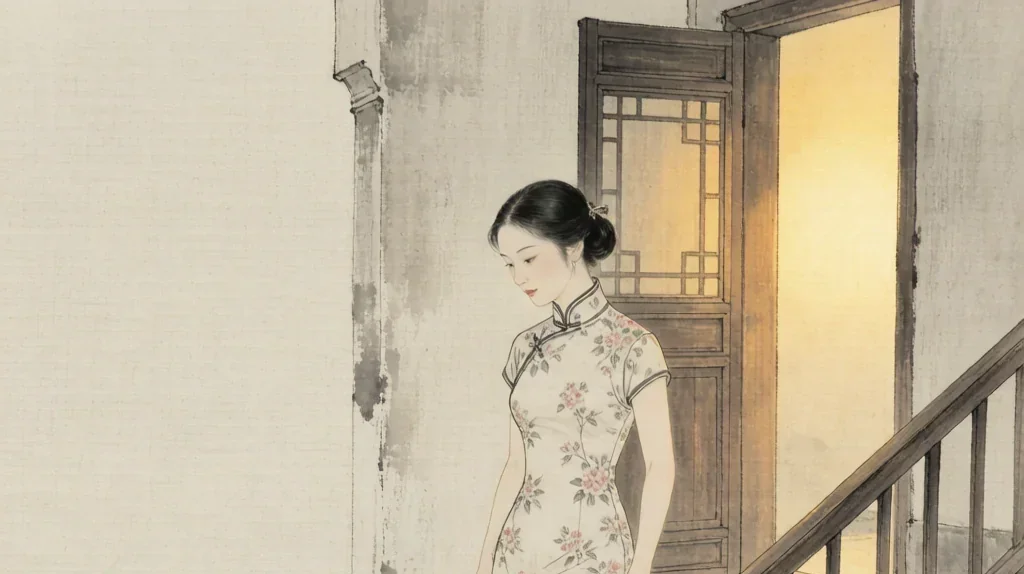
There is a moment in Wong Kar-wai's 2000 masterpiece In the Mood for Love (花样年华) when Maggie Cheung descends a narrow staircase in a hallway of shadows, wearing a qipao of impossible beauty — high-collared, form-fitting, printed with blooms that seem to pulse with color even in the dim light. She wears twenty-three different qipaos in that film, each one a character in its own right, and together they reignited the world's fascination with this most iconic of Chinese garments.
Silk: The Fabric That Built Empires
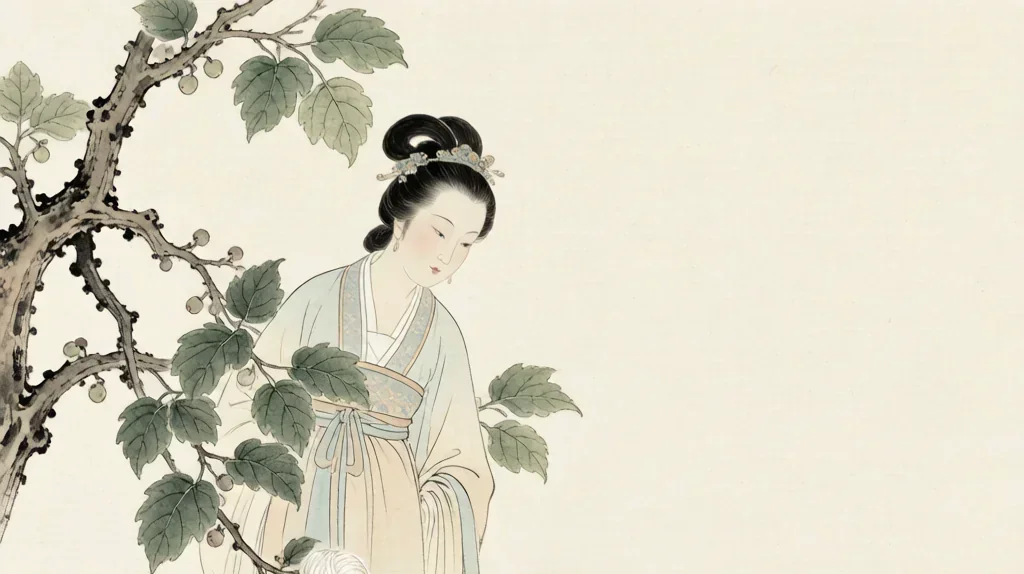
There is a Chinese legend that begins in a garden, with a cup of hot tea and a falling cocoon. The Empress Leizu (嫘祖), wife of the Yellow Emperor, was sitting beneath a mulberry tree when a silkworm cocoon dropped from the branches above and landed in her steaming tea.
Tangzhuang: The Elegance of the Tang
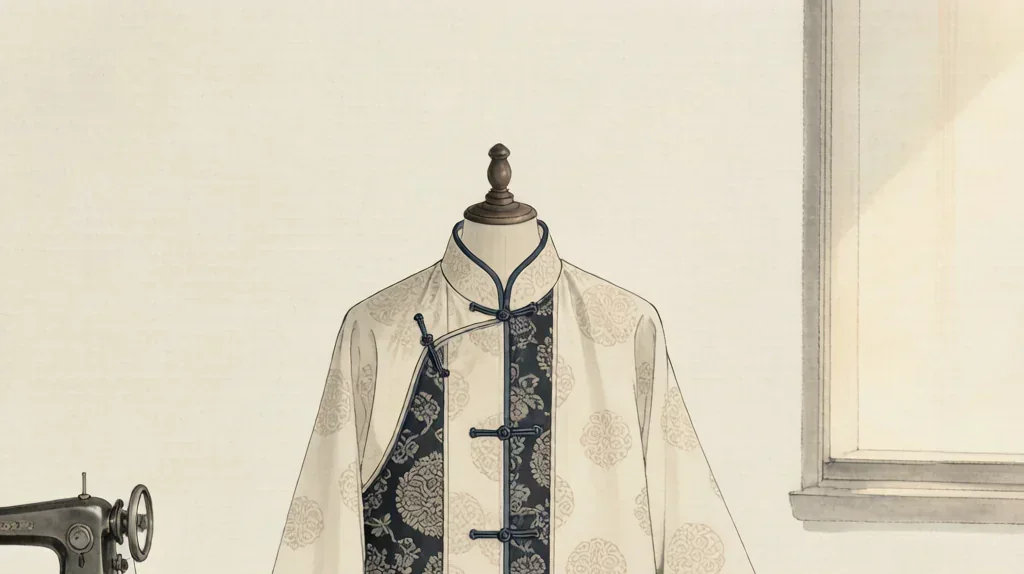
The Tang suit (唐装, tangzhuang) is one of the most recognizable symbols of Chinese cultural identity — a mandarin-collared jacket with distinctive knot-and-loop buttons (盘扣) that has become synonymous with Chinese formal wear. Despite its name, the garment has little direct connection to the Tang dynasty (618–907 CE): the term emerged among overseas Chinese communities, who referred to Chinatowns as "Tang People's Streets" (唐人街) and their traditional clothing as "Tang attire.

Beijing Opera Costumes: Identity Stitched in Silk
The moment the curtain rises on a Beijing Opera stage, you can often tell who a character is before they speak a single word. A general in golden armor, a scholar in a pale gown, a villain with a painted face and a black robe — each is announced by costume alone.

The Bijia: The Sleeveless Jacket of the Yuan
Some of the most useful garments in history are the ones that leave something out. The bijia ( 比甲 , Bǐ jiǎ ) was a sleeveless jacket worn over a robe in Yuan- and Ming-dynasty China — a long vest with no arms, open at the sides, that added warmth and dignity without restricting movement.
The Cloud Collar: A Shoulder Full of Clouds
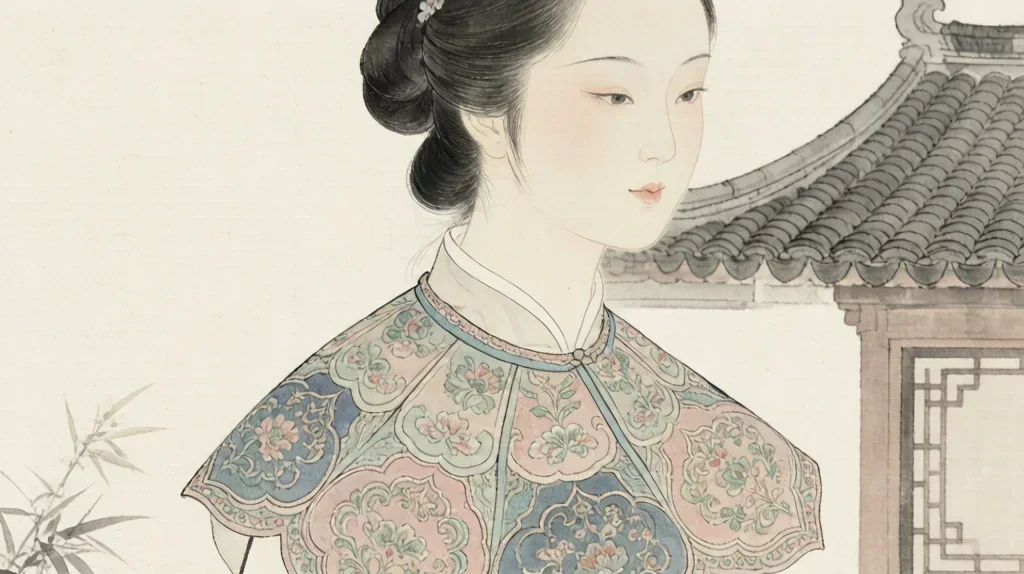
Picture a woman in a Ming or Qing dynasty courtyard, and around her shoulders you may see not a necklace but a small constellation of clouds — a flat, circular cape of embroidered silk that spreads like a halo across the upper body. This is the cloud collar ( 云肩 , Yúnjiān ), one of the most poetic garments in the Chinese wardrobe.
Dudou (肚兜) — Traditional Chinese Undergarment
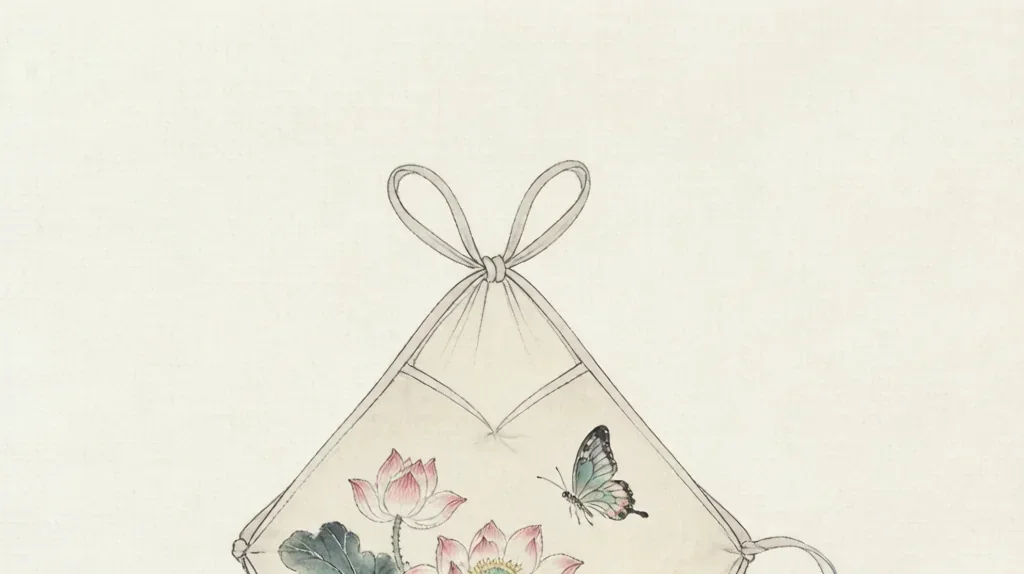
The dudou (肚兜), literally "belly wrap" or "belly cover," is a traditional Chinese undergarment with a history spanning more than 2,000 years. This simple diamond-shaped piece of cloth, tied around the neck and waist with silk cords, was the standard undergarment for Chinese women — and, in earlier periods, for men and children as well — from the Han dynasty (206 BCE–220 CE) through the early 20th century.

The Hezi: The Embroidered Pouch of Affection
Hanging from a man's belt in old China, small enough to cup in one hand, might be a tiny embroidered pouch that held far more than the coins or herbs inside it. The hezi pouch ( 荷包 , Hé bāo ) was a small cloth satchel worn at the waist, used to carry money, seals, or fragrant herbs — but above all it was a love token.
Dragon Phoenix Gown (龙凤褂) — Traditional Wedding Attire
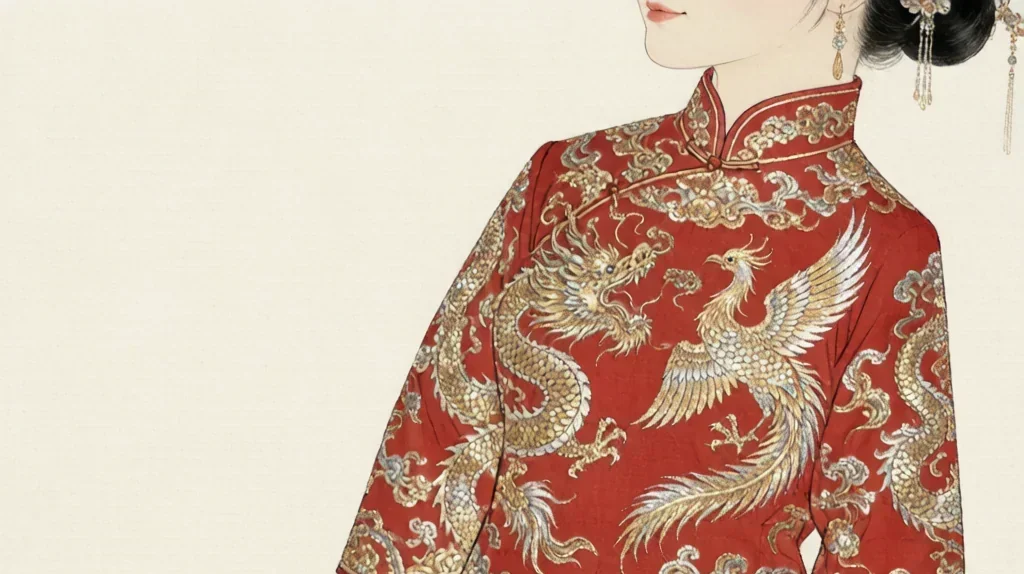
The longfenggua (龙凤褂), or "Dragon Phoenix Gown," is the most prestigious form of traditional Chinese wedding attire — a spectacular ensemble embroidered with dragons (龙) and phoenixes (凤) in gold and silver thread, symbolizing the perfect union of masculine and feminine energies. Originating in Guangdong province and refined by generations of master embroiderers, the longfenggua represents the apex of Chinese bridal craftsmanship.
Horse-Face Skirt (马面裙) — Ming Dynasty Splendor
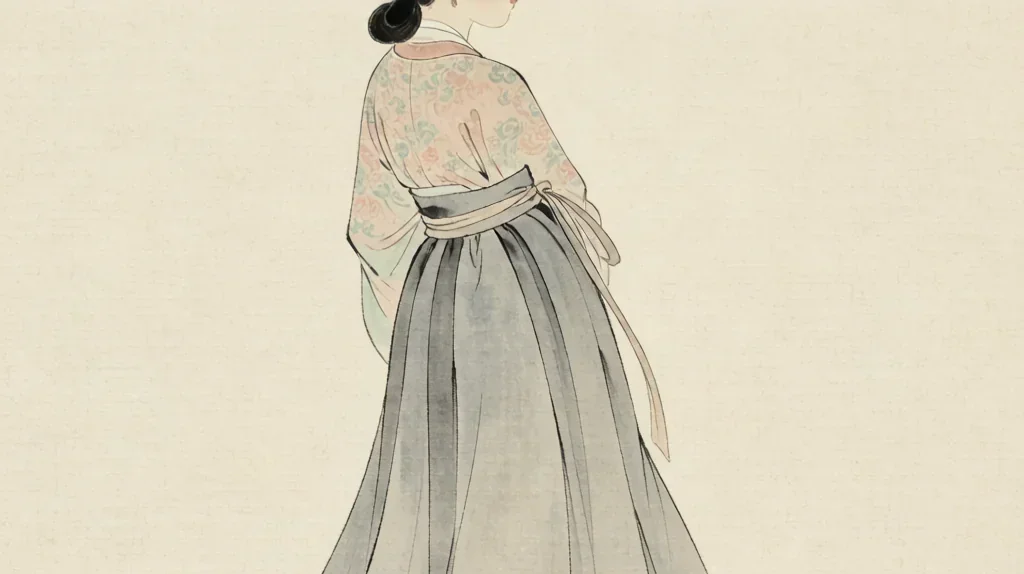
The mamianqun (马面裙), or "horse-face skirt," is one of the most distinctive and elegant garments in the history of Chinese women's fashion. Characterized by its unique structure — a skirt composed of two overlapping panels of fabric, each flat in the front and back but deeply pleated at the sides — the mamianqun was the standard formal skirt for Chinese women throughout the Ming (1368–1644) and Qing (1644–1912) dynasties.
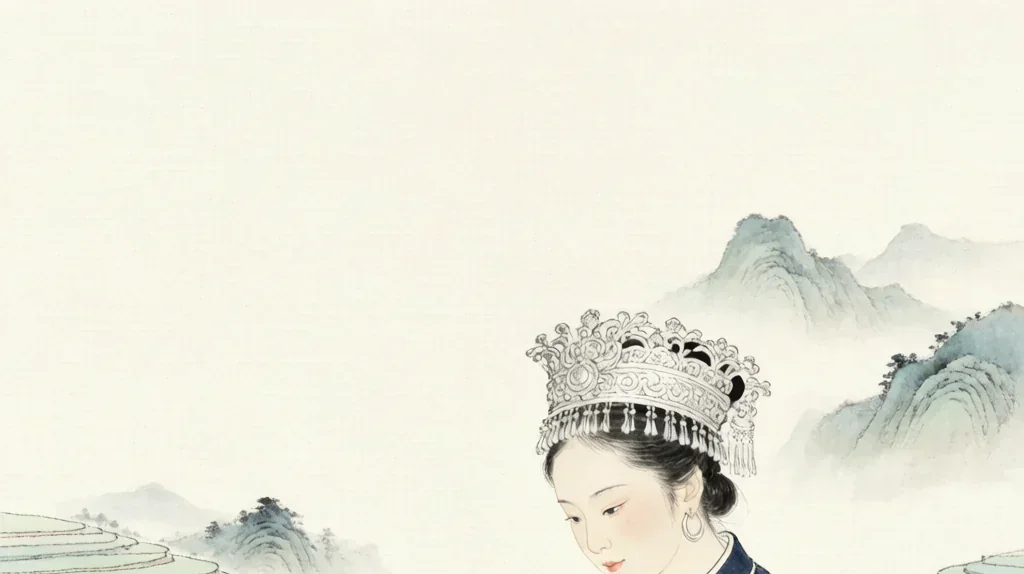
Miao Embroidery: A Script Without Words
Among the misty mountains of Guizhou, Hunan, and Yunnan, the women of the Miao ethnic group have for centuries kept their history not in books but in thread. Miao embroidery ( 苗绣 , Miáo Xiù ) is one of China's most extraordinary textile traditions, famous not only for its dazzling color and precision but for what it carries: legends of a great flood, memories of ancient migrations, and images of gods and ancestors.
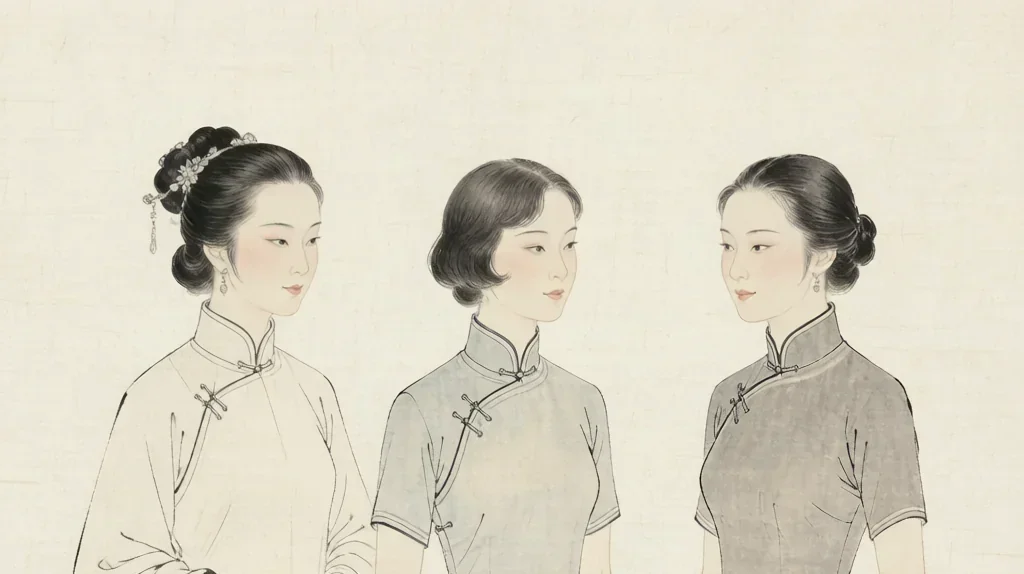
Qipao / Cheongsam (旗袍) — History and Evolution
The qipao (旗袍), known in Cantonese as cheongsam, is arguably the most iconic garment in Chinese fashion — a form-fitting dress with a high mandarin collar, diagonal front opening, and side slits that has come to embody Chinese femininity in the global imagination. Yet its current form is a remarkably modern creation.
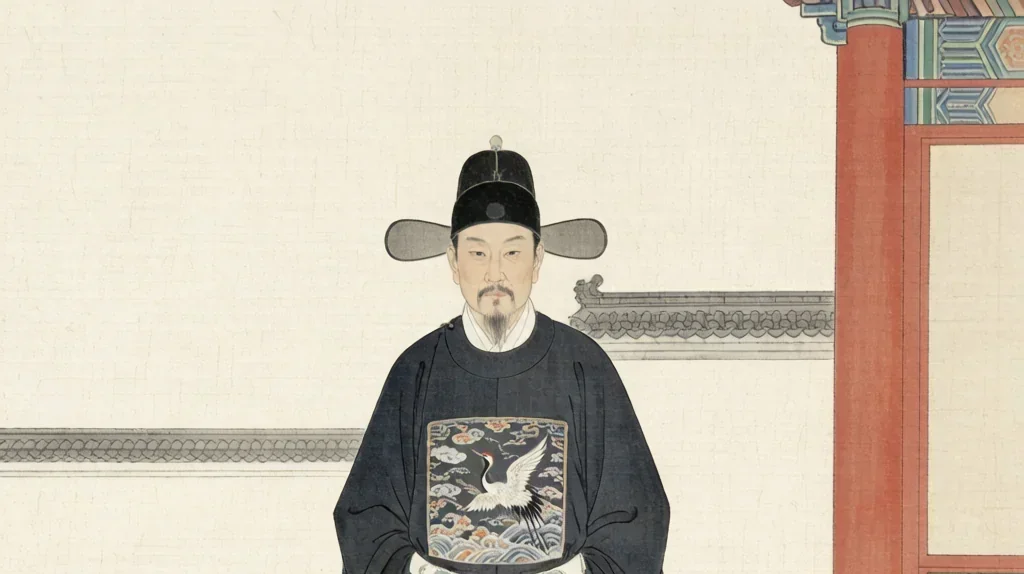
The Scholar-Official's Robe: Rank Woven in Thread
In imperial China, you could read a man's job title from across a courtyard. Not from his words or his seal, but from the square of embroidery on his chest.
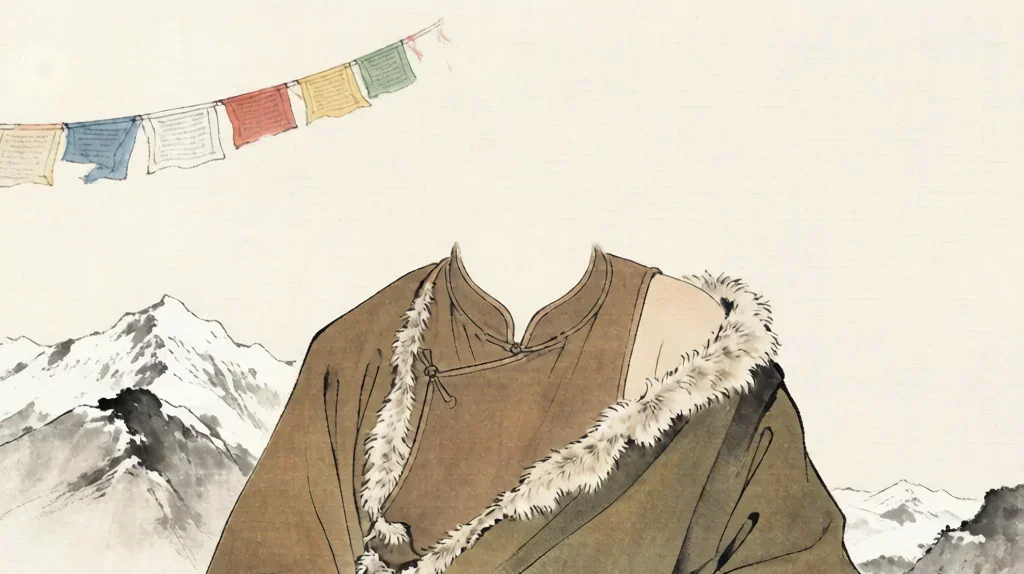
The Tibetan Robe: Dressing for the Roof of the World
On the high, thin-aired plateau of Tibet, where the sun can burn and the wind can freeze within the same afternoon, clothing has to be more than beautiful — it has to be a survival tool. The answer the Tibetan people found is the Tibetan robe ( 藏袍 , Zàngpáo ), a long, enveloping wrap of thick wool worn by herders, monks, and townspeople alike.
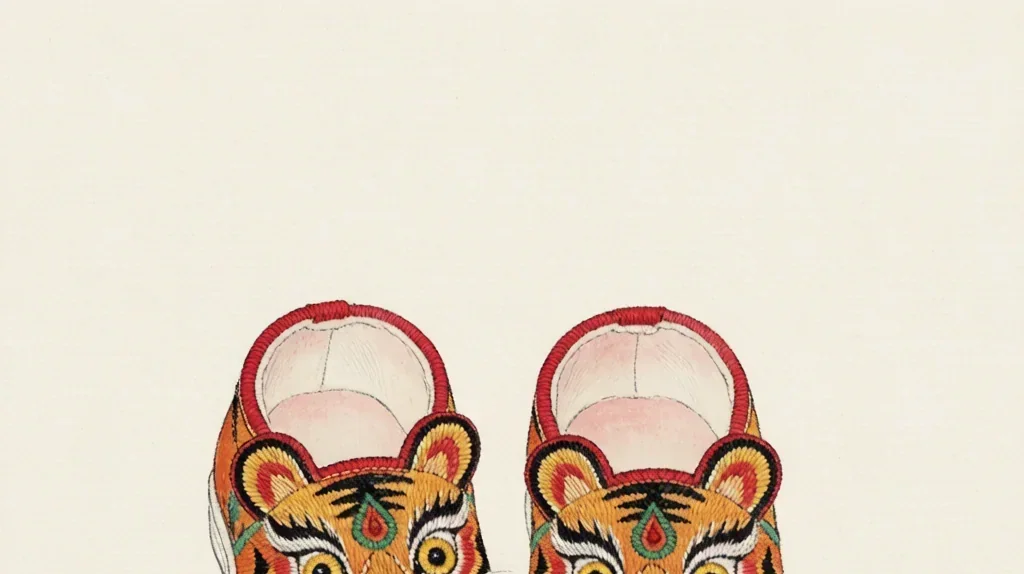
Tiger-Head Shoes: Protecting the Smallest Feet
In villages across northern and central China, a grandmother's most treasured gift to a new baby was often not a toy or a blanket but a pair of tiny shoes sewn with a fierce, grinning tiger's face. These are the tiger-head shoes ( 虎头鞋 , Hǔtóu Xié ), handmade cloth footwear for small children, decorated with embroidered eyes, whiskers, and a striped brow that turns each shoe into a miniature guardian beast.
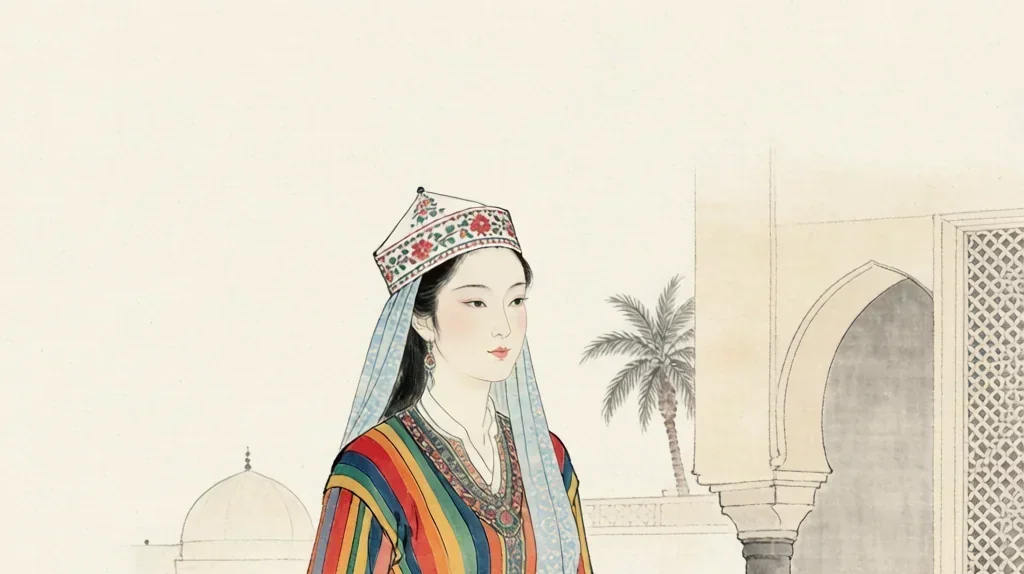
Uyghur Dress: Color on the Silk Road
At the heart of the Silk Road, where desert caravans once carried silk and spice between East and West, lives a people whose clothing looks like the trade routes themselves — a blaze of color, pattern, and borrowed beauty. Uyghur dress ( 维族服饰 , Wéiwú'ěr Fúshì ) is the traditional attire of the Uyghur people of Xinjiang, and it is unmistakable: women in long, swirling dresses of ikat silk, men in embroidered caps and flowing coats, all framed by the dry light of the Tarim Basin.
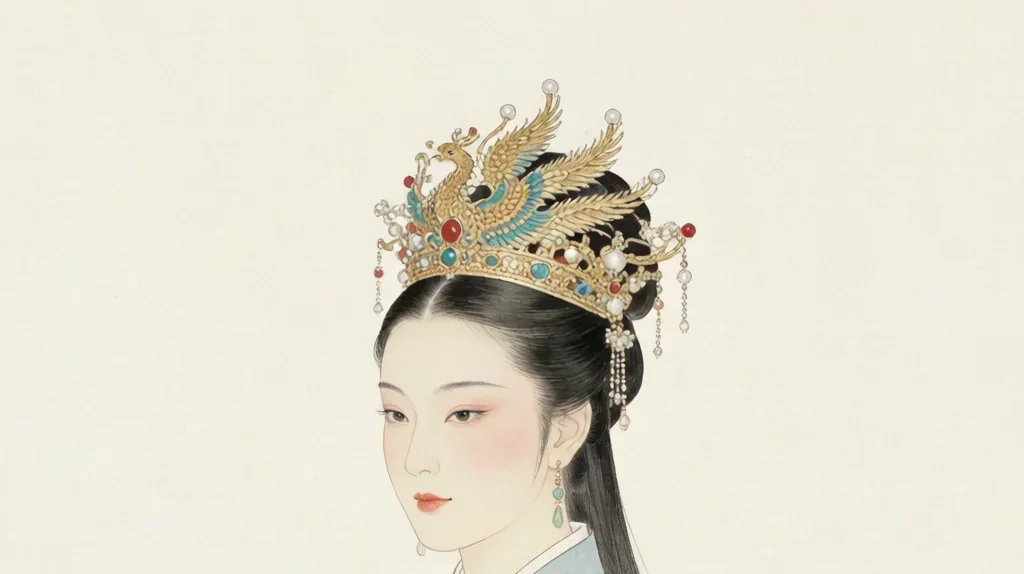
The Phoenix Crown and Cloud Cape: A Bride's Glory
On the most important day of a traditional Chinese woman's life, she did not simply put on a pretty dress. She was crowned.
The Baidi: The Ancient Cotton Garments of the South
The Baidi (白衣) are the white cotton garments of southern peoples — the plain, practical dress of the non-Han south.
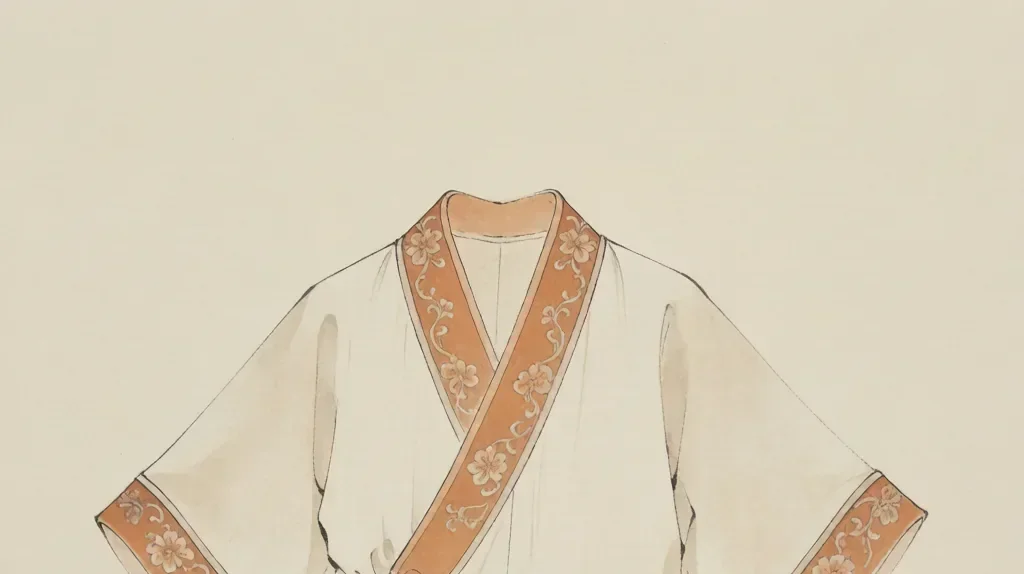
The Half-Sleeve Jacket: Tang Dynasty Style
The Banbi (半臂) is the half-sleeve jacket of the Tang — a short, sleeveless-over vest worn over the ru for ease and style.
The Bijia: The Sleeveless Vest of the Ming Dynasty
The Bijia (比甲) is the sleeveless vest of the Ming, a长短 frame worn over the robe by men and women alike.
The Long Robe: The Everyday Dress of the Scholar
The Changpao (长袍) is the long robe of the scholar-official — the everyday full-length dress of the literati.
The Cut Sleeve: The Fashion of the Han Elite
The 'cut sleeve' (断袖) recalls the Han emperor who sliced his own sleeve rather than wake his sleeping lover — a classic allusion to male love.
The Diadem: Ornaments of the Imperial Wife
The Dianmian (钿面) is the diadem of the imperial consort — the jeweled forehead ornament of the highest women.
The Cape: The Outdoor Garment of Imperial China
The Doupeng (斗篷) is the cape or cloak of outdoor travel — a hooded, sleeveless wrap against wind and rain.
The Duijin: The Symmetrical Closure of Traditional Dress
The Duijin (对襟) is the symmetrical front closure of Chinese dress — the two panels meeting dead center, buttoned down the chest.
The Square Hat: The Cap of the Ming Official
The Fangmao (方巾) is the square black cap of the Ming official and scholar — the mark of the lettered class.
The Phoenix Crown: The Headdress of the Empress
The Phoenix Crown (凤冠) is the empress's headdress — a dizzying mass of gold, pearls, and kingfisher feathers in the shape of phoenixes.
Hanfu Fabrics: Silk, Ramie, and the Weave of Tradition
Hanfu fabrics range from silk and ramie to gauze and brocade — the weave of tradition that gave Chinese dress its flow.
The Butterfly Knot: The Art of Chinese Buttoning
The butterfly knot (蝴蝶结) is the art of Chinese buttoning — the fabric loop-and-toggle that fastens robes without a seam of holes.
The Armor of Ancient China: From Leather to Lamellar
The armor of ancient China ran from lacquered leather to iron lamellar — the protection of the soldier through the ages.
Traditional Trousers: The Practical Garment of China
Traditional trousers (裤) are the practical lower garment of China — from the tied waistband to the bound ankle of workers.
The Magua: The Riding Jacket of the Qing
The Magua (马褂) is the Qing riding jacket — a short, cuffed coat worn over the robe by Manchu and Han alike.
The Mian Ao: The Padded Jacket of the People
The Mian'ao (棉袄) is the padded jacket of the people — the warm cotton-lined coat of winter for ordinary folk.
Ming Dynasty Dress: The Revival of Han Chinese Style
Ming dynasty dress revived Han Chinese style after the Yuan — the cross-collar robe, the bijia vest, and ranked official robes.
The Pibo: The Flowing Sash of the Tang Woman
The Pibo (披帛) is the flowing sash of the Tang woman — a long, light scarf draped over the shoulders and arms.
The Shenyi: The One-Piece Garment of the Warring States
The Shenyi (深衣) is the one-piece garment of the Warring States — a robe whose upper and lower parts are cut as a single wrap.
The Scholar's Hat: The Headwear of the Literati
The scholar's hat (方巾/巾) is the soft headwear of the literati — the kerchief that marked a man of learning.

The Water Sleeve: The Flowing Aesthetic of the Opera
The water sleeve (水袖) is the long, flowing cuff of opera — an extension of the actor's arm that speaks in silk.
Song Dynasty Dress: Elegance in Subtlety
Song dynasty dress prized elegance in subtlety — slender lines, restrained color, and the high-waisted skirt of its women.
Tang Dynasty Dress: The Splendor of the Imperial Court
Tang dynasty dress was the splendor of the court — full, high-waisted gowns, bright colors, and open-collared ease.
Wei and Jin Dress: The Unrestrained Style of the Seven Sages
Wei-Jin dress was the unrestrained style of the Seven Sages — loose, broad robes for a life of wine and talk.
Embroidered Shoes: The Steps of a Thousand Stitches
Embroidered shoes (绣花鞋) are the steps of a thousand stitches — the richly worked women's shoes of folk China.
The Jade Belt: The Ultimate Rank Insignia
The jade belt (玉带) is the ultimate rank insignia — a belt mounted with plaques of jade or gold for the highest officials.
The Belt: The Status Symbol of Chinese Dress
The belt (腰带) is the status symbol of Chinese dress — the sash that gathered the robe and signaled rank.
The Shang Yi Xia Chang: The Ancient Two-Piece Garment
The Shang yi xia chang (上衣下裳) is the ancient two-piece garment — a top and a skirt as the original Han dress.
Yuan Dynasty Dress: Mongol Influence on Chinese Clothing
Yuan dynasty dress shows Mongol influence on Chinese clothing — narrower cuts, boots, and the seed of later Qing styles.
The Cloud Shoulder: The Embroidered Cape of Ceremony
The Cloud Shoulder (云肩) is the embroidered cape of ceremony — a halo-like collar of petals worn by women at rites.